Why Windshield Replacement Can Include a Camera Calibration Bill
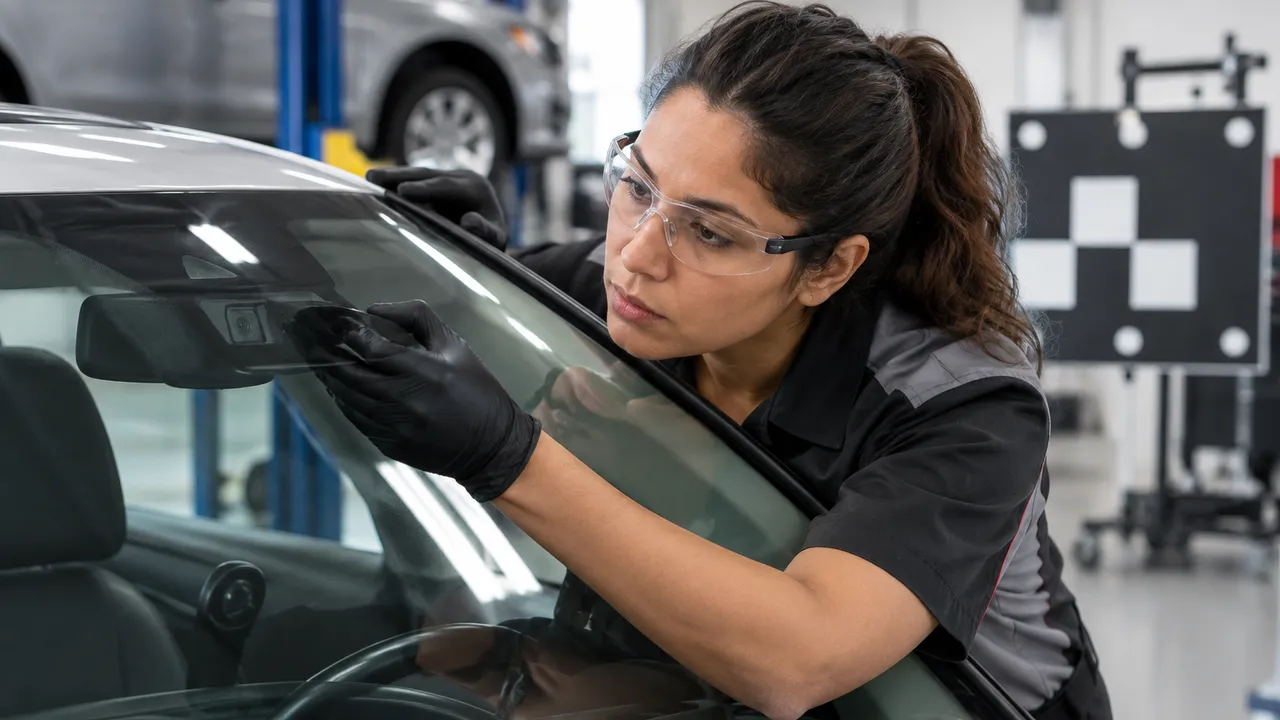
A windshield replacement quote may include more than glass, adhesive and labor. Many vehicles have a forward-facing camera mounted near the rearview mirror that supports features such as automatic emergency braking and lane-keeping assistance. Replacing the windshield can change the camera’s relationship to the road, creating a separate calibration requirement. Even a small change in the camera’s mounting angle can affect how it interprets lane boundaries.
That charge is not automatically an upsell, and it is not required on every vehicle. The deciding factors are the vehicle’s equipment and the manufacturer’s repair instructions. For drivers comparing estimates in October 2026, the useful question is not simply who offers the cheapest windshield, but who includes the complete required repair.
1. When the manufacturer calls for calibration
Start with the vehicle identification number, or VIN. Depending on the manufacturer and model, calibration may be required after windshield replacement, camera removal or installation, or work that changes camera alignment. The same model can have different equipment across trims and production dates, so a generic year-and-model lookup may not settle the question.
Ask the shop to identify the applicable manufacturer procedure using its current service information. A camera that remains attached to its bracket can still require calibration after glass replacement. Conversely, a vehicle without a windshield-mounted assistance camera should not receive a camera-calibration charge merely because it has other electronic safety features.
The procedure may also specify prerequisites, such as correct tire pressures, vehicle loading or wheel alignment. Ask whether any prerequisite work is needed on your vehicle and whether it is included in the estimate.
- Confirm the camera and assistance features fitted to the VIN.
- Ask which repair operation triggers the calibration requirement.
- Request the procedure reference on the estimate or work order.
2. Understand what the calibration charge covers
Static calibration generally uses specified targets, measurements and controlled shop conditions. Dynamic calibration involves driving under manufacturer-defined conditions while the system completes its calibration routine. Some vehicles need both. Weather, lane markings, lighting or unavailable equipment can delay completion; a short test drive is not necessarily a substitute for the prescribed process.
Calibration also differs from a diagnostic scan. A scan reads vehicle-system information and trouble codes; it does not necessarily establish correct camera alignment. No warning light does not prove calibration is unnecessary or successful. Ask whether the quoted service includes required scans, setup, calibration and any specified operational checks.
For mobile replacement, confirm where calibration will happen. A driveway may lack the level surface, clearance or lighting required for static setup. Mobile glass installation therefore does not guarantee that calibration can also be completed onsite.
- Who performs the work: the glass shop, dealer or subcontractor?
- Is transportation to another facility included?
- What happens if calibration fails or needs another appointment?
3. Compare complete estimates, not headline prices
Request written, itemized estimates for the same scope of work. Prices vary widely with glass availability, vehicle equipment, labor markets and calibration requirements. Rather than relying on a national average, get local quotes tied to your VIN and compare the total before taxes, then the final amount payable.
Original-equipment glass and aftermarket glass are not interchangeable choices in every repair situation. Ask whether the proposed part meets the applicable manufacturer requirements and supports your camera, head-up display, heating and acoustic features. The estimate should also explain installation materials, required replacement trim and who handles a leak or calibration-related comeback.
Set a written authorization limit for unexpected work. If calibration reveals a damaged bracket or an unrelated vehicle fault, require a revised estimate explaining the diagnosis, proposed correction and any repeat-calibration charge before approving additional spending.
| Quote line | What to verify |
|---|---|
| Glass | Manufacturer, part number and equipment compatibility |
| Installation | Adhesive, moldings, labor and warranty |
| Calibration | Required method, provider and included checks |
| Other charges | Scans, transport, mobile fees and taxes |
4. Check insurance before authorizing the repair
Windshield damage commonly falls under comprehensive coverage, subject to policy terms and deductibles. Some policies offer separate glass coverage; some states have special glass-deductible rules. Neither means every driver automatically gets free replacement. A repair benefit for a small chip also does not necessarily carry over to replacement and calibration.
Contact the insurer using the number on your policy or its official website. Describe the replacement and manufacturer-required calibration together, and ask what documentation or authorization is needed. If the insurer’s approved amount differs from the shop’s quote, resolve the difference before work begins rather than assuming someone else will absorb it.
If calibration is denied, request the reason in writing and ask how to submit the manufacturer procedure for reconsideration. Keep the claim number, itemized estimate and correspondence together so the disputed operation is clearly documented.
- Confirm your deductible and any glass endorsement.
- Ask about glass-part restrictions and calibration reimbursement.
- Check shop-choice rules, network terms and warranty responsibility.
- Get any expected out-of-pocket balance in writing.
5. Leave with proof of the completed work
Before pickup, request the final invoice, glass identification, calibration result and any required scan reports. Useful records identify the vehicle, date, provider and completed procedure, with a successful result rather than just a billing line labeled “calibration.” Ask whether any faults remain and whether the assistance systems are available for normal use.
Also obtain the adhesive’s safe-drive-away time and follow the shop’s written aftercare instructions. Adhesive curing and camera calibration are separate requirements; completing one does not complete the other. If calibration is unfinished, ask about driving restrictions and completion arrangements before leaving. Report warning messages or unusual assistance behavior promptly, and never deliberately provoke emergency braking to test the repair.
Check that the calibration report matches your VIN and covers each required stage. If both static and dynamic procedures were prescribed, documentation of only one stage leaves a completion question the provider should resolve.
Verify vehicle-specific procedures through manufacturer service information and coverage through your insurer and state insurance department; prices and policy terms vary.
AI Assistance Used — AI assistance was used in researching and drafting this article. It was reviewed, edited, and fact-checked by Jordan Singh before publication.