Is a Whole-Body MRI Worth Paying For When You Feel Healthy?
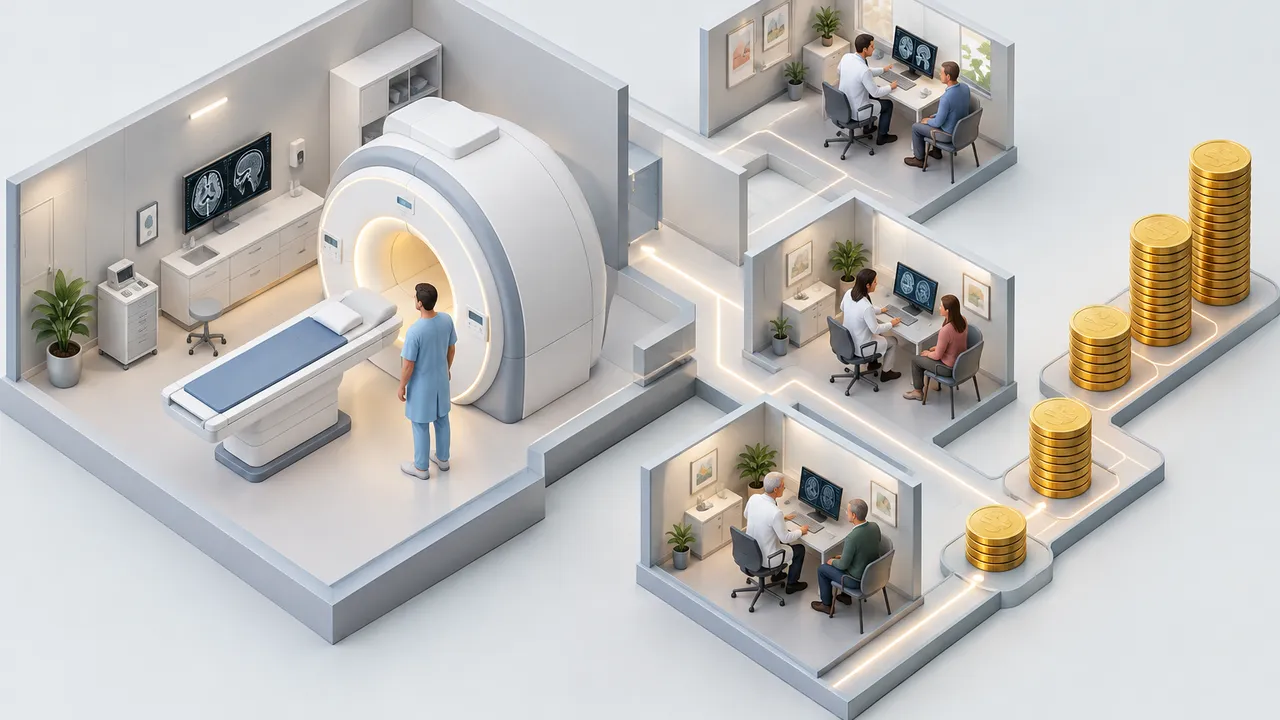
Commercial whole-body MRI services sell an appealing idea: look inside before symptoms appear and find trouble while it is treatable. For a healthy person with no unusual cancer risk, however, finding more abnormalities is not the same as living longer. The scan can start a medical workup rather than settle anything. The practical decision includes who will interpret uncertain findings and whether you can access and afford follow-up.
As of October 2026, routine commercial whole-body MRI screening has not been shown to improve health outcomes for symptom-free, average-risk adults. MRI is valuable for diagnosing specific problems and monitoring certain high-risk patients. The question is whether scanning broadly, without a clinical reason, delivers more benefit than harm.
1. Detection is not proof of benefit
A company may report how often scans uncover suspicious lesions or previously unknown cancers. Those numbers describe detection, not whether screening prevents advanced disease or death. Earlier diagnosis can make survival after diagnosis look longer even when a person's lifespan is unchanged, a distortion called lead-time bias. Screening can also find cancers that would never have caused illness, leading to treatment without a corresponding benefit. That is overdiagnosis.
The American College of Radiology cites insufficient evidence to recommend total-body MRI screening for people without symptoms, risk factors or a relevant family history. Stronger evidence would compare screened and unscreened groups over time, counting serious illness, deaths and harms from follow-up. Testimonials and detection rates cannot answer that question, even when an individual discovery is genuinely important. Ask for published outcome studies, not just a list of success stories.
Check who participated in any cited study. Results from people with symptoms or inherited cancer risks cannot establish the value of screening average-risk customers.
2. Incidental findings can start a cascade
An incidental finding is something discovered outside the scan's main purpose, such as a cyst, nodule or enlarged lymph node. Many are harmless; some need clarification. A radiology report may recommend another test because the screening images cannot establish what the finding is. That uncertainty is not itself a cancer diagnosis.
Follow-up can mean weeks of waiting, repeated imaging or an invasive procedure. Some workups appropriately identify treatable disease; others end with reassurance after expense and anxiety. Before booking, ask how the service handles uncertain results, not just how quickly it delivers a report.
For example, a clearly simple kidney cyst generally needs no further evaluation, while an incompletely characterized kidney lesion may require dedicated imaging to determine its significance.
- Who explains the findings and orders follow-up tests?
- Does the package include comparison with older scans?
- Who contacts you about an urgent result?
- Is there a plan for findings needing monitoring months later?
3. A normal scan is not an all-clear
'Whole-body' does not mean every disease or every body part is assessed equally. Coverage, scan sequences and image quality vary between providers. MRI can miss small tumors and abnormalities in organs it does not evaluate well. A reassuring report should never delay assessment of new or persistent symptoms.
MRI does not use ionizing radiation, an advantage over CT. But that does not make screening harmless or universally suitable. Implants and metal fragments require safety checks; claustrophobia can prevent completion. Ask whether contrast is used and how kidney disease or pregnancy affects eligibility.
A normal scan also does not measure blood pressure, cholesterol or blood glucose. These assessments can reveal treatable cardiovascular and metabolic risks that imaging cannot exclude.
- Continue recommended mammograms; whole-body MRI is not a substitute for breast screening.
- Keep colorectal screening current; a scan does not replace stool testing or colonoscopy.
- If eligible, discuss low-dose CT lung screening rather than relying on whole-body MRI.
4. The scan price is only the beginning
Advertised prices commonly run from around $1,000 to several thousand dollars, depending on location, coverage and extras. These are not national fixed rates. Elective screening is often self-pay, and the advertised fee may exclude everything that follows. Get an itemized written quote and ask what happens if the scan is incomplete.
A medically necessary follow-up test may qualify for insurance coverage even when the original screening does not. Coverage is not automatic: referrals, prior authorization, deductibles and network rules still apply. Confirm directly with the insurer and the follow-up facility before assuming the screening company has arranged covered care.
For proposed follow-up, request billing codes and a written estimate. Ask whether facility fees and the radiologist's professional fee are billed separately, especially at hospital-based centers.
| Cost | What to verify |
|---|---|
| Initial scan | Body regions, contrast and radiologist interpretation included |
| Extra imaging | Dedicated MRI, ultrasound or CT charges |
| Specialist visits | Network status and expected cost-sharing |
| Biopsy or monitoring | Procedure, pathology and repeat-imaging bills |
5. Choose a screening plan, not a shortcut
For most symptom-free, average-risk adults, the better-value starting point is primary care and recommended screening tailored to age, anatomy, smoking history and family history. These recommendations are based on evidence about benefits and harms, not simply the ability to spot abnormalities. Check current guidance through the U.S. Preventive Services Task Force, the American Cancer Society and your clinician.
People with certain inherited cancer syndromes may need specialist-directed surveillance that includes whole-body MRI. That is a different use from buying a commercial scan for reassurance. If you still want one, decide beforehand what you are willing to spend and pursue after an uncertain result. A negative scan is a snapshot, not a guarantee.
Bring relatives' cancer types and ages at diagnosis to that discussion. Several related cancers or unusually young diagnoses may justify genetic counseling rather than commercial imaging.
- Review symptoms and your personal and family history before labeling yourself average-risk.
- Ask what this particular scan can miss and which findings trigger follow-up.
- Budget for downstream care, including time away from work and possible repeat tests.
Verify current recommendations, eligibility, prices and coverage with official sources, providers and insurers; this is not personalized medical advice.
AI Assistance Used — AI assistance was used in researching and drafting this article. It was reviewed, edited, and fact-checked by Nadia Clarkson before publication.