Tire Replacement Is About More Than Tread Depth
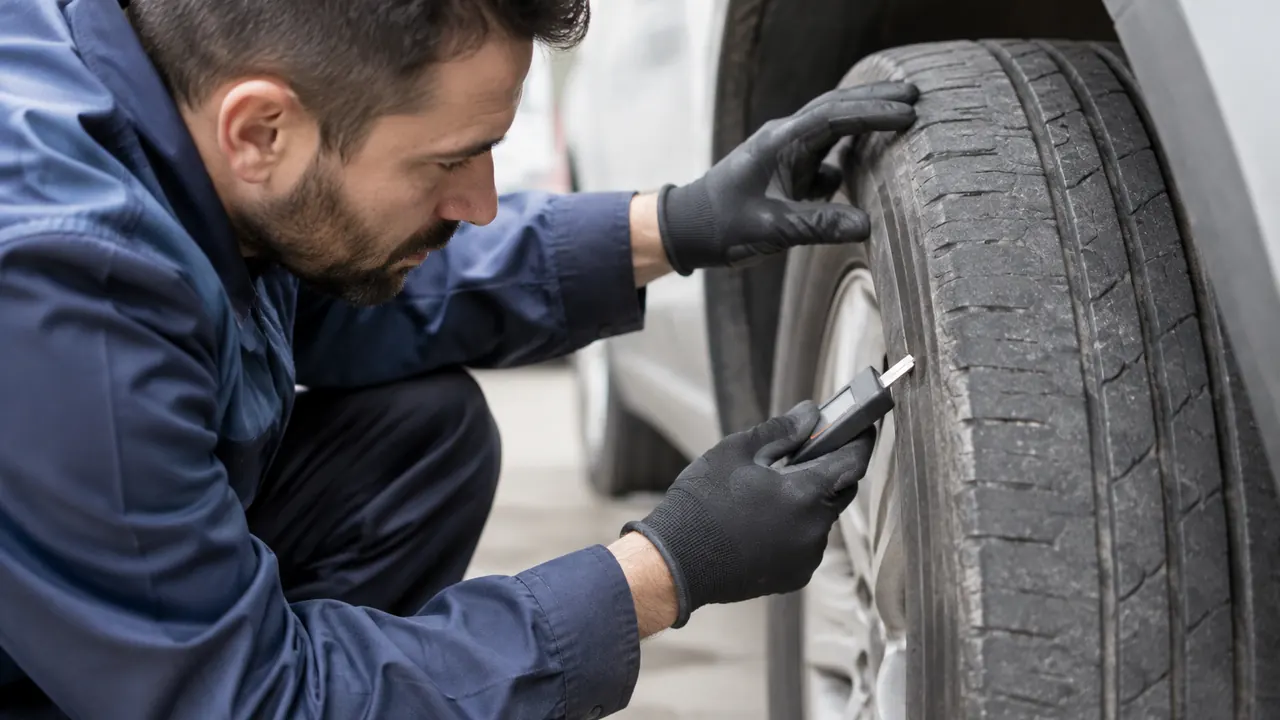
A tire can have visible tread and still need replacement. Rubber ages, impacts can damage internal structure, and uneven wear can leave one part of the tread unsafe while another looks acceptable. That matters whether you drive a gasoline sedan, a hybrid, an electric vehicle or an all-wheel-drive SUV. As you assess your tires in 2026, treat tread depth as one checkpoint, not a complete verdict on whether the vehicle is ready for another season.
The best replacement decision combines what you can measure, what you can see, how the vehicle behaves and what its manufacturers require. A shop should be able to explain its recommendation using those details rather than simply saying your tires are old or worn. Use this checklist for routine inspections and before a long trip, but do not wait for a scheduled service if a tire develops a bulge, loses pressure or changes the way the vehicle drives.
1. Measure tread across the tire, not just in one spot
Use a tread-depth gauge in the main grooves at several places around each tire. Check the inner, center and outer portions of the tread, avoiding the raised wear bars when taking measurements. The shallowest meaningful reading matters; averaging a worn shoulder with a healthier center can conceal a problem. Have a technician check areas you cannot safely reach or see, especially the inside shoulders of the front tires.
For ordinary passenger tires, 2/32 inch is the familiar replacement threshold and a common state-law minimum, although inspection rules vary. Wear bars become level with adjacent tread at approximately that depth. Do not treat it as a promise of good rain traction until the last fraction disappears. Drivers who regularly encounter heavy rain may reasonably plan replacement around 4/32 inch, subject to tire guidance and conditions. That is a planning point, not a universal legal requirement or guarantee.
- Record readings for all four tires so changes are easier to spot.
- Look for wear bars in multiple grooves, not just one visible location.
- Replace a tire with exposed cords; do not keep driving to use its remaining tread.
| Tread finding | Practical response |
|---|---|
| Above 4/32 inch | Continue checking age, damage and performance. |
| Around 4/32 inch | Discuss rain exposure and replacement planning. |
| At or below 2/32 inch | Replace; verify applicable local requirements. |
| Uneven readings | Investigate the cause and assess the lowest readings. |
2. Find the build date and apply the right age guidance
Low mileage does not stop tire aging. Heat, sunlight, storage conditions, inflation history and use all influence deterioration, and appearance cannot reveal every internal change. A lightly driven second car or stored spare therefore deserves attention even when its grooves look deep. Age is a separate replacement consideration, not something a good tread reading cancels out.
Find the tire identification number associated with the DOT marking on the sidewall. On modern tires, its final four digits identify the manufacturing week and year: 1821 means the 18th week of 2021. The complete number may appear on only one side, so a shop may need to read an inward-facing sidewall. Check every tire rather than assuming a set shares the same date.
Then compare the vehicle owner's manual with the tire manufacturer's current service-life guidance. Some manufacturers call for replacement around six years; some tire makers specify a ten-year maximum, with earlier professional inspections or replacement as needed. Neither number is a universal safe-life promise. Follow the applicable guidance, resolving differences with the manufacturers and using the more conservative limit while seeking clarification. Include the spare, and ask whether an age limit runs from manufacture or another specified date.
3. Separate surface weathering from urgent damage
Inspect sidewalls and tread grooves in good light. Fine surface cracking can be a sign of weathering, but a photograph or quick glance cannot reliably establish how deep it goes. Have cracking assessed, especially when it is spreading or appears alongside pressure loss. Deep splits, exposed reinforcement, tread lifting or a localized sidewall bulge need a more urgent response.
A bulge can indicate damaged internal cords, often after a pothole or curb impact. Do not press on it, attempt a sidewall repair or assume it is harmless because the tire holds air. Some radial tires have shallow sidewall indentations from normal construction, but an outward bubble is different. If you are unsure which you see, avoid driving until you obtain professional advice.
After a hard impact, check for cuts, wheel damage and pressure changes even if the vehicle initially feels normal. Internal damage may not be visible from outside. A tire professional may need to remove the tire from the wheel to inspect it; an exterior inspection alone is not always enough.
- Stop driving on a tire with a bulge, exposed cords or separating tread.
- Use an appropriate spare only within its stated speed and distance limits.
- Arrange roadside assistance if changing the tire would expose you to traffic.
4. Treat uneven wear as a clue, not just a replacement bill
Uneven wear means the replacement decision should include a search for the cause. Alignment problems, worn suspension parts, incorrect inflation and missed rotations can all contribute. Wear patterns offer clues, not a diagnosis by themselves. Replacing tires without addressing the underlying problem can shorten the life of the new set and leave a handling issue unresolved.
Check cold inflation pressures against the driver's door-jamb placard or owner's manual, not the maximum pressure molded on the tire. Cold generally means the vehicle has been parked for at least three hours; follow its instructions. Front and rear specifications may differ. A tire-pressure warning system is not a substitute for regular gauge checks because its warning threshold may allow meaningful underinflation before a light appears.
Ask the shop to document tread readings and inspect relevant steering and suspension components before recommending an alignment. Rotation can help distribute normal wear, but it cannot restore missing rubber or cure damaged parts. Follow the vehicle's rotation schedule and pattern; directional tires and different front and rear sizes can restrict which positions are interchangeable.
| Pattern or symptom | Possible contributors to investigate |
|---|---|
| Both shoulders worn | Underinflation, loading or operating conditions |
| Center worn more | Inflation and tire-specific wear characteristics |
| One shoulder worn | Alignment or suspension condition |
| Cupping or scalloping | Suspension, balance or other mechanical issues |
5. Take declining wet-weather grip seriously
Tread grooves help move water away from the contact patch. As they become shallower, a tire generally has less capacity to manage standing water. Speed, water depth, inflation, vehicle load and tire design also matter. No tread-depth number makes hydroplaning impossible, and a tire that feels adequate on dry pavement may be much less reassuring in rain.
Pay attention to new or worsening wet-road behavior: easier wheelspin during gentle acceleration, reduced confidence in ordinary turns or braking that feels less secure in comparable conditions. These observations are reasons for inspection, not proof that tires are the only cause. Pavement contamination, brake problems and changing weather can produce similar symptoms. Do not deliberately provoke a skid or make hard stops to test grip.
If wet performance has declined, have tread depth, pressures, age and condition checked together. Replacing before the minimum depth can be sensible for frequent highway driving in heavy rain. Meanwhile, reduce speed, increase following distance and avoid standing water when possible. Those precautions remain necessary with new tires. If the vehicle suddenly feels unstable or develops strong vibration, pull over safely and seek help rather than assuming rain alone explains it.
6. Check replacement specifications and AWD matching rules
Start with the vehicle manual and placard for tire size, load requirements, inflation and any front-to-rear differences. Ask the installer to confirm an appropriate speed rating and any special requirements, including run-flat equipment. Electric vehicles also need tires suited to their specified loads and operating requirements; an EV marketing label alone does not establish compatibility.
For some all-wheel-drive vehicles, closely matched rolling circumferences are critical. If one tire travels a different distance per revolution, the drivetrain can interpret the resulting wheel-speed difference as ongoing slip. Depending on the system, that can cause unnecessary coupling activity, heat or wear. The acceptable difference is vehicle-specific; there is no universal AWD tread-depth allowance.
Matching the sidewall size alone may not be enough because tire models can differ in actual dimensions. Before approving one replacement, ask for the automaker's permitted tread-depth or circumference difference and measurements of the existing tires.
- Confirm whether the vehicle requires matching brand, model and construction.
- Ask whether one tire, a pair or all four must be replaced.
- Consider tire shaving only if the manufacturer permits it and a qualified shop recommends it.
- Do not assume a two-tire replacement rule overrides AWD specifications.
7. Leave with a documented plan
Before authorizing work, ask which finding makes replacement necessary now: tread, age, damage, performance or a vehicle matching requirement. Request an itemized installed price covering mounting, balancing, valves or pressure-sensor service, disposal and any alignment work. Warranty coverage and road-hazard protection vary; neither should be assumed to cover normal wear, aging or every impact.
If only two tires are being replaced and the vehicle permits it, tire-industry guidance generally favors putting the deeper-tread pair on the rear to help preserve stability on wet roads, including on front-wheel-drive vehicles. Follow any vehicle-specific restrictions. After installation, confirm cold pressures and any required pressure-monitoring reset, then keep the receipt, tire identification details and inspection readings. Schedule the next rotation or condition check according to the applicable guidance.
Consult your vehicle and tire manufacturers’ current guidance and a qualified tire professional for replacement limits, damage assessment and drivetrain-specific matching requirements.
AI Assistance Used — AI assistance was used in researching and drafting this article. It was reviewed, edited, and fact-checked by Lisa Barber before publication.