What Actually Makes a Kitchen Knife Worth the Money
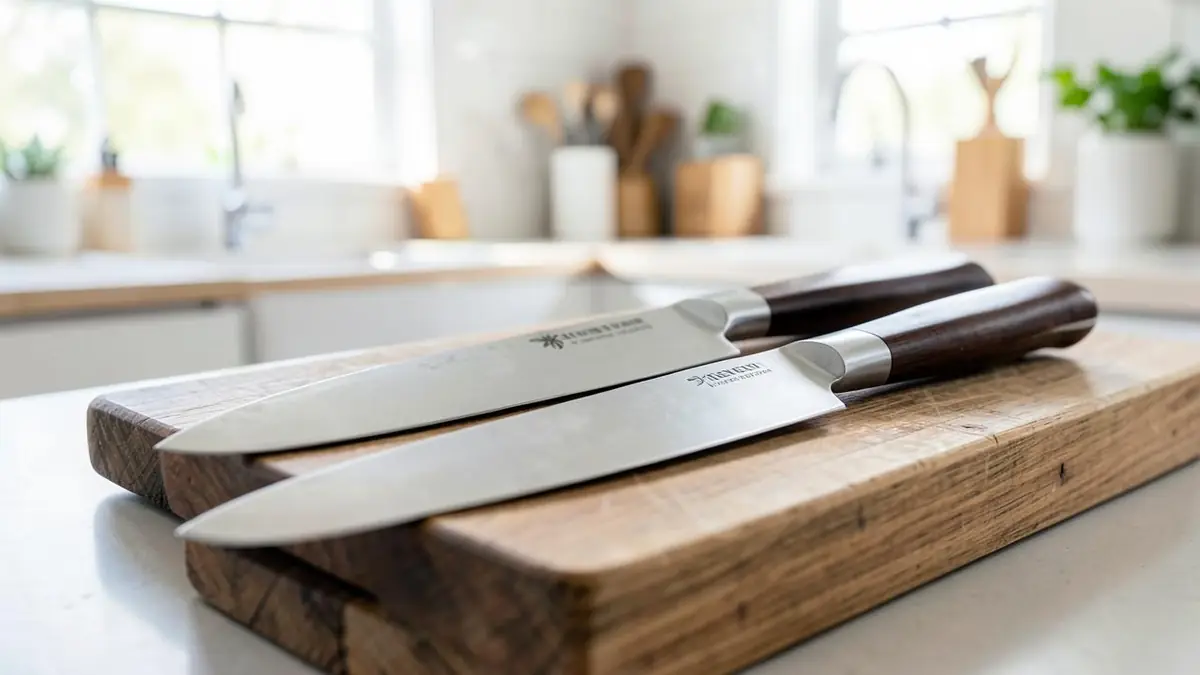
Knife pricing spans an extraordinary range for a tool that does one thing. The same shape and length can be sold for the price of a takeaway or the price of a weekend away, and the performance gap between those two is much smaller than the price gap suggests.
The honest summary is that there is a steep improvement over the cheapest knives, a broad and useful middle, and then a long stretch where you are paying for craftsmanship, materials, and pleasure rather than measurable cutting ability.
Steel is a trade-off, not a ranking
Harder steels hold an edge longer and can be ground thinner, which is why many Japanese-style knives cut so cleanly. They are also more brittle, less forgiving of twisting, and harder to sharpen at home.
Softer European-style steels dull sooner but tolerate abuse and respond quickly to a honing rod. Neither is superior in the abstract; the right choice depends on how carefully you cut and how willing you are to maintain the edge.
Geometry does most of the cutting
How thin the blade is behind the edge determines how easily it passes through dense food. A thick blade wedges in a carrot and splits it rather than slicing it, regardless of how sharp the very edge is.
This is why an inexpensive but thin knife often outperforms a heavy premium one on vegetables, and why a knife that felt magnificent in the shop can feel clumsy once you are prepping for a family dinner.
Handle and balance are personal
Balance is a matter of preference rather than correctness. Some cooks want weight in the handle for control; others prefer it forward for chopping momentum. What is not optional is that the handle suits your hand and stays secure when wet.
Hold the knife in a pinch grip, thumb and forefinger on the blade rather than the handle, and see whether the bolster digs in. A heavy full bolster that blocks the grip is a common reason expensive knives sit unused in the block.
Skip the block set
Sets are priced to look like value and usually include several knives most households never touch, plus a block that takes counter space and a pair of shears. The per-knife saving is real, but so is the quality compromise.
Three knives cover nearly everything: a chef's knife or santoku for the bulk of the work, a paring knife for small tasks, and a serrated bread knife. Buying those three individually at a moderate price usually beats a set at the same total.
Sharpening is the real upgrade
A modest knife that is genuinely sharp outperforms an expensive knife that has not been touched in two years. Honing straightens an edge and should happen often; sharpening removes metal and is needed only occasionally.
A basic whetstone plus a few videos is the cheapest performance improvement available in a kitchen. Pull-through sharpeners are convenient but aggressive, and on a hard, thin blade they can do more harm than the dullness they fix.
Care that costs nothing
Keep knives off glass, stone, and ceramic boards, which blunt an edge quickly. Wood and end-grain boards are kinder, and soft plastic is an acceptable compromise.
Wash and dry by hand rather than in the dishwasher, where heat, detergent, and knocking against other items damage both edge and handle. Store on a magnetic strip or in a sheath instead of loose in a drawer.
Knife materials, hardness ratings, and care requirements vary by manufacturer. Follow the maker's guidance for the specific product.
AI Assistance Used — AI assistance was used in researching and drafting this article. It was reviewed, edited, and fact-checked by Leah Fornier before publication.