Waterproof Flooring Does Not Mean a Waterproof Room
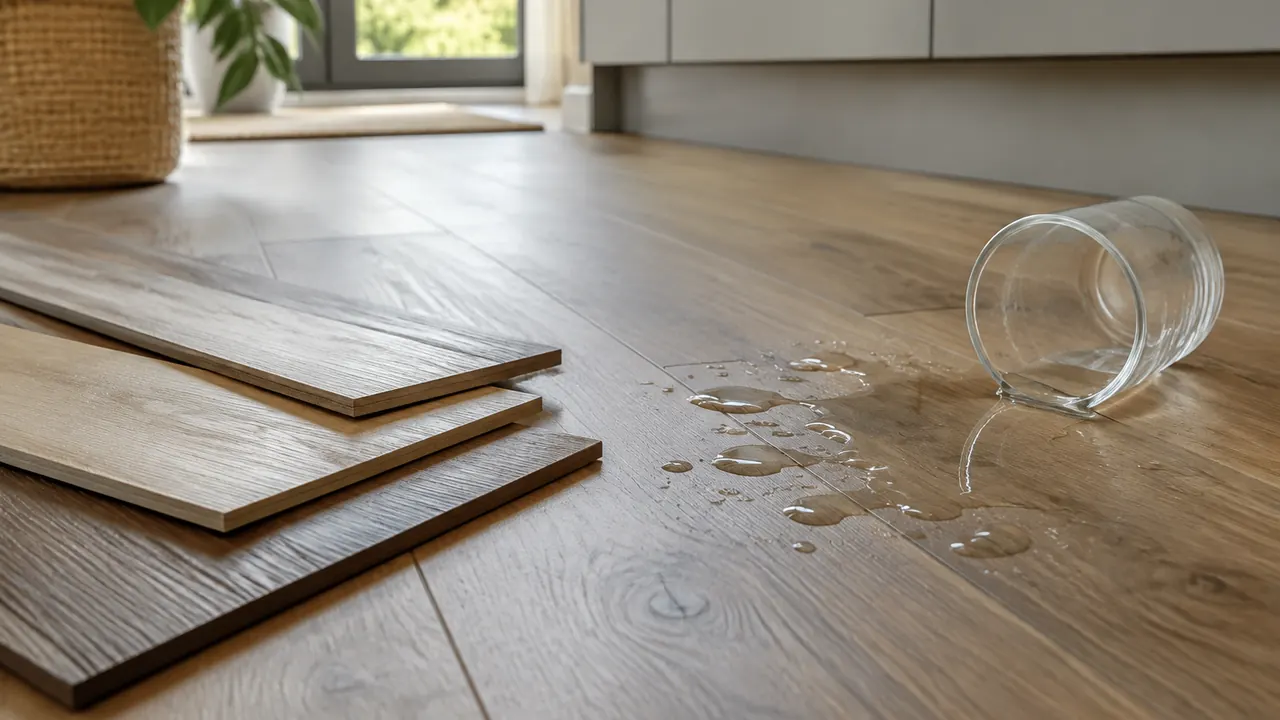
A knocked-over water bowl is one problem. A dishwasher leak that slips beneath the flooring is another. Both can happen in a room sold on the promise of “waterproof” planks, yet only one may fall within the product’s warranty. When shopping in 2026, treat that word as the start of your questions, not the end. It may describe how the plank material tolerates water, how an assembled surface handles a limited spill, or a specific installation backed by narrow conditions.
A waterproof room requires more than a durable finish. Water can travel through joints, around the perimeter, through pipe openings and into the subfloor without visibly damaging the planks above. For households managing pets, kitchen spills or a damp basement, the useful distinction is between a floor that resists damage and an assembly that keeps water out. Those are different promises, with different costs when something goes wrong.
1. Start with what the water claim actually covers
“Waterproof” and “water-resistant” are not interchangeable guarantees across flooring categories. A manufacturer may describe the core as waterproof while excluding water beneath the floor. Another may offer surface-water protection only when approved joints, perimeter details and accessories are installed exactly as directed. A stated exposure period is not permission to leave a spill sitting: care instructions may still require prompt cleanup. Ask which document defines the claim and whether it applies to the exact product number you are buying.
Read three documents together: the technical specifications, installation instructions and residential warranty. The marketing page may emphasize the best feature; the other documents explain the boundaries. Also separate water protection from stain, scratch and wear coverage. A floor can survive a puddle yet retain an odor, show a surface stain or lose coverage because moisture came from below. Save dated copies before purchase, along with the receipt and packaging labels. Online language can change, and similar-looking collections may have different requirements.
- Ask whether protection applies to the plank, assembled joints, perimeter or entire installed floor.
- Look for covered water sources, exposure limits and any required cleanup procedure.
- Confirm whether the remedy includes labor, removal and replacement materials, or only a limited product allowance.
2. Vinyl usually tolerates water better than what is underneath
Many luxury vinyl planks and tiles have water-tolerant materials that will not swell the way wood-based products can. That makes them practical for everyday spills. But rigid-core vinyl, flexible vinyl and sheet vinyl are different constructions, and none automatically creates a waterproof room. Click joints may slow water entry without being certified watertight. Glue-down products introduce adhesive requirements, and sheet vinyl still needs suitable seams, edges and penetrations. Check the complete product specifications rather than assuming every vinyl floor behaves alike.
The distinction becomes important after a long leak. Vinyl may look usable while water remains beneath it, soaking a wood subfloor or creating conditions for mold on susceptible materials. Over concrete, moisture and alkalinity can affect adhesives or other parts of the assembly even if the vinyl itself remains intact. Water entering at the wall can bypass the surface entirely. After a significant leak, drying and evaluating what is underneath matters more than whether the top still looks good.
| Flooring type | What a claim may cover | What still needs checking |
|---|---|---|
| Click vinyl plank | Water-tolerant plank materials; sometimes assembled surface performance | Joint limits, perimeter details and water beneath the floor |
| Glue-down vinyl | Water-tolerant flooring material | Adhesive moisture limits and substrate preparation |
| Sheet vinyl | A continuous water-tolerant surface with fewer seams | Seam treatment, edges, cuts and penetrations |
| Water-resistant laminate | Limited surface-spill protection | Core exposure, time limits and required sealing |
| Engineered wood | Finish resistance or product-specific spill protection | Wood movement, exposed edges and moisture exclusions |
3. Laminate protection depends heavily on joints and edges
Laminate generally has a wood-fiber core beneath a decorative layer and protective wear surface. Products marketed for water resistance may use treated edges, tighter locking profiles or other measures to delay penetration. Those improvements can help with ordinary household spills, but they do not make every laminate suitable for every wet location. When moisture reaches vulnerable core material, swelling can distort edges or joints. Damage may become apparent after the surface has already dried.
For laminate, look closely at where surface-water coverage begins and ends. Instructions may require sealing expansion spaces with a specified combination of compressible backing and flexible sealant, along with special treatment around tubs, doorways or pipes. Other products have different requirements or prohibit certain rooms altogether. Follow the exact system; do not improvise by filling every joint with caulk. A floating floor needs room to move, and the wrong sealant detail can restrict movement or undermine the locking connection. If a retailer says the product handles standing water, ask for the written exposure conditions and exclusions. A demonstration involving a loose plank in a bucket says little about an installed floor with cut edges, transitions and a vulnerable subfloor.
4. Engineered wood remains wood, even with added protection
Engineered wood combines a real-wood surface with supporting layers designed to improve dimensional stability compared with solid wood. That construction does not make it immune to water. Moisture can cause staining, checking, movement or separation between layers, depending on the product and exposure. Some newer products advertise enhanced spill resistance or waterproof performance through particular finishes, cores or joint systems. Evaluate those claims individually rather than extending them to engineered wood as a category.
A finish protects the exposed face, but scratches, bevels, cut ends and perimeter gaps can offer moisture pathways. Pet accidents are especially worth checking because coverage for water does not necessarily include urine, odor or staining. For a household that wants real wood, the practical choice may be a product approved for the specific room, paired with fast cleanup and careful moisture management. Also verify the required indoor temperature and relative-humidity range. Seasonal moisture changes can affect wood even without a visible spill.
- Confirm whether below-grade installation is allowed for the exact engineered-wood product.
- Ask whether pet urine is expressly covered, including staining and associated limits.
- Check approved cleaning methods; steam cleaning and overly wet mopping may be prohibited.
5. Match the installation to the room, not just the plank
Installation details decide whether a promising product performs as intended. The subfloor must meet the manufacturer’s requirements for flatness, soundness, cleanliness and moisture. A click floor is not a shortcut around an uneven base, and extra padding is not automatically helpful. Unapproved underlayment can allow excessive movement and stress the joints. For glue-down flooring, the specified adhesive, preparation method and moisture limits are part of the water-risk calculation, not optional upgrades.
Ask the installer to explain the perimeter, transitions and penetrations before work begins. Some water-resistant systems require particular sealing details while preserving expansion space; others do not authorize a sealed installation. Fixed cabinets or islands can also interfere with movement if they pin a floating floor, depending on the instructions. Ordinary kitchen and bathroom flooring should not be treated as a shower or wet-room waterproofing system. Where true waterproofing is required, the assembly needs an appropriate design, including its junctions with walls and drains.
- Get a written scope covering preparation, moisture testing, underlayment, adhesive and sealing details.
- Confirm who supplies compatible accessories and who documents the finished installation.
- Ask how water beneath the floor would be investigated and whether planks can be removed without damage.
- Keep leftover material for repairs, recognizing that future batches may not match.
6. Solve basement moisture before covering the slab
A basement can have several moisture problems at once: humid air, condensation, vapor moving through concrete, or liquid water entering through cracks and wall joints. A waterproof plank does not fix any of them. Investigate recurring dampness, musty smells, staining or visible water before choosing flooring. Gutters, drainage, plumbing repairs or foundation work may matter more than the surface material. A dehumidifier can help control indoor humidity but cannot stop bulk water entry.
For concrete, use the moisture-testing methods required by the flooring and adhesive manufacturers. A handheld meter may help locate areas of concern, but it is not necessarily an accepted substitute for specified testing. Ask for the results, locations, dates and applicable limits in writing. A polyethylene vapor retarder may be required or permitted beneath certain floating floors; other installations need a different approach. Do not assume a thin sheet addresses hydrostatic pressure or a persistently wet slab. Excess moisture may call for a compatible mitigation system installed under controlled conditions, or for delaying the project until the source is corrected. Wood subfloors need moisture evaluation too, especially over crawl spaces or after a leak. Covering damp material can hide the warning signs while the underlying problem continues.
7. Read exclusions as a household risk checklist
Before paying, search the warranty for flooding, plumbing leaks, appliance leaks, standing water, moisture from below, mold, pet accidents and improper installation. These are common areas for limits or exclusions, but wording varies. Check whether coverage changes in bathrooms, laundry rooms or basements, and whether it is transferable or prorated. A long headline warranty can still provide a narrow remedy. An installer’s workmanship warranty is separate from the manufacturer’s product warranty.
Choose around the event your household is most likely to face. For pets and small spills, prioritize explicit surface-spill and pet coverage, cleanable joints and prompt cleanup. For a basement, prioritize moisture diagnosis, approved below-grade use and a compliant assembly. For an appliance leak, recognize that no plank label replaces leak detection and timely repairs. Keep water bowls on suitable trays, use mats that the manufacturer permits and periodically check underneath them. If a substantial leak occurs, stop the source and arrange prompt evaluation and drying rather than waiting for visible flooring damage. The best purchase is not the boldest water claim. It is a documented match between the material, the room, the installation and the protection you actually need.
Check current product warranties and installation instructions before purchase, and consult a qualified flooring or moisture professional about site-specific conditions.
AI Assistance Used — AI assistance was used in researching and drafting this article. It was reviewed, edited, and fact-checked by Jordan Singh before publication.