Walking Pad or Treadmill: What to Check Before Buying
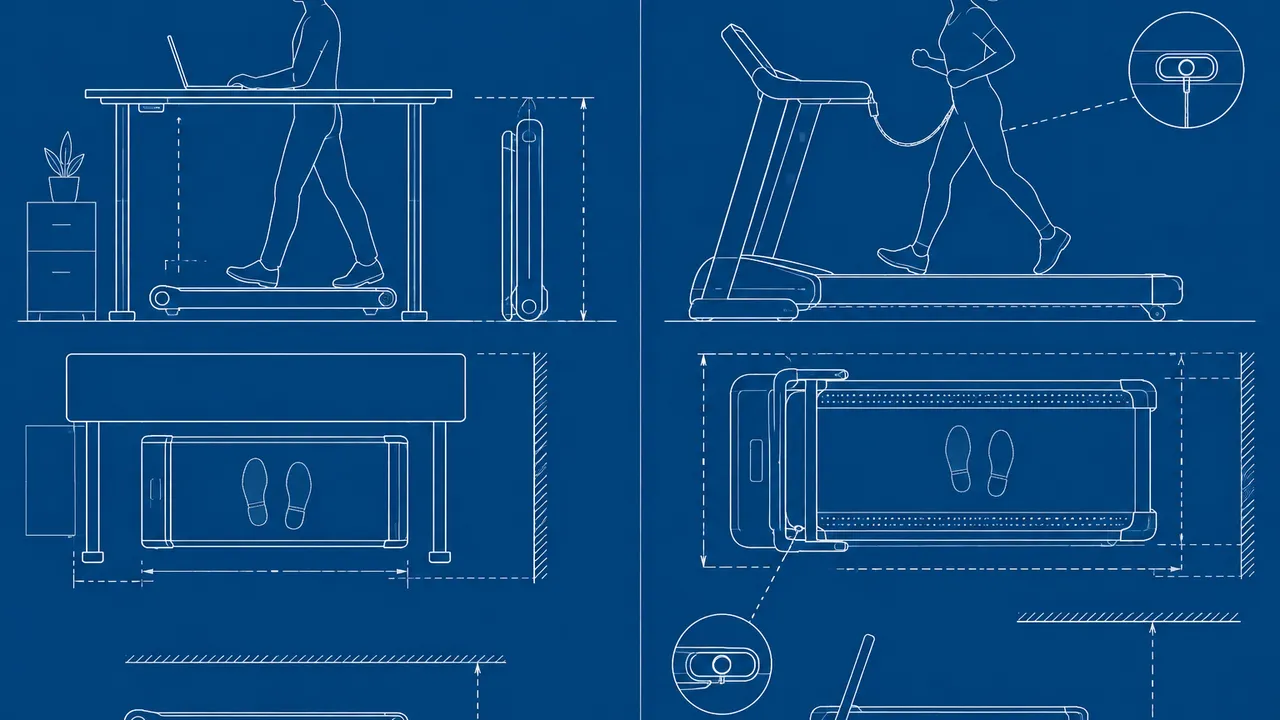
A walking pad can make a standing desk more useful, while a treadmill can support brisk walks and running workouts. But product names blur the differences. Some compact machines have folding rails; others offer speeds that seem ambitious for their short belts and minimal support. The trade-offs become clearer when you compare actual operating requirements rather than photographs or advertised horsepower.
As of October 2026, the best buying approach remains matching the machine to its hardest intended job. Decide whether that means slow desk walking, purposeful exercise or running, then check the current manufacturer’s manual—not just a retailer’s comparison chart.
1. Measure the usable belt, not the machine
Overall dimensions tell you whether a machine fits the room. Usable belt dimensions tell you whether you fit the machine. Look for “running surface” or “walking area,” and confirm that the measurement excludes side rails and motor covers. A wide housing can conceal a surprisingly narrow moving belt.
Compact pads commonly offer roughly 16–20 inches of belt width and 40–50 inches of length. Running treadmills often provide about 20–22 inches by 55–60 inches. These are shopping ranges, not safety guarantees: taller users, longer strides and faster speeds may need more room. Try the intended pace before buying whenever possible.
For desk setups, add the deck height to your usual standing position. Your desk must rise enough to keep the keyboard near elbow height, and crossbars must not obstruct the machine or your feet.
- Check space for your natural stride without crowding either end.
- Allow manufacturer-specified clearance behind and beside the machine.
- Measure desk opening width, desktop height and overhead clearance.
2. Match speed limits to the actual workout
A machine’s maximum speed is not proof that it is suitable for running. Many desk-oriented pads top out around 3–4 mph; some hybrid models go faster only with their rails raised. Confirm permitted activities, operating modes and speed limits in the manual for the exact model.
For desk work, a low starting speed and small adjustment increments matter more than a high ceiling. For exercise, consider incline, sustained-use limits and whether speed changes feel controlled. Ask about session-length limits and required cooldown periods; compact machines are not automatically designed for all-day use.
Check the user-weight limit alongside intended speed and session duration. A weight rating alone does not establish endurance. If several household members will share the machine, ask whether consecutive sessions require a cooling interval.
| Main use | Prioritize | Verify before buying |
|---|---|---|
| Desk walking | Low starting speed; easy controls | Fits desk; intended session duration |
| Purposeful walking | Stride room; accessible handrails | Comfortable brisk pace; incline operation |
| Running | Longer belt; stable frame | Explicit running approval; speed with rails raised |
3. Treat handrails and stopping controls as essentials
Handrails help with mounting, dismounting and recovering balance; a desk is not a substitute. Rail-free pads can suit slow walking, but offer less support if attention slips. If you need balance assistance, seek clinical guidance before choosing one. Never assume a folding rail locks securely without checking its instructions.
Look for an accessible stop control and understand the emergency-stop system. A tethered safety key should attach to clothing when supplied. A wireless remote alone may be misplaced or dropped. Check the US Consumer Product Safety Commission’s recall database using the model name and number. Confirm that replacement keys and remotes remain available.
Review startup behavior too: does the belt begin at its lowest speed, provide a countdown or resume a previous setting? Confirm what happens after a power interruption and whether app controls require an internet connection.
- Test stopping procedures at the lowest speed before normal use.
- Keep children and pets away during operation.
- Disconnect power and secure controls after use, following instructions.
4. Check noise, storage and the route inside
Noise comes from the motor, belt and footfalls; floor vibration may bother downstairs neighbors more than it bothers you. Advertised decibel readings are difficult to compare without matching speed, user load, floor type and microphone distance. Seek demonstrations with someone actually walking. A suitable protective mat may reduce vibration, but will not soundproof an apartment.
Check operating dimensions separately from folded dimensions, including the clearance needed to fold or roll the machine. “Under-bed storage” works only if the entire unit clears the bed frame. Verify whether upright storage is permitted; some pads must stay flat. Delivery weight, stairs, doorway turns and wheel placement determine whether storage is practical. Also follow the manual’s outlet and extension-cord restrictions.
Plan access for maintenance, not just storage. Read the belt-centering, tensioning and lubrication instructions before buying; check required tools, lubricant type and service intervals. A tight desk alcove may make routine adjustments awkward.
5. Price the return before placing the order
A compact machine can still be expensive to return, especially if it requires freight shipping. Before paying, read the seller’s policy for your ZIP code and the exact listing. Marketplace sellers may have different terms from the manufacturer. Save the policy and order confirmation in case the listing changes.
Distinguish a trial period from a warranty: a warranty may cover a defective component without covering dissatisfaction, labor or transportation. Ask who arranges pickup and what packaging is required. Keep the carton until you know the machine works for you. For warranty-shopping guidance, consult the Federal Trade Commission’s consumer website.
Ask how repairs work where you live: a parts-only remedy may mean installing a motor yourself or hiring a technician. Confirm local service availability and whether troubleshooting requirements could extend beyond the return window.
- Get a written return-shipping estimate or calculation method.
- Check restocking fees and deductions for original delivery.
- Confirm whether assembly, use or missing packaging affects eligibility.
- Compare parts, labor and in-home service coverage.
Verify specifications, recalls, prices and return terms with official sources before purchasing; this guide is not personalized medical advice.
AI Assistance Used — AI assistance was used in researching and drafting this article. It was reviewed, edited, and fact-checked by Leah Fornier before publication.