Before Ordering a Walk-in Tub: Check Water, Power and Doorway Access
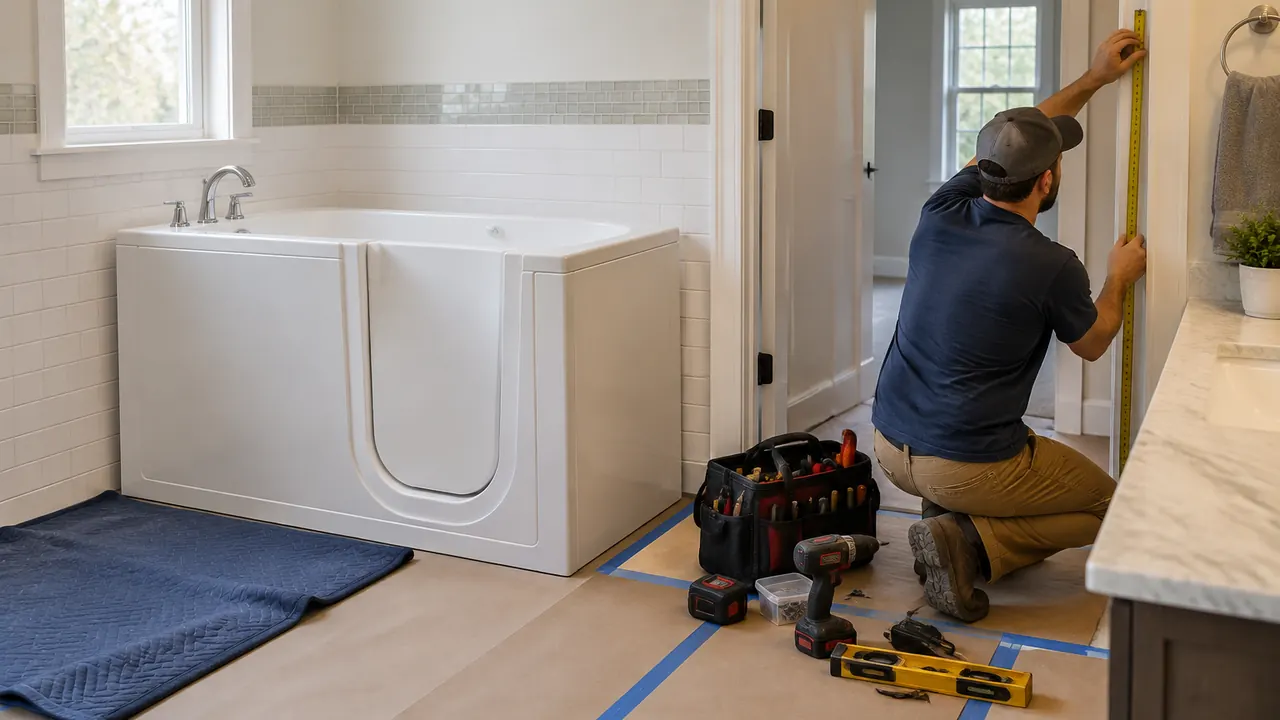
A walk-in tub can make stepping into a bath easier, but buying one is also a plumbing, electrical and access project. The tub must reach the bathroom, fit its intended space, receive enough hot water and drain reliably. Its door must work for the person using it, and its equipment must remain reachable after the surround is finished. A model that looks suitable in a showroom can become an expensive mismatch when those details are checked too late.
For a purchase in 2026, start with the exact model’s current installation manual rather than a brochure or an advertised starting price. Have the installer inspect the home and turn the findings into a written scope. Before paying a deposit, understand both the construction bill and the everyday routine: entering, closing the door, filling, bathing, draining and getting out.
1. Measure the entire delivery route, not just the bathroom
Ask for the tub’s shipping dimensions, unpacked dimensions and weight, plus the manufacturer’s permitted handling positions. The listed bathing dimensions do not necessarily include projecting fittings, the frame or protective packaging. Walk the route from the unloading point through exterior doors, hallways, corners and stairs. A doorway that is wide enough on paper can still fail when the crew needs room to turn a long, rigid unit.
Have the installer record the narrowest clear opening, not simply the door’s nominal size. Hinges, stops, handrails and ceiling height at stair landings can matter. Confirm which components may be removed without damage or warranty problems. If a jamb, wall section or window must come out, price the removal and complete restoration before delivery. Also identify who is responsible if the tub arrives but cannot reach its destination.
- Measure clear width and height at every opening, along with turning space before and after it.
- Confirm access for the delivery vehicle, unloading equipment and the crew carrying the tub.
- Specify floor protection, removal of the old fixture and disposal of packaging and demolition debris.
- Ask whether delivery is curbside, inside the home or directly into the prepared bathroom.
2. Check usable hot water against the tub’s actual demand
Do not assume an existing water heater can support the new tub because it handled the old one. Ask how much mixed water the selected model needs at its intended bathing level with a person seated inside. Published capacity may describe a different fill condition. The amount of hot water required depends on incoming cold-water temperature, the heater’s storage temperature and the desired bath temperature, not just the tub’s size.
A plumber should compare that demand with the heater’s usable output, recovery and other household loads. For a tankless unit, verify the flow it can sustain at the required temperature rise, especially with colder winter inlet water. A heater inside a jetted tub may help maintain bath temperature; do not assume it can heat a cold fill. Avoid treating a higher water-heater setting as a simple fix, because it increases scalding risk and may require appropriate mixing protection.
- Request the model’s recommended hot-water supply and the assumptions behind that recommendation.
- Ask whether showers, laundry or dishwashing must be paused while the tub fills.
- Include any heater, mixing-valve, piping or utility-capacity upgrade in the installed quote.
- Have the plumber verify temperature-limiting protection required by local code and the manufacturer.
3. Get model-specific electrical requirements
Walk-in tubs vary substantially in electrical needs. A basic soaking model may not need an electrical connection for the tub itself, while pumps, air blowers, heaters, lights and powered drains can change the requirements. Get the wiring diagram for the exact package being ordered. A nearby bathroom receptacle is not proof that the existing circuit is suitable, available or permitted for the installation.
Have a qualified electrician check the required voltage, circuit count, amperage, grounding, ground-fault circuit-interrupter protection and any disconnect requirements. Follow the current manufacturer’s instructions and locally adopted electrical code; do not assume every optional feature can share one circuit. Panel space alone also does not establish adequate electrical capacity. The quote should include the cable route, necessary openings, permits and restoration, rather than leaving those costs until the tub is already in the bathroom.
- Ask who performs the electrical work and whether that contractor is appropriately licensed locally.
- Require the written price to identify included circuits, protection and any panel work.
- Confirm controls and electrical connections remain accessible without unsafe reaching or improvised extension cords.
| Tub configuration | What to verify | Possible scope change |
|---|---|---|
| Soaking only | Whether any included feature needs power | Little or no tub-specific electrical work |
| Water jets or air jets | Pump or blower circuit specifications | New protected circuit and wiring |
| Added bath heater | Load and separate-circuit instructions | Additional circuit or capacity assessment |
| Powered drainage | Power needs and outage procedure | Wiring and a documented exit plan |
4. Examine drainage and the space beneath the tub
A fast-drain feature cannot compensate for every problem downstream. The plumber needs to inspect the existing drain location, trap, venting and accessible piping, then compare them with the installation instructions. Moving a drain across an open basement ceiling is a different job from moving one in a concrete slab. Older piping, restricted flow or previous alterations can add work that a photo-based estimate misses.
Ask how the tub connects to the household drainage system and whether any advertised draining performance depends on particular conditions. Multiple outlets or a powered drain may require specific connections; they do not automatically mean the existing plumbing can accept the discharge as intended. The contractor should also assess the floor and support requirements for the filled tub and occupant. Identify any structural review, subfloor repair or leveling work before installation, and require leak and drainage testing before concealed areas are closed.
- Document whether the price includes drain relocation, trap and vent changes, and access openings.
- Ask how concealed damage or unsuitable piping will be priced and approved if discovered.
- Confirm who repairs ceilings, tile, flooring and waterproofing disturbed by the plumbing work.
- Request a demonstration of normal drainage and the prescribed procedure if powered equipment fails.
5. Try the door, seat and exit routine before buying
An inward-opening door generally needs space inside the bathing well to swing; an outward-opening door needs clear space in the bathroom. Neither design is automatically the right choice for every user. Door geometry, latch effort, threshold height, seat position and clearance for feet or knees all matter. If possible, try a dry demonstration unit with the same door and seat arrangement, using the mobility aid normally needed at home.
Most conventional walk-in tubs require the user to enter before filling and wait for the water to drain before opening the door. Do not assume an outward-opening door provides a safe emergency exit while the tub is full. Ask about the model’s specific restrictions, assistance needs and power-failure procedures. Someone who cannot safely tolerate the waiting period, operate the latch or transfer onto the seat may need a different bathing arrangement, assessed with an occupational therapist or another qualified professional.
- Reach the latch, faucet, hand shower and drain controls while seated, without twisting awkwardly.
- Check clearance for a walker, wheelchair, caregiver and nearby toilet or vanity.
- Verify locations and support for grab bars; do not treat an unapproved door or rim as a handhold.
6. Make fill-and-drain estimates meaningful
Ask for separate fill and drain estimates for the selected model, with the conditions behind each estimate. Filling depends on usable faucet flow, supply pressure, pipe restrictions and available hot water. Draining depends on water volume, the tub’s outlet arrangement and the home’s plumbing. A showroom demonstration or a best-case advertised time may not represent your bathroom.
For a rough fill estimate, divide the expected fill volume by the installer’s estimated delivered flow at the chosen faucet. That calculation is only a planning tool: temperature adjustments and real operating conditions can change the result. Ask the contractor to time both filling and draining during commissioning and show you how to use the controls. Consider the whole seated waiting period, not just the bath itself, especially if getting chilled, tired or uncomfortable is a concern.
7. Require an installed price and a service-access plan
A useful quote names the exact model, options and included work, not simply a tub price plus an installation allowance. Ask for a site-based proposal with exclusions, payment milestones, cancellation terms and the procedure for approving changes. Financing terms should be reviewed separately from the installation scope, including the total repayment cost.
Future repairs deserve space in today’s plan. Have the installer mark access panels and required working clearances for pumps, valves, electrical components and door hardware. A tiled surround or tightly placed vanity should not block prescribed access. Confirm who handles warranty service and which labor, travel or finish-restoration costs may remain yours.
- Include delivery, demolition, disposal, plumbing, electrical work, permits, inspections and finish repairs.
- List allowances and exclusions for hidden damage, structural work and water-heater upgrades.
- Identify responsibility for scheduling trades and resolving damage or failed inspections.
- Require operational testing, recorded fill-and-drain times, user instruction and warranty documents.
- Keep the final specifications, approved changes and service contacts with the purchase contract.
Before committing, verify current prices, contract terms and model requirements, and have qualified local professionals confirm code compliance and suitability for your home.
AI Assistance Used — AI assistance was used in researching and drafting this article. It was reviewed, edited, and fact-checked by Lisa Barber before publication.