Accessible Concert Seating: What to Confirm Before Buying Tickets
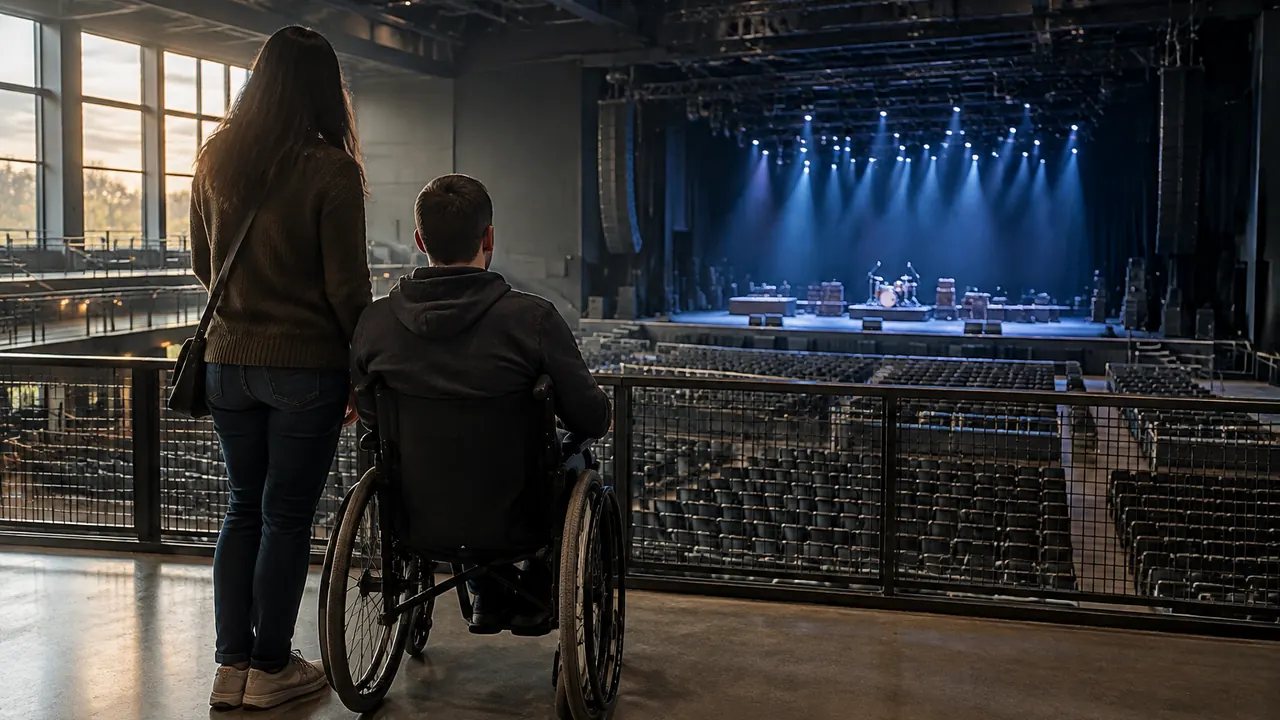
An accessible concert ticket can identify a wheelchair space or another seating feature without explaining how you will reach it, what you will see when fans stand or whether an accessible restroom is nearby. Those details matter as much as the row and section. A venue may have a usable entrance but a long detour from parking, or a platform whose view changes with the tour’s production equipment.
For concerts in 2026, start with the venue’s accessibility page, then confirm the arrangements for your specific show with its accessibility or guest services team. Ticketing maps, resale listings and older fan photos may not reflect the current setup. Explain the features you need rather than assuming a label covers them. Before paying, get important answers in writing and save them with your tickets.
1. Find out exactly what the ticket represents
Accessible seating is not one interchangeable product. A wheelchair location generally provides floor space for someone who remains in their mobility device; it may not include a fixed seat. A designated aisle seat may have a folding or removable armrest but still require stairs. Other listings may describe limited-step seating or a companion chair. Ask the venue to interpret the actual section, row and seat number.
Do this before choosing a ticket category or accepting a substitute offered by a seller. If you plan to transfer, ask about the seat’s armrests, height and nearby storage for your mobility device. Confirm whether a scooter can remain at the location without blocking circulation. An unfamiliar symbol on a mobile seating map is a reason to ask, not a reliable description of the space.
- Is this a wheelchair space, a transfer seat, a companion seat or another seating type?
- Can I reach this exact location without steps, including within the row?
- What usable dimensions and turning space are available for my mobility device?
- If I transfer, where will my device stay, and who can retrieve it?
2. Trace the entire step-free route
Ask staff to walk you through the journey from your arrival point to your seat, not just confirm that the building has an elevator. Routes can cross steep approaches, uneven pavement, heavy doors or crowded concourses. A public entrance shown on a map may not be the accessible entrance used for that event. Confirm which doors open when and whether early-entry packages use the same accessible route.
Then check the return trip. Elevators may develop long queues after the encore, and temporary crowd controls can change access to an exit or pickup area. Ask what happens if an elevator goes out of service and how staff would assist you during an emergency. Do not assume an ordinary passenger elevator will operate during an evacuation. Anyone who cannot use stairs needs a clear explanation of the venue’s procedures.
- Which entrance should I use, and how far is it from the designated drop-off point?
- Does the route include stairs, ramps, thresholds or outdoor surfaces that could be difficult?
- How many elevators are involved, and is there another usable route if one fails?
- Where should I meet staff if I need directions or help reaching the seating area?
- Will the same step-free route remain available after the show?
3. Check sightlines for a standing crowd
A clear view in an empty arena does not guarantee a clear view during a concert. Ask whether the location provides a sightline over spectators who stand, especially if you will remain seated. Under applicable ADA assembly-area design requirements, wheelchair-space sightlines must account for standing spectators where standing is expected. That is different from a ticket seller simply describing a seat as unobstructed.
Request a recent photo taken from seated eye level at the proposed location, while recognizing that it may show a different production. Ask about the specific stage layout, speaker towers, railings, camera platforms and mixing desk. Floor seating can be particularly challenging when the crowd stands. If staff cannot confirm the setup yet, find out when production information will be available and whether any seat-change option exists before buying.
- Can someone seated here see the performance when the surrounding audience stands?
- Could a railing, companion chair or temporary barrier block my view?
- Who should I contact during the concert if the actual setup obstructs the location?
| Listing or feature | What still needs confirmation |
|---|---|
| Raised accessible platform | Seated view over standing fans and platform railings |
| Accessible floor location | Obstructions from crowds, cameras and production equipment |
| Side-stage accessible section | View of performers, screens and the full stage |
| Unobstructed-view label | Whether the assessment accounts for a seated viewer |
4. Keep companions and ticket procedures together
Confirm companion arrangements before splitting an order across accounts or sellers. For covered venues, ADA ticketing rules generally allow a buyer to purchase up to three companion seats with a wheelchair-space ticket when those seats are available. Rules address adjacent placement and alternatives when that placement is unavailable; they do not guarantee unlimited group seating together. Ask where each person will sit, whether the companion seat is movable and how the venue handles larger parties.
Accessible tickets generally must be sold through the same methods and sales stages as other tickets. Venues cannot charge extra for accessible seating, although prices can differ across seating categories. A seller may ask whether you need the accessible features but cannot require proof of disability as a condition of purchasing an accessible ticket. If the map shows none available, contact the box office rather than buying an unsuitable seat on the assumption that staff can move you later.
- Can you identify my space and every companion seat before I authorize payment?
- If accessible inventory is unavailable online, what official purchasing options remain?
- For a resale or transferred ticket, can you verify the location and its accessible features?
- What are the exchange or refund terms if a promised feature is unavailable?
5. Verify restrooms and everyday essentials
A restroom marked accessible may be on another level or beyond a crowded concourse. Ask for the closest usable restroom to your seat and whether reaching it requires an elevator or staff-controlled door. If you need assistance from a companion, ask about single-user or family restrooms and who may use them. Neither label guarantees an adult changing table or a powered door.
Describe any specific fixture or clearance you need and ask staff to verify it, rather than relying on a general assurance. Also check the route to concessions, drinking water and any medical services station. If you must bring medication, medical equipment or supplies, review the show’s bag and security procedures in advance. Explain storage, refrigeration or electrical needs explicitly; do not assume the venue can provide these services or that an outlet near your seat is available for use.
- How far is the closest accessible restroom, and is the route step-free throughout?
- Is there a private restroom where my companion can assist me?
- Does that restroom have the transfer space or changing equipment I need?
- What screening process applies to my medical bag, medication or equipment?
6. Plan parking, drop-off and the trip home
Accessible seating and accessible parking are separate arrangements. A concert ticket does not reserve a parking space, and a disability parking placard does not necessarily waive event parking charges. Ask whether accessible spaces require advance purchase, are first-come, first-served or use a particular lot entrance. Check the posted permit requirements and whether an accessible shuttle connects any remote parking area to the venue.
For a van with a ramp or lift, verify vehicle clearance and the availability of an appropriate access aisle. If arriving by rideshare, taxi or a friend’s vehicle, get the exact accessible drop-off and pickup locations. A convenient arrival curb may close after the show. Build in time for slow elevator queues and vehicle congestion, and check the last departure if using public transit or a booked paratransit service.
- Which lot offers the shortest usable route, and are spaces reservable or only parking admission?
- Can my vehicle enter the garage and deploy its ramp or lift safely?
- Does the route from parking include curbs, steep slopes or uncontrolled street crossings?
- Where can I wait safely if my accessible ride is delayed after the venue closes?
7. Request accommodations and save a backup plan
Contact the venue early for services such as an assistive listening device, sign language interpretation or other effective communication arrangements. Ask which organization handles the request: the venue, promoter or another event operator. Advance notice can help staff arrange services, but a missed preferred deadline is a reason to ask what remains possible, not to assume assistance is unavailable. Confirm any device checkout requirements and whether interpretation affects the best seating location.
Before show day, save the accessibility contact’s reply, your exact entrance, a seating screenshot and a working phone number. Ask how to reach guest services once inside, especially if mobile reception is weak. If a promised feature is missing, explain the specific barrier and ask staff for a usable solution before accepting a move. A replacement location should meet your access needs, not merely put you somewhere else. Keep records of unresolved problems and any extra expenses for a follow-up complaint.
Confirm current event layouts, accommodation procedures, ticket terms and parking prices directly with the venue before purchasing.
AI Assistance Used — AI assistance was used in researching and drafting this article. It was reviewed, edited, and fact-checked by Nadia Clarkson before publication.