The Used-Car Inspection to Arrange Before Leaving a Deposit
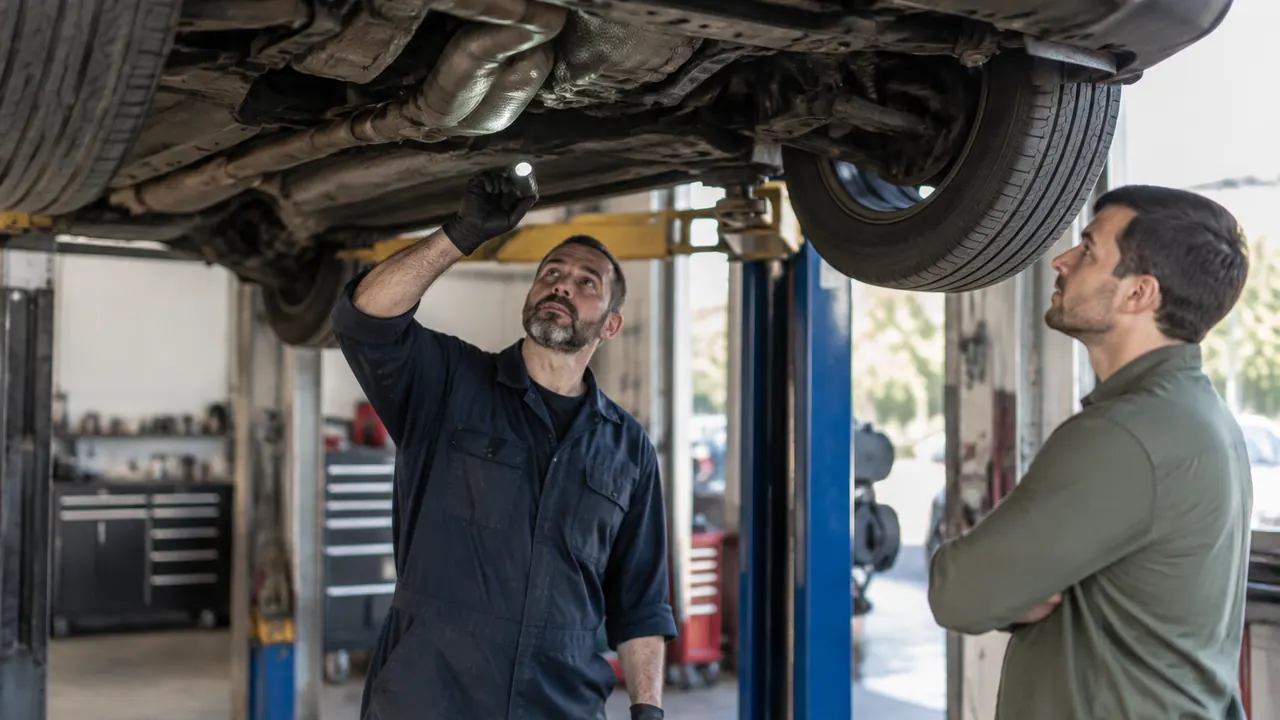
The best time to negotiate a used-car inspection is before you leave a deposit, not after the seller has your money. A freshly detailed cabin, a smooth trip around the block and a clean vehicle-history report can all be reassuring. None establishes that the car is mechanically sound, free of hidden damage or worth the asking price. An independent pre-purchase inspection gives you a better basis for deciding whether to buy, renegotiate or walk away.
For a purchase in 2026, that inspection should fit the vehicle: a conventional gas car, hybrid and battery-electric vehicle need overlapping but different checks. The central rule remains simple. Choose a qualified mechanic who works for you, establish access to the car, and put any deposit conditions in writing before paying. You are buying an assessment of the car’s present condition, not a guarantee that nothing will fail later.
1. Establish inspection access before discussing a deposit
Ask the seller whether your chosen shop can inspect the vehicle before you make a binding purchase commitment. Explain that the appointment needs enough time for a lift inspection, diagnostic scan and road test where practical. A dealer’s own inspection or certification is useful background, but it is not a substitute for an assessment commissioned by you. With a private seller, agree on whether the seller will deliver the car or accompany you.
Settle transportation, permission and timing before booking. A shop may need the seller’s authorization to drive the vehicle; confirm insurance arrangements for any transport or test drive. If the car cannot leave the premises, ask whether a mobile inspector can provide adequate access. Without a lift or suitable equipment, important areas may remain unchecked. A seller who refuses reasonable independent access leaves you with uncertainty that a discount cannot necessarily solve.
- Confirm the VIN, inspection location, appointment window and seller contact information.
- Ask that the engine remain cold before arrival, if possible, and that faults not be cleared.
- Agree that inspection does not authorize repairs, disassembly or other work without permission.
- Get permission to share the inspection report with the seller if you request repairs or renegotiate.
2. Make any deposit conditional, specific and refundable
Avoid assuming that a deposit is refundable because the sale is unfinished. Rights depend on the agreement, seller type and applicable state law. There is generally no federal three-day cancellation right for a vehicle bought at a dealership. If the seller requires a holding deposit, obtain a signed agreement before paying that identifies the car by VIN, the amount, how long it will be held and whether it applies toward the purchase price.
A useful condition says you may cancel after an independent inspection, by a stated deadline, and receive the full deposit back. Avoid language requiring a “major defect” unless the agreement clearly defines it; buyers and sellers can disagree about what qualifies. Specify how you must give cancellation notice, when the refund is due and how it will be paid. Include what happens if the seller prevents inspection or the shop cannot complete it on schedule.
For example, request a term allowing cancellation based on inspection results at your discretion, with a full refund within a specified number of business days. That is a negotiating request, not a universal legal entitlement. Ensure the receipt and purchase documents do not contradict it. Keep signed copies and payment records; a card payment alone does not guarantee recovery.
3. Hire the right mechanic and define the inspection
Choose an independent shop familiar with the model, powertrain and common repair issues. Ask who will perform the inspection, what equipment is available and whether the shop regularly handles pre-purchase work. An ordinary oil-change check is not the same service. Request a written scope, price and expected turnaround before booking; fees vary with location, vehicle complexity and the testing required. Paying the shop directly helps keep its assignment clear: report to you.
The deliverable should distinguish safety concerns, active faults, overdue maintenance and items that merely deserve monitoring. Ask for photographs, diagnostic findings and repair estimates or realistic ranges, with any need for further diagnosis identified. Give the mechanic the listing, service records and your observations, but do not ask for a simple “good car” verdict. An inspection samples accessible systems at a particular time; intermittent faults and internal wear may escape detection.
Ask whether the shop can scan more than the engine computer. Transmission, airbag, braking, body and driver-assistance modules may hold relevant faults. Recently cleared codes or incomplete emissions readiness monitors deserve explanation, although a disconnected or replaced battery can also cause resets. Neither a clean scan nor completed monitors prove the absence of problems.
| Inspection option | Main advantage | Limitation to clarify |
|---|---|---|
| Independent shop | Lift access and broader diagnostic equipment | Transport and appointment availability |
| Mobile inspector | Can inspect at the seller’s location | Underbody access and testing equipment |
| Model or powertrain specialist | Experience with complex or unusual systems | Cost, distance and scheduling |
4. Request a lift inspection, not just a checklist
The underside often tells a different story from the paint. Ask the mechanic to inspect structural areas, suspension mounting points, brake and fuel lines, and evidence of leaks or collision repairs. Surface rust is different from corrosion that weakens a component; the report should explain the distinction. Uneven tire wear may indicate alignment, suspension or damage issues, while fresh undercoating can limit visibility rather than prove sound condition.
The inspection should also connect findings to likely ownership costs. A car may drive acceptably while needing tires, brakes, a timing-belt service or several fluid-related repairs soon. Ask what is unsafe now, what needs prompt attention and what can wait. For inaccessible components, establish whether extra testing is warranted before purchase instead of treating an unchecked box as a clean bill of health.
- Brakes and tires: measure accessible pad and rotor condition, tread depth, tire age and uneven wear; inspect hoses and lines.
- Steering and suspension: check play, damaged boots, worn joints, leaks and wheel-bearing symptoms.
- Engine and transmission: inspect leaks, cooling-system condition, mounts, fluid condition where serviceable, and shifting behavior.
- Body and safety equipment: look for repair evidence, water intrusion, corrosion, warning lights, belt damage and airbag-system faults.
- Maintenance: compare available records with the manufacturer’s schedule, especially costly age- or mileage-based services.
5. Give hybrids, EVs and connected features extra attention
For a hybrid or EV, find a technician trained and equipped for that vehicle’s high-voltage system. Ask for available battery-health information, relevant fault scans and checks of thermal management and charging equipment. Dashboard range is not a battery-health certificate: temperature, driving history and climate-control use affect it. A reported state-of-health figure also needs context about the test method and manufacturer; it is not equally available or comparable across models.
Have the inspector examine accessible battery-enclosure areas for impact damage and verify charging operation where practical. A brief plug-in test does not establish sustained fast-charging performance. Check remaining battery and powertrain warranty coverage by VIN, including transfer rules and capacity-loss terms. For any modern car, verify that cameras, sensors, infotainment and climate controls function. Windshield or collision repairs may require driver-assistance calibration; ask for documentation rather than assuming no warning light means correct calibration.
- Confirm which charging cables, adapters and keys are included and inspect their condition.
- Ask how seller accounts will be removed and vehicle access transferred securely.
- Verify which advertised software features transfer and which require a new subscription.
- Do not handle orange high-voltage cables or attempt your own battery-enclosure inspection.
6. Use a deliberate test drive to gather clues
Arrange a route that includes local streets, rough pavement and highway speeds when safe, legal and permitted. Start with the audio off. Before moving, check warning-light behavior, seat adjustment, visibility, mirrors and essential controls. A cold start can reveal rough running, smoke or noises that diminish after warm-up. Note conditions and symptoms instead of diagnosing them yourself, and pass those observations to the mechanic.
During the drive, assess acceleration, shifting, steering response, braking and vibration. The car should not require constant steering correction on a reasonably level road. Listen for clunks over bumps and humming that changes with speed. Test heating and air conditioning, then look for new leaks or unusual odors after parking safely. Do not perform emergency maneuvers, let go of the wheel or deliberately trigger collision-avoidance systems. If braking, steering or another safety function feels compromised, stop safely rather than completing the route.
7. Treat history reports as leads, then make your decision
A vehicle-history report can flag reported accidents, title brands, odometer discrepancies and some service events. It cannot prove that every accident, flood exposure or repair was reported, or that a recorded repair was done correctly. Information can be delayed or missing. Match the VIN on the car and documents, examine the title, and verify the seller’s authority to sell. Resolve liens and title-transfer requirements through the relevant state agency and lienholder before completing payment.
Check the VIN for open recalls through NHTSA and ask a manufacturer-authorized dealer about applicable campaigns. Read warranty documents and, at a dealership, the FTC Buyers Guide. Use the inspection to price repairs and decide whether the total cost still works. If you cancel, follow your deposit agreement’s notice procedure and deadline. Keep the report and cancellation record. Walking away from unresolved damage, inaccessible systems or unclear paperwork is a legitimate outcome.
| Evidence | What it can tell you | What it cannot establish |
|---|---|---|
| History report | Events supplied to its databases | That unreported damage never occurred |
| Service records | Documented maintenance and repairs | Current condition of every component |
| Independent inspection | Observed condition and test results | Freedom from future failures |
| Recall lookup | Listed open safety recalls | Overall mechanical soundness |
Before paying, verify current inspection pricing, warranty coverage, deposit terms and state requirements, and consult a qualified mechanic or attorney when needed.
AI Assistance Used — AI assistance was used in researching and drafting this article. It was reviewed, edited, and fact-checked by Jordan Singh before publication.