Buying Used Baby Gear: What to Verify Before Paying
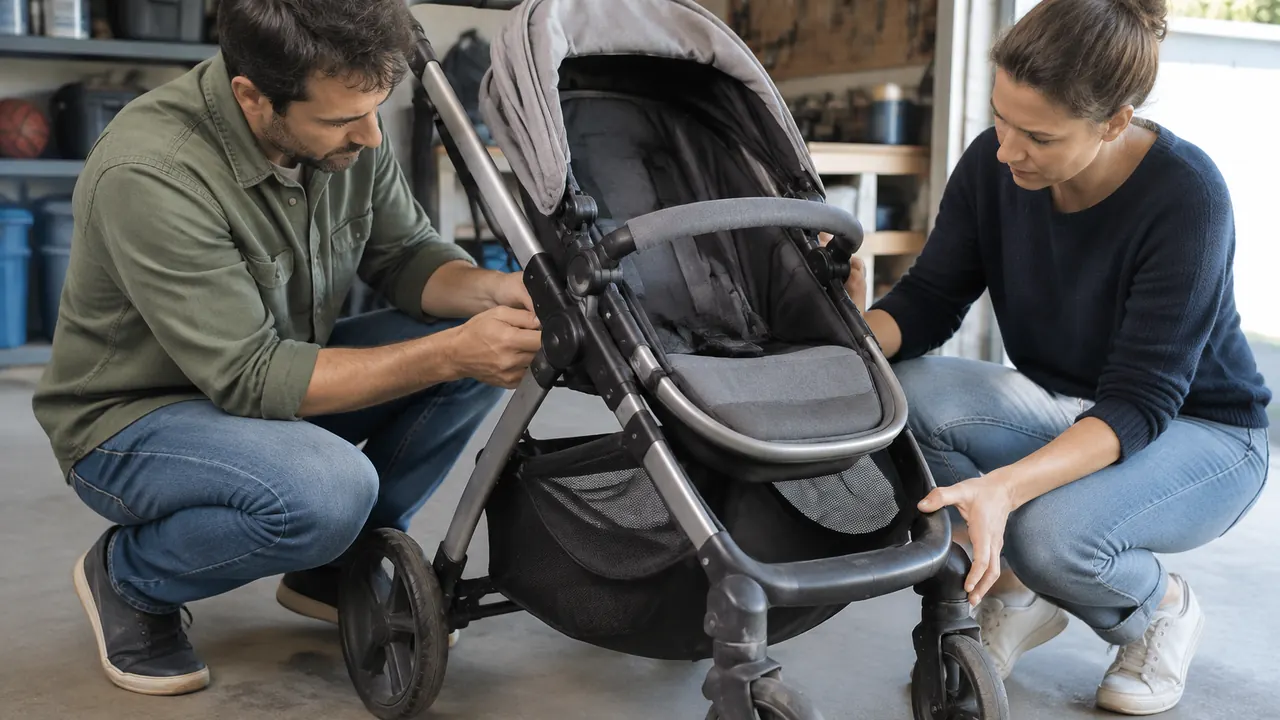
A secondhand stroller or high chair can stretch a family budget, but a clean cover and smooth sales pitch do not establish safety. The checks that matter are often underneath: a model label, a manufacturing date, an intact locking mechanism and hardware that matches the manufacturer's instructions. Some problems are repairable with approved parts. Others make the item unsuitable regardless of price.
For families shopping in 2026, the key distinction is between something that still works and something that meets applicable safety requirements. An older product may look almost new while predating a major standard change. Before paying, identify the exact product, investigate recalls, download its instructions and inspect its essential parts. Apply extra scrutiny to car seats and sleep products, where hidden history or an incompatible component can undermine protection.
1. Establish identity before discussing price
Ask the seller for clear photographs of every identification label before arranging pickup. You need the brand, model name, model number and manufacturing date; some recall notices also specify serial numbers, lot codes or date ranges. A listing title such as “deluxe travel system” is not enough. Similar-looking products can have different instructions, hardware and recall status.
Search the Consumer Product Safety Commission's recall database at CPSC.gov for most baby gear. For car seats, check the National Highway Traffic Safety Administration at NHTSA.gov, along with the manufacturer's recall information. Search the brand and product type as well as the model number. No matching result does not prove an unidentified product is safe; ask the manufacturer to resolve uncertainty.
If a recall applies, confirm the prescribed remedy was completed for that specific item. A seller's assurance that it was “fixed” is insufficient without supporting details. Federal law prohibits selling recalled consumer products unless the applicable recall remedy has been applied. Complete these checks before making a deposit.
- Match the label on the actual item to the manual and recall notice.
- Ask for documentation of any manufacturer-provided repair or replacement.
- Walk away if essential identifying information is missing or unreadable.
2. Car seats: Verify history, expiration and every required part
A used car seat is a poor gamble when its history cannot be verified. Crash damage may be invisible, and an intact shell is not proof of protection. Buying from someone you know and trust may help establish history, but still check the model, manufacturing date, expiration and instructions. Expiration periods vary by manufacturer and model; do not substitute a generic six-year or ten-year rule.
Ask directly whether the seat was ever in a vehicle during a crash, including when unoccupied. Follow the seat manufacturer's replacement policy. NHTSA says replacement is not automatically necessary after a minor crash, but its definition requires all five conditions below. A manufacturer may require replacement after any crash; its instructions control the decision for that seat.
Inspect the shell, energy-absorbing foam, harness, buckle, adjuster and labels. Verify that required infant inserts, installation components and any base you plan to use are correct for the model. Ask how the harness was cleaned; washing or chemicals contrary to instructions may compromise it. A certified child passenger safety technician can help assess fit and installation, not certify an unknown crash history.
- The vehicle could be driven away from the crash.
- The door nearest the seat was undamaged.
- Nobody in the vehicle was injured.
- No airbags deployed.
- The car seat has no visible damage.
3. Cribs and sleep gear: Treat standards and fit as deal-breakers
For cribs, age is more than a cosmetic issue. Stronger federal crib standards took effect June 28, 2011, including a ban on traditional drop-side cribs and tougher requirements for slats, mattress supports and hardware. A crib made before that transition is not a sensible secondhand choice unless the manufacturer can document compliance with the newer standards. Reject traditional drop-side models, even if someone has immobilized the side with homemade hardware.
For bassinets, bedside sleepers and play yards, verify the exact model and all sleep-related components. Use only the mattress or pad supplied or specifically approved by the manufacturer for that product. An added mattress can create dangerous gaps or change the enclosure's effective height. Check mesh for tears, rails for secure locking, mattress supports for damage and attachment systems for completeness.
Federal rules introduced in recent years changed the infant sleep marketplace, and the Safe Sleep for Babies Act prohibits inclined sleepers for infants and crib bumpers. Do not buy these secondhand. A lounger, swing or bouncer is not a substitute for a compliant crib, bassinet or play yard. Follow safe-sleep guidance: baby on their back, on a firm, flat surface without soft bedding.
| Item | Verify | Reason to pass |
|---|---|---|
| Crib | Standards compliance and original hardware | Traditional drop side or structural repair |
| Bassinet | Approved pad and complete supports | Sagging surface or improvised mattress |
| Bedside sleeper | Required straps and bed compatibility | Missing attachment system |
| Play yard | Rail locks, floor and correct pad | Torn mesh or added mattress |
4. Strollers: Test the frame, brakes and attachments
Meet where you can unfold and inspect the stroller without rushing. Look closely at hinges, welds, rivets and folding locks. Surface scuffs are different from cracks, bent tubing or loose joints. Operate the folding system as the manual directs, keeping fingers clear, and confirm that every required lock engages. Roll the empty stroller and test its parking brake using the manufacturer's procedure.
Check the complete harness, buckle, seat attachment and wheel retention. A missing shoulder strap is not an acceptable trade-off for a discount. Travel systems require particular care: a car seat that clicks into an adapter is not necessarily an approved combination. Verify the stroller, adapter and car seat models against the manufacturers' compatibility information, including any relevant production dates.
For jogging strollers, inspect the front-wheel locking system and any required tether or hand brake. Follow the manufacturer's child-age, developmental and use restrictions; a stroller's appearance does not establish suitability for running. Avoid a load test with your child before finishing the inspection. If a seller will not allow you to check the mechanisms, leave.
5. High chairs, carriers and activity gear: Check restraints and limits
High chairs need stable frames, reliable locks and the full restraint system specified in the instructions. A tray is not a restraint. Inspect the seat, crotch restraint and harness anchors, along with any folding or height-adjustment mechanism. For booster seats and hook-on chairs, verify all attachment straps or clamps and the permitted chair or table dimensions. Not every dining surface is compatible.
For soft carriers, inspect stitching, webbing, buckles and fabric at load-bearing points. Obtain the manual for the precise version, because adjustment methods, carrying positions and minimum sizes vary. Structured backpack carriers also need intact frames and supports. With bouncers, swings and activity centers, check developmental limits as well as weight limits; a baby may outgrow safe use before reaching the maximum listed weight.
- Reject frayed load-bearing straps, cracked buckles or torn anchor points.
- Verify all stabilizers, feet, seat supports and required restraints are present.
- Check battery compartments for corrosion and use only approved power supplies.
- Never treat a swing or bouncer as an infant sleep space.
6. Missing parts and cleaning can erase the savings
Before negotiating, compare the assembled product with the manual's parts list and diagrams. Sellers may not recognize a missing spacer, anti-rebound component, crotch post or mounting bracket. Ask the manufacturer whether an exact replacement is available and approved for that production run. Do not assume that hardware-store bolts, online universal straps or parts from a similar model are equivalent.
Price the remedy before paying, including shipping and any replacement fabric, wheels or approved mattress. Older discontinued products can become unusable because one essential part is unavailable. Keep the item out of service until required parts arrive and assembly is complete. A low price is not compensation for improvising a safety-critical repair.
Cleaning also has limits. Check the instructions before laundering covers, soaking straps or using disinfectants. Examine foam, seams and concealed folds for mold, pests and deterioration. Strong fragrance may make condition harder to assess, not better. If contamination cannot be removed using the permitted method, or the cleaning history raises unresolved concerns about a critical component, choose another item.
7. Make the final payment conditional on verification
Bring the downloaded manual and your checklist to pickup. Compare the physical product with the seller's photographs, then confirm the labels and accessories again. Ask about repairs, modifications, storage and reasons for selling. Treat incomplete answers as unresolved questions, not permission to assume the best. Marketplace ratings and a friendly seller cannot establish product compliance.
Only pay when you can identify the item, clear relevant recall concerns and confirm that essential parts and instructions are available. After purchase, register the product with the manufacturer when possible so future safety notices can reach you. Save the model and serial information, manual and any recall-remedy documentation somewhere easy to find. If a crucial question remains unanswered, passing is the safer bargain.
Check current recall notices and manufacturer instructions before purchase, and consult a certified child passenger safety technician for car seat installation help.
AI Assistance Used — AI assistance was used in researching and drafting this article. It was reviewed, edited, and fact-checked by Nadia Clarkson before publication.