Timing Belt Replacement: How to Check Whether Your Car Is Due
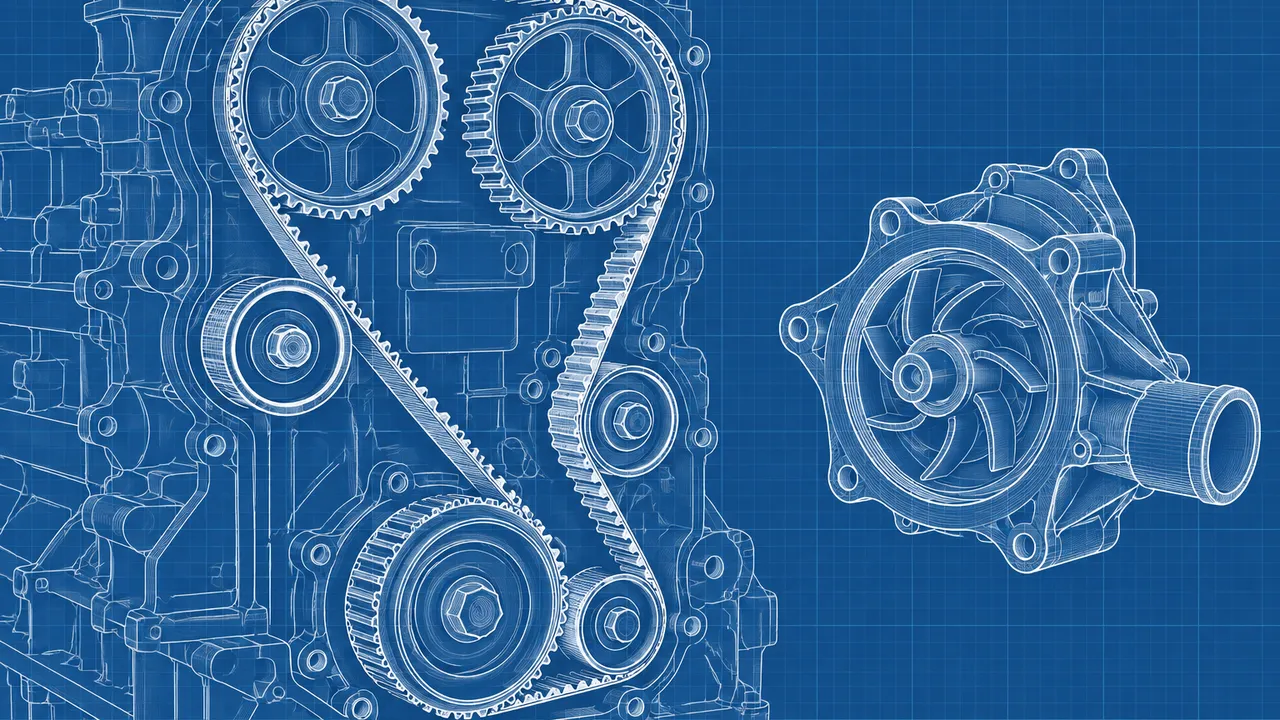
A timing belt can look unremarkable right up to the point it fails. On many engines, a broken belt lets pistons strike valves, turning scheduled maintenance into major engine damage. But not every car has a timing belt, and not every belt follows the same replacement schedule. Identification and documentation therefore matter more than a quick visual check.
The right decision starts with your exact engine, the automaker’s maintenance instructions and evidence of previous work. Mileage matters, but age can matter just as much. A lightly driven car may still be due, while a high-mileage vehicle with documented recent service may not be.
1. Identify the engine, not just the model
The same model can use a belt with one engine and a chain with another. Start with the model year, engine size and vehicle identification number, or VIN. Ask a manufacturer’s dealer to confirm the engine and timing-drive design, or check the automaker’s owner website and service information.
The visible rubber belt driving accessories is usually a serpentine belt, not the timing belt. Timing chains generally lack a routine replacement interval, but they can wear and need diagnosis. Some engines also contain separate oil-pump belts, so ask what the quoted job actually covers.
For an imported vehicle, identify its original sales market. A domestic maintenance guide may describe different engines despite matching the model name and year.
- Confirm the engine code if the vehicle has been modified.
- Do not identify the timing drive from exterior appearance alone.
- Ask specifically about oil-immersed, or “wet,” belts and their requirements.
2. Find the official mileage and age limits
Check the maintenance booklet or manufacturer’s US owner portal for the exact year and engine. Many belt intervals fall around 60,000 to 100,000 miles, but some are longer; calendar limits also vary. Those ranges are context, not permission to wait. If the schedule specifies both mileage and years, follow whichever comes first.
Read footnotes for applicable operating conditions, and distinguish inspection instructions from mandatory replacement. Ask the dealer about revised guidance or engine-specific campaigns current in October 2026. Check the manufacturer’s VIN lookup and the federal vehicle-safety agency’s recall database; neither replaces the maintenance schedule. For wet belts, using the specified engine oil is particularly important. If documents conflict, ask the manufacturer to resolve the discrepancy in writing rather than averaging the intervals you find.
Confirm when the calendar interval starts under the manufacturer’s instructions; the original belt’s age should not be counted from your used-car purchase date.
3. Treat missing records as an unresolved risk
A seller’s assurance is not proof of replacement. Look for a dated invoice identifying the vehicle, mileage and timing-belt work. Vehicle-history reports can omit independent-shop repairs, while a sticker under the hood is only a lead. With no reliable record and a car near or beyond its interval, arrange service promptly rather than assuming it was done.
A professional inspection may reveal cracks, contamination or abnormal tracking, but a clean-looking belt cannot establish age or remaining life. Do not wait for noise or a warning light. If the engine suddenly stops and belt failure is suspected, avoid repeated starting attempts and have it towed.
If an invoice lists only a kit number, ask the issuing shop to identify its contents and confirm installation, rather than merely a parts purchase.
- Request records from the previous owner or servicing shop.
- Check whether “belt replaced” meant only the accessory belt.
- Keep the new invoice, including replacement date and odometer reading.
4. Match related work to the engine
Related parts can make a quote look expensive, but overlapping labor may justify replacing them together. The important question is whether those parts are driven by the timing belt, accessible during the job or specifically required by the automaker’s procedure. A universal “complete package” is not evidence that every item is necessary.
A belt-driven water pump is often sensible to replace because failure can threaten the belt and repeating access is costly. A separately driven pump may offer little labor savings. Tensioners and idlers are commonly replaced with the belt; seals should be assessed for leakage, not automatically disturbed simply because the engine is open.
If oil or coolant has contaminated a dry timing belt, have the leak’s source repaired before fitting the replacement; otherwise, the new belt remains exposed.
| Item | What to verify |
|---|---|
| Water pump | Drive arrangement and shared access labor |
| Tensioners and idlers | Replacement guidance and inclusion in kit |
| Seals and gaskets | Leaks and replacement requirements after disassembly |
| Coolant and bolts | Correct specification and any single-use hardware |
5. Compare equivalent quotes, then document the work
Request two or three written estimates using the same VIN and scope. Total prices vary widely with engine access, local labor rates and parts selection; an internal wet-belt job can be very different from a conventional belt service. A lower price is not necessarily better if it omits required components, and a higher price does not make unrelated repairs essential.
Ask the shop to separate required work, preventive recommendations and unrelated findings. Confirm who supplies the parts and what the parts-and-labor warranty covers. After service, save the itemized invoice and have the shop state the next due date and mileage using the applicable maintenance instructions. A reminder based only on mileage can miss an age limit.
Ask whether the technician has serviced this engine and has its required timing-locking tools. Incorrect alignment or tension can damage an otherwise healthy engine.
- Get the belt-kit brand, part numbers and included components, rather than accepting “timing service” alone.
- Compare labor charges and ask whether shared access reduces the cost of related repairs.
- Include coolant, shop fees, taxes and any required calibration or setup procedures in the total.
- Require approval before extra work begins, supported by an explanation, photos or measurements where appropriate.
Verify engine-specific intervals, campaign coverage and current prices with manufacturer resources and repair providers; this article is general guidance, not personalized advice.
AI Assistance Used — AI assistance was used in researching and drafting this article. It was reviewed, edited, and fact-checked by Lisa Barber before publication.