How to Choose a Stroller That Fits Your Trunk, Sidewalks and Daily Routine
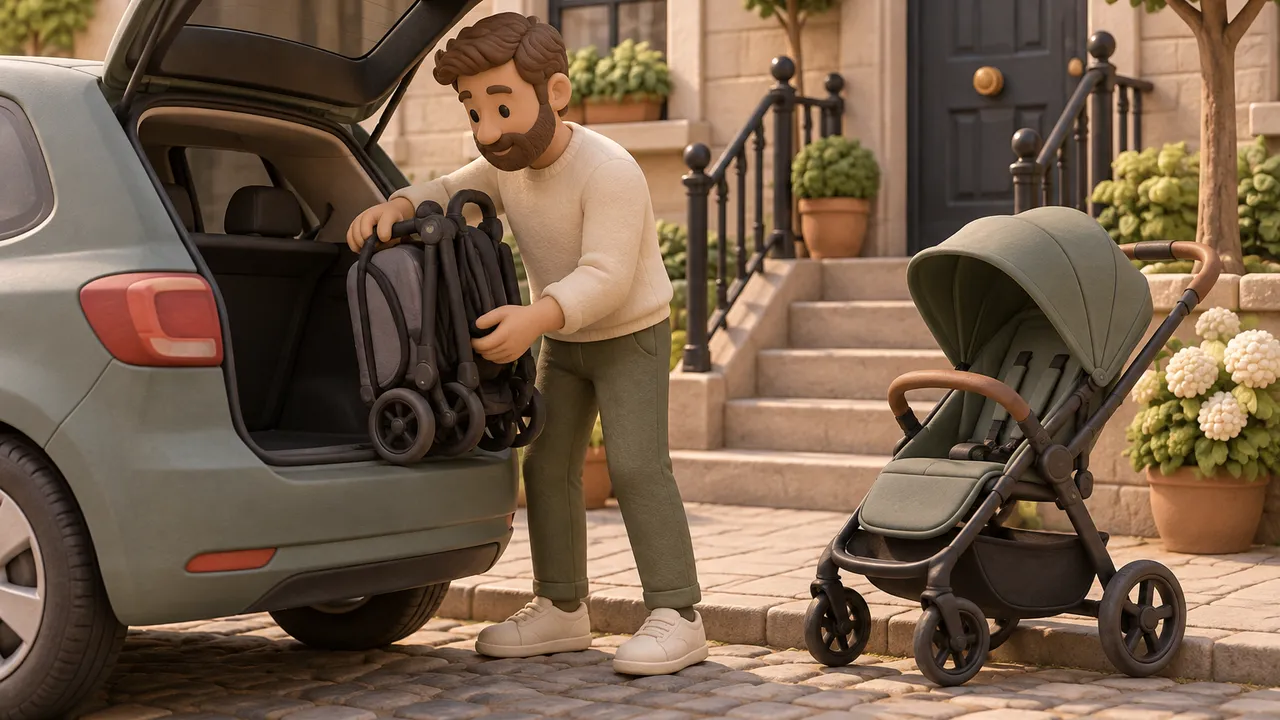
A stroller can look compact in a store and still block the groceries, snag on broken sidewalks or feel impossible to lift after daycare pickup. The best choice starts with the places it must fit and the jobs it must do, not an accessory bundle. Include every regular caregiver in testing; differences in height and strength can change the verdict.
Map a normal week before shopping: driving, walking, stairs, transit and storage. Then test candidates against those demands. Folded size, lifting weight, wheels and newborn compatibility are separate questions; a stroller that excels at one may disappoint at another. Future sibling plans add another layer.
1. Measure the trunk, not just the stroller
Measure your trunk’s usable space with the rear seats in their normal positions. The opening may be narrower than the interior, and a sloped hatch can catch a handlebar even when the stroller fits on the floor. Leave room for the diaper bag, groceries and anything that regularly travels with you.
Compare all three folded dimensions in the manufacturer’s specifications, noting whether they include the seat, wheels and adapters. Compact measurements sometimes describe a stripped-down frame. At a retailer, fold the actual configuration and try it in your vehicle with permission. Close the hatch gently; never assume it clears.
If fitting requires wheel removal, time that step and find somewhere to contain wet wheels. Check whether the remaining frame rests securely without placing delicate connectors against the trunk floor or other cargo.
| Check | Measure or test | Common obstacle |
|---|---|---|
| Entry | Opening width and height | Narrow hatch opening |
| Storage | Usable floor depth | Wheel-well intrusion |
| Clearance | Height beneath closed hatch | Sloping rear glass |
| Daily load | Space beside folded stroller | Groceries and bags |
2. Test the lift you will actually perform
Advertised weight may cover the frame alone or the stroller with one seat; definitions vary. Compare equivalent setups in official specifications. Then lift the demonstration stroller from floor level to your trunk’s loading height. Weight matters, but so do balance, grip location and whether the folded package swings open.
A one-hand fold does not necessarily mean a manageable one-hand carry. Practice the entire sequence, including setting the brake, folding, engaging the transport lock and reopening. If your route includes apartment stairs, plan separate trips or suitable storage rather than carrying a child inside the stroller on stairs.
Repeat the lift several times if comfortable, rather than judging one successful attempt. Notice whether you must twist, reach across a high bumper or hold the folded stroller away from your body to avoid dirty wheels.
- Check whether removable seats create extra loading trips.
- Look for an accessible, comfortable carrying grip.
- Confirm the folded stroller locks securely before lifting.
3. Match wheels to your roughest regular route
Small wheels suit smooth store floors and can help keep a stroller compact. Larger wheels generally handle cracks, cobbles and uneven pavement better, although tire material, suspension and frame design also matter. Air-filled tires can soften the ride but require pressure checks and may puncture; foam-filled alternatives avoid flats without guaranteeing equal comfort.
Test with a retailer-approved demonstration load, not only an empty seat. Turn through a narrow aisle, cross a threshold and check whether the handle height lets you walk without kicking the frame. Bigger wheels can improve handling while consuming more trunk space.
Ask how to remove hair and grit from wheel assemblies and whether replacement wheels are available. For air-filled tires, confirm the valve is accessible with your pump and identify the correct replacement tube size.
- Try uneven paving where the retailer permits.
- Check brake access while wearing your usual shoes.
- Choose a jogging-approved model for running; follow its age restrictions.
4. Verify newborn approval for the exact setup
A deeply reclining seat is not automatically suitable from birth. Read the manufacturer’s age, weight and developmental requirements for the exact seat and model year. Some strollers need an approved bassinet, infant insert or compatible infant car seat for newborn use. Check the approved adapter combination, too; a seat that appears to click into place is not proof of compatibility. Budget for required accessories before comparing final prices.
Newborn transport approval does not make every attachment a safe routine sleep space. Follow American Academy of Pediatrics guidance: move a sleeping baby from a seated stroller or car seat to an appropriate firm, flat sleep surface as soon as practical. For October 2026 shopping, check the Consumer Product Safety Commission’s recall database and manufacturer notices, especially for used equipment with missing labels or parts.
Have the retailer demonstrate the newborn harness settings and attachment release mechanisms. Avoid adding aftermarket cushions or head supports unless explicitly approved by the manufacturer; extra padding can alter harness fit or positioning.
5. Treat expandable doubles as a configuration, not a promise
An expandable single can save a later purchase, but only if its approved two-child arrangements suit your family. Upper and lower seats may have different weight or height limits, and some combinations require specific adapters or exclude a bassinet. Check each child’s likely needs when both will ride, rather than relying on the stroller’s combined capacity. A second seat may be sold separately.
Ask to push and fold the exact double setup before buying. Added length and weight can make curbs, steering and trunk loading harder; a second seat can also reduce basket access. Compare a dedicated double if two riders are likely to need seats for several years.
Measure your narrowest doorway and elevator with the double’s full footprint in mind. Check whether both seats can recline simultaneously in the approved arrangement, and follow any specified loading order to reduce tipping risk.
- Confirm each seat’s individual limits and approved position.
- Price seats, adapters and necessary newborn attachments together.
- Check whether both seats remain attached when folded.
Specifications and availability change; verify dimensions, approved configurations, safety instructions and recalls through official manufacturer and government sources before purchasing.
AI Assistance Used — AI assistance was used in researching and drafting this article. It was reviewed, edited, and fact-checked by Nadia Clarkson before publication.