Storage Beds: What to Check Before You Order One
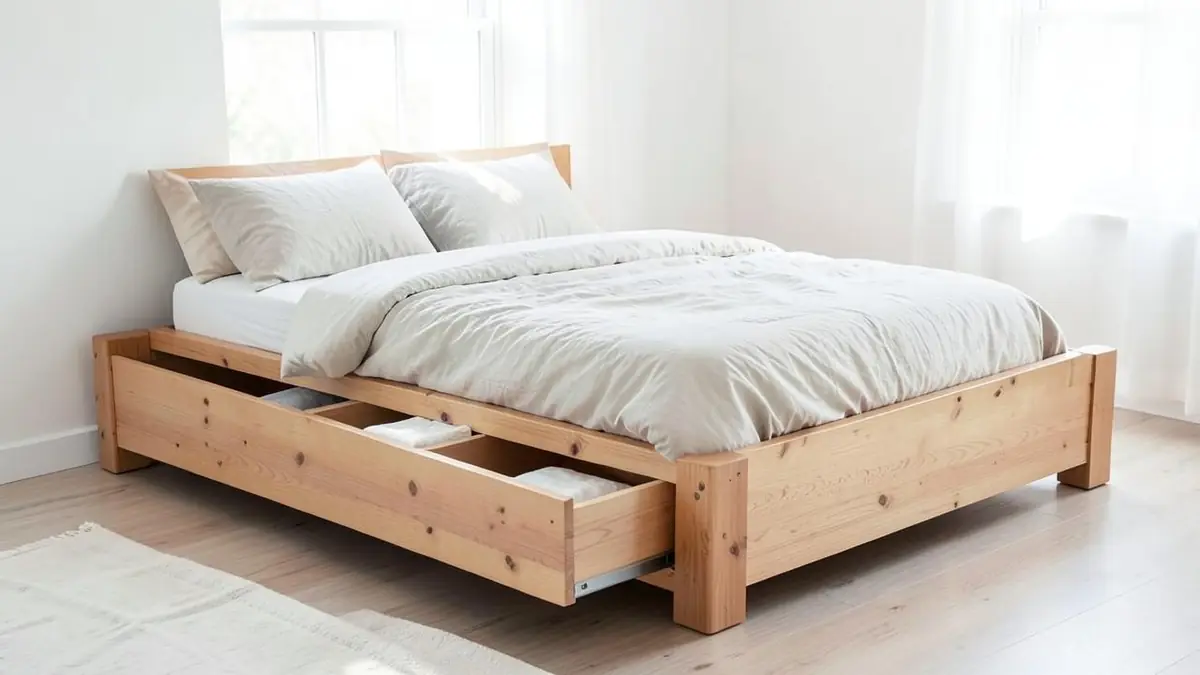
In a small bedroom, the space under the bed is the largest unused volume in the room. Storage beds convert it into drawers or a lifting compartment, and for anyone without a spare wardrobe they can remove the need for extra furniture entirely.
They also introduce constraints that a plain frame does not have. Drawers need floor space to open into, lifting mechanisms need clearance above, and the whole structure has to stay rigid while carrying both a mattress and a load underneath.
Drawers or a lifting base
Side drawers are convenient for items used weekly, but they need clear floor beside the bed equal to the drawer depth. In a room where the bed sits against a wall or close to a wardrobe, half the storage becomes unreachable.
An ottoman base lifts the whole mattress on gas struts, giving one large compartment accessible from the foot of the bed. It suits bulky, occasionally used items, and it needs headroom and a mattress light enough to lift comfortably.
Measure the swing and the ceiling
Before ordering, tape out the drawer extension on the floor, or measure the arc of a lifting base against sloped ceilings and low light fittings. Both are common causes of returns on a heavy item.
Check the route into the bedroom too. Storage bed bases arrive in large, rigid sections that cannot be flexed around a tight stair turn the way a plain frame's rails can.
Look underneath at the support
Storage beds carry more weight and have fewer central legs than plain frames. A solid central rail with its own floor supports is the difference between a base that stays flat and one that sags within a year.
Slat spacing matters for mattress warranties, many of which specify a maximum gap. Sprung slats add comfort; rigid platforms suit foam mattresses better. Check what your mattress maker requires before choosing.
Material honesty
Most affordable storage beds use engineered board with a veneer or wrap. That is not automatically a problem — good board is stable and flat — but thin board around drawer boxes tears at the fixings under load.
Look for drawer boxes with solid or thick-board sides and metal runners rather than plastic guides or castors running directly on the bedroom floor, which mark carpet and eventually fail.
Ventilation and what to store
An enclosed base under a mattress restricts airflow, and mattresses release moisture overnight. In a cool or damp room, that can lead to condensation and mildew on the underside.
Choose a base with ventilation holes, air the compartment occasionally, and avoid storing anything damp. Bedding, out-of-season clothing, and luggage are ideal; paperwork and anything valuable is better elsewhere.
Assembly and later disassembly
Storage beds are heavy and usually need two people and two hours. Confirm whether the retailer offers assembly, and whether that includes removing packaging, which is substantial with this category.
Ask whether the frame can be taken apart and rebuilt. Some ottoman bases use single-use fixings or a factory-assembled shell, which makes a future house move considerably more complicated than it needs to be.
Dimensions, mechanisms, and warranty conditions vary by manufacturer. Check the assembled and packaged measurements against your room before ordering.
AI Assistance Used — AI assistance was used in researching and drafting this article. It was reviewed, edited, and fact-checked by Leah Fornier before publication.