Stainless Steel or Nonstick: Which Pan Fits the Way You Cook?
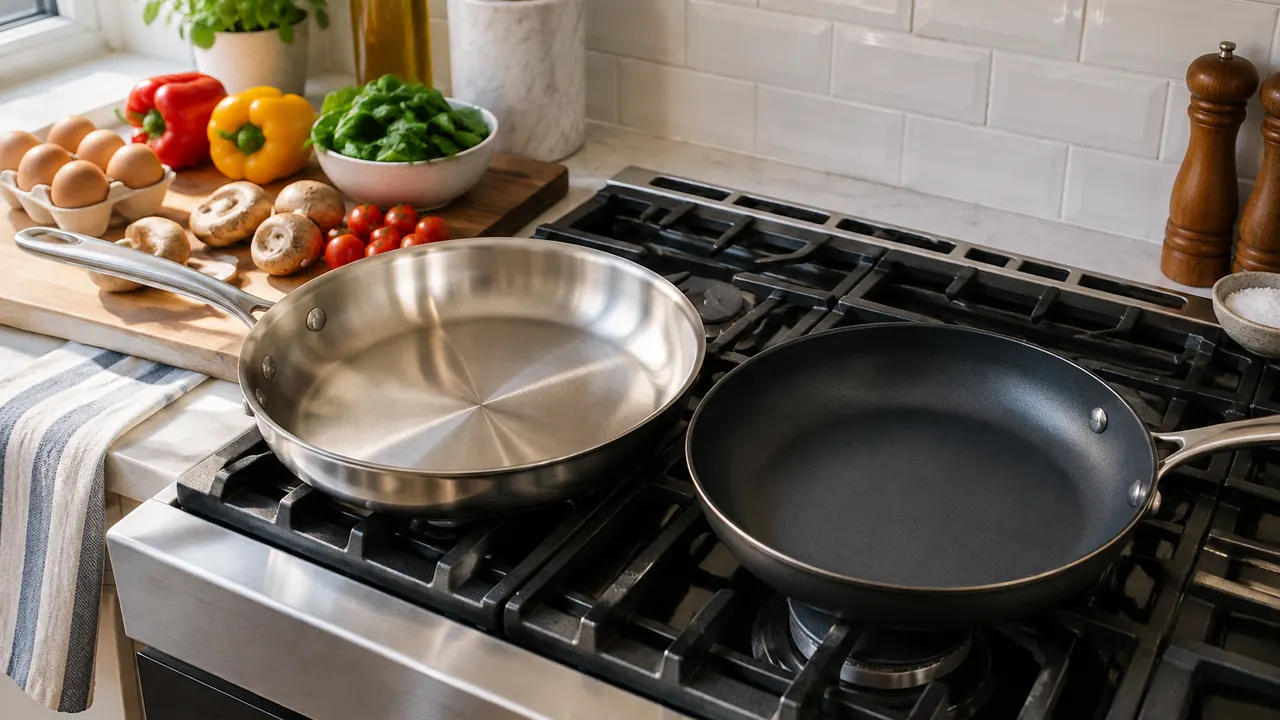
The best skillet for breakfast is not necessarily the best skillet for dinner. Eggs benefit from a forgiving surface that releases them without much fat. A steak benefits from strong browning, while a quick pan sauce needs the flavorful brown bits left behind. Stainless steel and nonstick excel at different parts of that routine. Choosing between them gets easier when you stop asking which material is better and start asking what you cook, how hot you cook it and how much care you will give the pan.
For shoppers in 2026, labels can complicate a straightforward decision. Ceramic, titanium-reinforced, professional and hybrid describe different features, not a shared standard of durability or safety. Start with the actual cooking surface, then check the manufacturer's instructions for heat, utensils, cleaning and oven use. A practical kitchen may need one pan of each type, but a small budget or limited cabinet space makes prioritizing your most frequent meals more useful than buying a matching set.
1. Let your usual meals make the first cut
For frequent eggs, pancakes and delicate fish, nonstick offers easier release and less demanding cleanup. It is especially helpful when you want to cook with a modest amount of butter or oil. Stainless steel is the stronger default for browning meat, sautéing vegetables and building sauces from browned residue. Neither category guarantees even heating: the pan's construction, thickness and fit on the burner matter, too.
Most stainless skillets use aluminum or another conductive metal in a layered body or bonded base to spread heat. Nonstick coatings also commonly sit over aluminum. That means you are comparing both a cooking surface and the structure beneath it. Before buying, lift the pan, check whether the handle feels secure and make sure the cooking area fits your typical portions. A crowded skillet steams food regardless of what its surface promises.
- Breakfast most days: prioritize a manageable nonstick skillet.
- Meat and pan sauces most nights: start with stainless steel.
- Induction stove: verify compatibility on the exact model; neither label alone settles it.
| Everyday job | Usual first choice | Main reason |
|---|---|---|
| Eggs and pancakes | Nonstick | Easy release at moderate heat |
| Steak and chops | Stainless steel | Good browning without coating limits |
| Pan sauces | Stainless steel | Browned residue adds flavor |
| Delicate fish | Nonstick | Less risk of tearing during turning |
| Sautéed vegetables | Either | Choose for browning or easy cleanup |
2. For eggs and delicate foods, favor easy release
Nonstick is the low-friction choice for scrambled eggs, omelets and fish fillets that might otherwise fall apart. Use low to medium heat and a little fat if the recipe calls for it. Let the surface warm briefly according to its instructions rather than leaving an empty skillet heating while you prepare ingredients. Eggs need controlled heat, not a blistering pan; excess heat can toughen them before the center is cooked.
Stainless steel can handle eggs, but it asks more of the cook. A clean surface, controlled preheating and enough fat help, and the margin between sticking and overbrowning is narrower. If breakfast already feels rushed, buying stainless solely to master an egg-release trick is unlikely to improve your morning. Nonstick is useful precisely because it reduces that learning curve without requiring a different recipe.
Pancakes, crepes and reheated rice also suit nonstick when cooked within the pan's limits. For fish, the goal matters: choose nonstick for gentle cooking and intact portions, or stainless when you want stronger browning and are comfortable waiting for the food to release. In either pan, pat ingredients dry and avoid moving them constantly. Moisture and premature flipping can undermine even a well-chosen skillet.
3. For searing and pan sauces, give stainless the job
Stainless steel shines when browning is part of the recipe rather than something to avoid. Dry the meat, warm the pan gradually, add an appropriate cooking fat and leave space between pieces. Medium-high heat may be enough; the highest burner setting is not automatically better. Food often grips the surface initially and releases more readily as a crust develops. Forcing a turn too early can tear that crust away.
The brown bits remaining after cooking are called fond, and they are the foundation of a quick pan sauce. Remove the food, adjust the heat and add a modest amount of liquid, such as stock, water or wine. Scrape with a suitable utensil, simmer and finish as your recipe directs. Brown residue brings flavor; blackened, acrid residue usually calls for cleaning the pan and starting the sauce separately.
- For a better sear, dry the ingredients and work in batches instead of crowding.
- For tomato, lemon or wine sauces, stainless is generally a practical, nonreactive surface.
- Nonstick can brown food at moderate heat, but it usually produces less useful fond.
- If a coated hybrid pan advertises searing performance, follow its coating-related restrictions rather than assuming it behaves like bare steel.
4. Treat heat limits as product-specific rules
Nonstick is not one material. Many traditional coatings contain PTFE, while products marketed as ceramic nonstick generally use a different, sol-gel-derived coating. Their permitted temperatures vary. Some PTFE pans list maximum temperatures around 500 degrees Fahrenheit, but others have lower limits, and that number is not a recommended everyday cooking target. Check the exact product instructions, including restrictions on preheating, broilers and high-output burners.
An empty pan can overheat quickly on a powerful burner, even if the control is not at its highest setting. Overheated PTFE can release fumes that can cause flu-like illness in people and are especially dangerous to pet birds. Ventilate while cooking and keep birds away from kitchen fumes. Ceramic coatings also need sensible heat management: a different coating chemistry does not make repeated overheating harmless to the pan's performance.
Stainless steel usually tolerates hotter cooking, but handles, lids and other components can set lower oven limits. Oven-safe does not automatically mean broiler-safe. Check every component you intend to use, and remember that a handle that stays comfortable on the stovetop can become dangerously hot in the oven. For either material, avoid routine heating until oil smokes; lower the heat if you overshoot.
5. Choose the cleanup routine you will actually follow
Nonstick is often easiest to clean immediately after it cools enough to handle safely. Use warm water, dish soap and a soft sponge, then dry it. Even when a manufacturer permits dishwasher cleaning, hand-washing is usually the gentler routine for the coating and exposed edges. Avoid abrasive pads, scouring powders and utensils that scrape. Some manufacturers also advise against aerosol cooking sprays because residue can build up and impair release.
Stainless steel tolerates more assertive cleaning, but it does not need punishment after every meal. Soak stuck-on food or gently simmer a little water to loosen it, then wash. For persistent residue or discoloration, use a cleaner approved for stainless cookware and follow its directions. Rainbow discoloration alone usually does not mean the pan is ruined. Avoid chlorine bleach and other cleaners the manufacturer warns against.
- Let either pan cool before washing; abrupt temperature changes can contribute to warping.
- Use wood, silicone or other manufacturer-approved utensils on nonstick, even if metal utensils are advertised as acceptable.
- Put a soft protector between stacked pans so another pan's base does not scrape the coating.
- Keep the outside bottom clean, too; accumulated grease can smoke during later cooking.
6. Replace nonstick based on condition, not a calendar
There is no reliable universal lifespan for a nonstick skillet. Cooking frequency, heat, cleaning and storage all influence wear, and a higher price does not guarantee years of easy release. Ceramic nonstick can also lose its slickness before obvious flaking appears. Stainless steel has no release coating to wear away and can last for decades when its construction holds up, although warping, loose handles or separating layers can still end its useful life.
Do not treat every faint mark as an emergency, but inspect changes rather than ignoring them. A suspected scratch may be residue or a utensil mark; clean gently and consult the manufacturer's guidance if you cannot tell. A damaged coating is not a good candidate for home sanding, seasoning or a do-it-yourself repair. Warranty coverage varies, and ordinary coating wear may be excluded.
- Replace a nonstick pan when the coating peels, flakes, blisters or develops deep scratches that expose the underlying material.
- Consider replacement when food consistently sticks despite proper cleaning and normal cooking technique.
- Stop using a pan with an unstable handle, pronounced warping or separating components until its safety can be assessed.
- After severe overheating, follow the manufacturer's advice; replace the pan if the coating is visibly damaged.
7. Buy for your routine, not the longest feature list
If you have room for two skillets, a modest nonstick pan for eggs and a larger stainless pan for dinner cover many everyday jobs. Spend according to use: sturdy construction and a comfortable handle matter more than coordinating colors. If you want only one, choose nonstick for mostly gentle cooking and easy cleanup, or stainless for browning, sauces and a surface without a replaceable coating.
Read environmental and material claims narrowly. PFOA-free does not mean PTFE-free or PFAS-free; PTFE belongs to the broad PFAS family. If avoiding PFAS is your priority, uncoated stainless is a straightforward skillet option, while a ceramic claim deserves confirmation from the manufacturer. Whatever you buy, verify the current specifications for that model rather than relying on an old review. The right pan is the one whose strengths match dinner and whose care instructions fit your habits.
Check the manufacturer's current instructions and warranty terms for your exact pan before relying on temperature limits, cleaning claims or replacement coverage.
AI Assistance Used — AI assistance was used in researching and drafting this article. It was reviewed, edited, and fact-checked by Nadia Clarkson before publication.