How to Check a Used Car for Signs of Flood Damage
A flood-damaged used car does not always smell swampy or arrive with mud under the seats. By the time it reaches a sales lot or online listing, someone may have shampooed the upholstery, replaced the carpet and polished every visible surface. Water can still leave corrosion inside connectors, sediment beneath trim and moisture trapped in insulation. Problems may emerge later, after a convincing test drive.
For shoppers in 2026, the safest approach combines a hands-on inspection, vehicle-history checks and an independent professional evaluation. No single stain, rusty bolt or musty odor proves a car was flooded. But several clues in unrelated places deserve attention, especially when the seller cannot explain them. Bring a flashlight, ask permission before lifting removable liners and inspect in daylight. Do not unplug connectors, remove seats or disturb airbag wiring yourself.
1. Start with the seller’s story, not the shine
Before inspecting the cabin, ask whether the car has ever had water enter it, been submerged, suffered storm damage or received an insurance payout for water damage. Ask where it was kept and whether the carpet, seats, wiring or electronic modules have been replaced. A roof leak is different from floodwater reaching the dashboard, but either calls for an explanation of the source, repairs and drying process. Request invoices rather than accepting “professionally detailed” as an answer.
Check the vehicle identification number, or VIN, against the listing, title and accessible VIN labels. Look for gaps in the ownership story, a recent move between states or a sale soon after major repairs. Those circumstances are not proof of fraud; they tell you where to ask questions. Inspect before signing or paying a nonrefundable deposit, and arrange an independent inspection before committing. A seller’s refusal to allow reasonable checks is itself a reason to pause.
- Ask for water-damage disclosures and repair explanations in writing, and keep copies with the advertisement.
- Verify the seller’s authority to sell the vehicle and check whether a lien remains.
- Compare replacement-part receipts with the seller’s explanation for a newly refreshed interior.
2. Look beneath carpeting and along its edges
Start in the lowest parts of the passenger compartment: front footwells, rear footwells and the floor beneath the seats. Remove loose floor mats and inspect the carpet below them. With permission, gently lift an accessible carpet edge without unclipping trim or forcing anything. The surface may be dry while foam padding underneath remains damp, stained or gritty. Press an accessible area with a clean paper towel to check for moisture, but recognize that a thoroughly dried car may leave no wetness.
Compare carpet color, texture and wear across the cabin. Fresh carpet in an otherwise worn car is not automatically suspicious, but poorly fitted edges, mismatched sections or new upholstery paired with rusty hardware warrant questions. Look for a horizontal discoloration line along lower trim and sediment in seams that ordinary shoes would not reach. Salt residue can come from winter driving, so location matters. A technician can safely inspect deeper layers if your initial checks raise concerns.
- Check under every removable mat, including rear mats; do not inspect only the driver’s side.
- Feel accessible padding for dampness and look for staining, grit or unusual replacement seams.
- Inspect carpet edges beside the center tunnel and door openings without pulling apart the trim.
- Photograph suspicious areas so an independent shop can evaluate the same locations.
3. Examine seat hardware and hidden storage wells
Use your flashlight on seat rails, mounting bolts and exposed metal beneath the seats. Light surface rust on an isolated unpainted part can occur without flooding, particularly in humid climates. More concerning patterns include widespread corrosion across several seat bases, gritty deposits around bolt heads and rust accompanied by staining on adjacent upholstery. Look without touching electrical connectors or probing beneath powered seats. Seat assemblies can contain wiring for airbags, occupancy sensors and other safety systems.
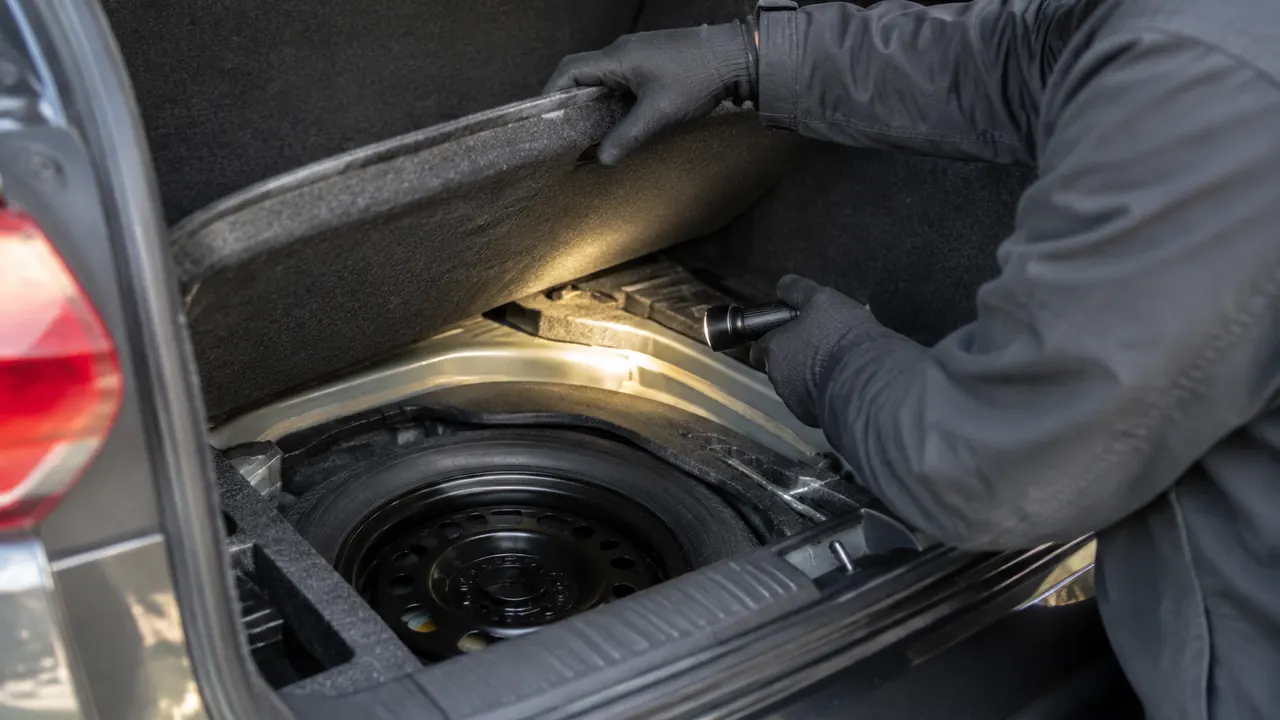
Next, lift removable trunk or cargo-floor liners and check the spare-wheel well, tool tray and side storage pockets. On vehicles without a spare, inspect the accessible lower cargo compartment instead. Water often collects in these depressions, leaving sediment, rust or a tide mark after the visible cargo area has been cleaned. Compare several low points rather than judging one stain. A leaking hatch seal can also fill a well, so the cause needs diagnosis.
- Check exposed seat-belt webbing for staining as you pull it out normally; do not dismantle retractors.
- Look inside accessible tool recesses and around cargo-floor seams for dried mud.
- Leave inaccessible cavities, underbody inspection and trim removal to the inspecting shop.
| Finding | Possible alternative explanation | What to verify |
|---|---|---|
| Rust on one seat rail | Humidity or a localized spill | Whether corrosion appears elsewhere |
| Water in a spare-wheel well | Hatch or taillight seal leak | Entry point and damage beneath liners |
| Silt beneath seats and cargo trim | Dirty cargo or prior misuse | Distribution and evidence of waterlines |
| Fresh carpet with corroded hardware | Separate cosmetic and moisture issues | Replacement records and hidden condition |
4. Treat odors as clues, not a verdict
Notice the smell when you first open the doors, before the seller starts the engine or ventilation. A persistent musty odor can indicate moisture in carpet padding, upholstery or the heating and air-conditioning system. Strong fragrance, recently applied cleaner or multiple air fresheners can obscure it. None proves concealment, but ask why the cabin needed treatment. If practical, revisit the car after it has sat closed rather than relying on an inspection with every door open.
Run the ventilation fan at several speeds and try available heating and cooling settings. Note whether an odor appears only through the vents or remains throughout the cabin. Air-conditioning components can develop odors without any flood exposure, and spills can make one seat smell. The distinction requires diagnosis, not a guess based on scent. Likewise, a cabin that smells completely neutral may have been extensively cleaned or fitted with new soft materials.
- Look for dampness or staining where the odor seems strongest, rather than assuming its source.
- Watch for persistent interior window fogging, while accounting for weather and ordinary condensation.
- Do not accept deodorizing as proof that trapped moisture, mold or corrosion has been addressed.
- If an odor causes irritation, leave the vehicle and let a professional investigate.
5. Test electrical behavior methodically
Water intrusion can affect connectors and modules without producing an immediate failure. With the seller’s permission, test electrical equipment while parked, then repeat key checks during a safe test drive. Operate windows, locks, mirrors, seat adjustments, interior lights, wipers, audio and climate controls. Try the backup camera and parking aids in an appropriate setting. On a modern used car, also check available touchscreens and driver-assistance status messages, but never create a dangerous situation to test a safety feature.
Watch the instrument display during startup. Consult the owner’s manual for normal warning-light behavior; many indicators briefly illuminate as part of a self-check. Investigate lights that stay on, expected indicators that never appear, repeated screen restarts, flickering displays or intermittent accessories. A weak battery can cause confusing symptoms too, so electrical glitches need diagnosis rather than an automatic flood verdict. Conversely, flawless operation during a short visit cannot rule out corrosion that will cause trouble later.
- Repeat window, lock and seat operations to catch inconsistent responses rather than checking each once.
- Ask the shop to scan accessible modules, not just read basic engine trouble codes.
- Have unexplained communication faults, airbag warnings or charging-system issues evaluated before purchase.
- For hybrids and EVs, have a qualified technician assess suspected water exposure involving high-voltage components; do not touch orange cables or damaged battery enclosures.
6. Understand what a clean title cannot tell you
A clean title generally means the current document does not carry a damage brand such as salvage or flood. It does not certify that the vehicle has never been wet. State branding rules differ, and water damage may never trigger a brand if no qualifying event is reported. An owner may pay for repairs privately, decline to make an insurance claim or sell before the full extent of damage becomes apparent.
Order a vehicle-history report and consider an approved National Motor Vehicle Title Information System provider for title, brand and certain insurer or salvage records. Verify providers through the official NMVTIS website. Commercial reports may add service and other information, but their sources and coverage differ. NICB’s free VINCheck can provide another limited check for participating insurers’ theft and salvage records; it is not a complete history report. Missing records, reporting delays and undisclosed repairs leave gaps. Compare results with the physical car, seller disclosures and inspection findings.
- Review historical brands and title dates, not just the current title’s appearance.
- Confirm that every report covers the exact VIN on the vehicle you are inspecting.
- Treat a no-records-found result as limited information, not evidence that flooding never occurred.
7. Make the inspection your buying gate
If several warning signs line up, do not let a discount rush the decision. Arrange a pre-purchase inspection with a shop you choose, and specifically request an assessment for water intrusion. Share photographs, history reports and the seller’s explanation. A routine mechanical check may not include lifting liners, examining hidden connectors or scanning multiple electronic systems unless you discuss that scope beforehand.
Ask the technician to distinguish active leaks, old localized moisture and evidence consistent with broader submersion. Request written findings, inspection limitations and estimates for diagnosed problems. No nondestructive inspection can guarantee that every hidden connection or cavity is unaffected. Repair costs can remain uncertain when corrosion is widespread, particularly around safety electronics. For an ordinary shopper seeking dependable transportation, unexplained evidence of substantial flooding is a strong reason to choose another car.
- Pause for diagnosis if you find isolated dampness or a leak, even when flooding seems unlikely.
- Walk away if the seller blocks an independent inspection or pressures you to ignore inconsistent records.
- Avoid assuming a warranty covers preexisting water damage; read exclusions and disclosure requirements.
- Commit only after the paperwork, physical evidence and professional findings tell a reasonably consistent story.
Consult an independent qualified technician before buying a vehicle with suspected water damage, and verify current title rules and history-report coverage.
AI Assistance Used — AI assistance was used in researching and drafting this article. It was reviewed, edited, and fact-checked by Leah Fornier before publication.