Small Trailers: How to Pick One You Can Tow and Store
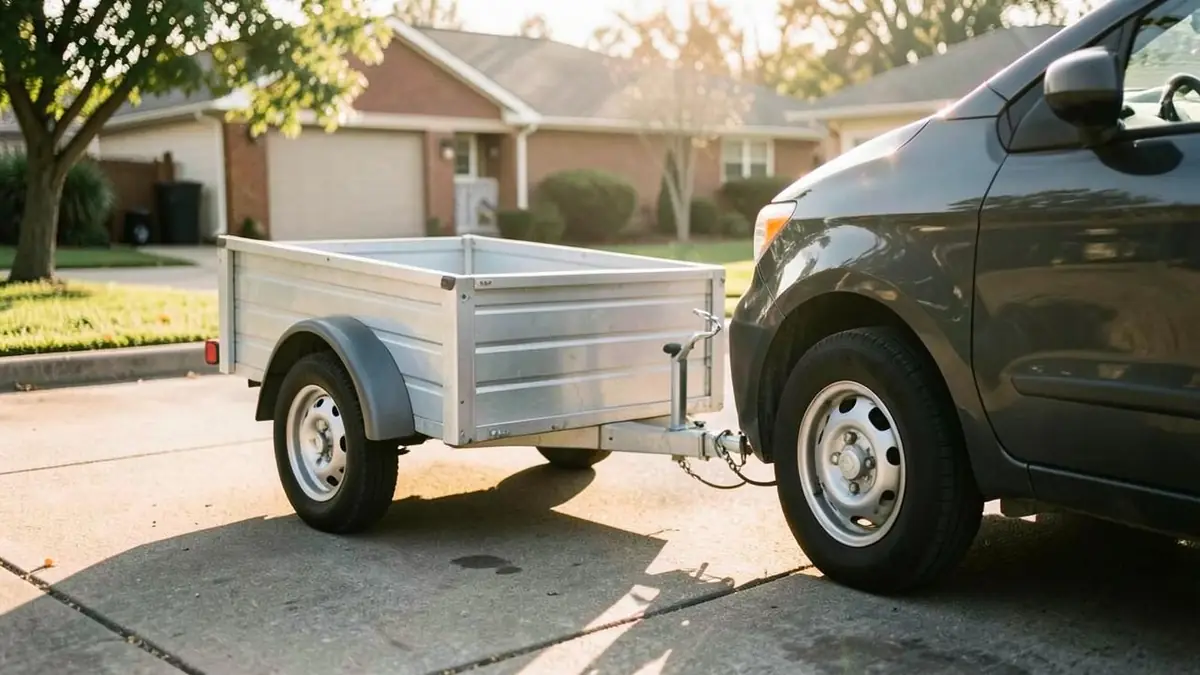
A small trailer is one of the more genuinely useful things a household can own. Garden waste, building materials, a motorbike, a house move done in stages: all become straightforward. The mistake most first-time buyers make is sizing the trailer for the largest job they can imagine rather than the ones they will actually do.
Two constraints do most of the deciding, and both are external. What your driving licence permits you to tow, and where the trailer will sit when it is not in use.
Start with the licence and the tow vehicle
Licence categories restrict the combined weight of vehicle and trailer, and the rules differ by country and by when the licence was issued. Exceeding them is an insurance problem as much as a legal one.
The tow vehicle has its own limits: a maximum towing mass, a maximum noseweight at the coupling, and often a lower limit for unbraked trailers. All three are in the handbook and on the vehicle plate, and the lowest of them governs.
Braked or unbraked
Unbraked trailers are lighter, cheaper, and simpler, and they are capped at a relatively low gross weight. For garden waste and household loads, that cap is usually sufficient.
Braked trailers carry considerably more and stop far better when loaded, but they add an overrun mechanism that needs periodic adjustment and a handbrake that must be maintained. Choose braked only if the load genuinely requires it.
Payload is not the same as capacity
The useful figure is gross weight minus the trailer's own unladen weight. A heavier galvanised trailer with a high gross rating may carry less than a lighter one with a lower rating.
Loose material is heavier than it looks. A cubic metre of damp soil or wet sand comfortably exceeds a tonne, which puts it beyond most small trailers regardless of whether it fits inside the sides.
Inspect the boring components
On a used trailer, the coupling, the wheel bearings, and the tyres are what fail. Tyres on trailers usually perish from age rather than wear; check the date code and treat anything over about six years as due for replacement irrespective of tread.
Lift each wheel and check for play in the bearings, and inspect the chassis around welds and the axle mounting for rust. Lights and wiring are cheap to fix; a corroded chassis is not.
Measure where it will live
A trailer parked awkwardly gets used less and irritates neighbours more. Measure the storage space including the drawbar, and check that you can manoeuvre it by hand into position, which is much harder on gravel or a slope.
Tipping and folding trailers store in a fraction of the footprint, at some cost in strength and price. For a small driveway, that trade is usually worth making.
Ongoing costs and security
Trailers need periodic bearing grease, tyre replacement by age, and in some jurisdictions registration or inspection. None of it is expensive, but it is not zero, and a neglected trailer is genuinely dangerous at speed.
Trailer theft is common because trailers are easy to hitch and drive away. A hitch lock, a wheel clamp, and a ground anchor cost a fraction of the trailer and are what insurers increasingly expect to see.
Towing rules, licence categories, and registration requirements vary by country. Confirm the regulations that apply to you before towing.
AI Assistance Used — AI assistance was used in researching and drafting this article. It was reviewed, edited, and fact-checked by Leah Fornier before publication.