Making a Small Kitchen Genuinely Work
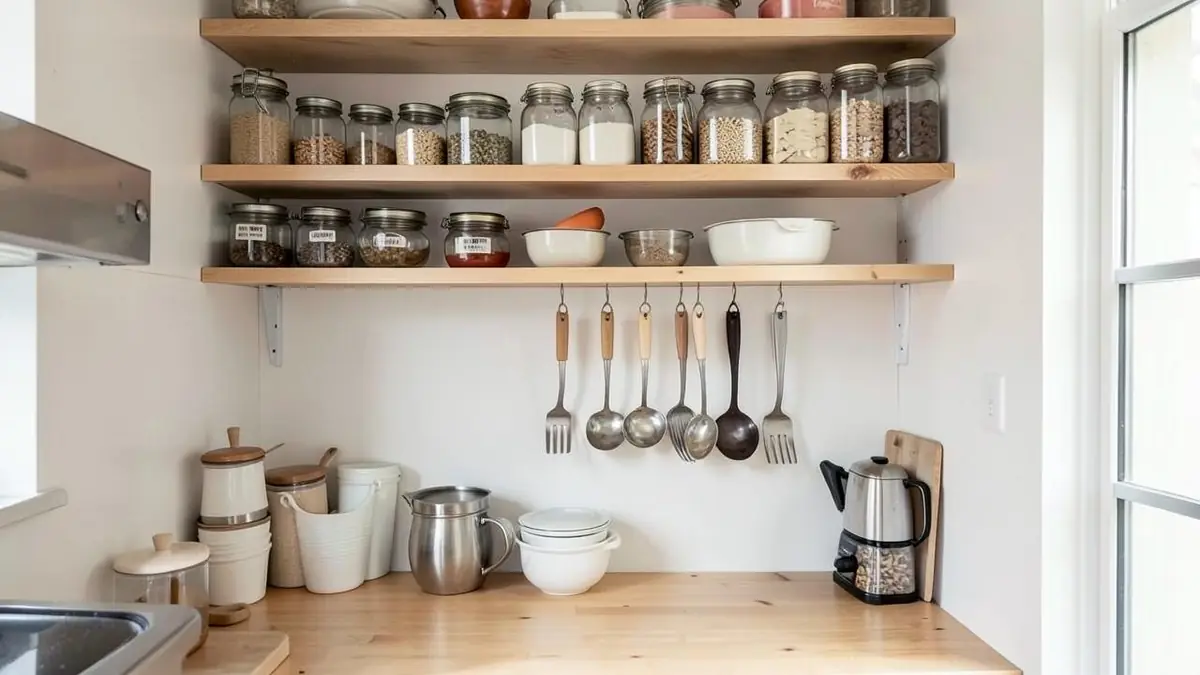
The complaint about small kitchens is almost always framed as storage, but the thing that makes cooking in them frustrating is usually the absence of a clear area to work on.
Once counter space is treated as the scarce resource, the sequence of decisions changes, and most of them cost nothing.
Counter space is the real constraint
Every appliance permanently parked on the worktop consumes the resource you most need. Anything used less than a few times a week belongs in a cupboard.
Aim for one continuous clear stretch beside the hob rather than several fragmented patches. A single usable area transforms how a small kitchen feels to cook in.
Go vertical and use the doors
Wall rails for utensils, magnetic knife strips, and shelves above eye level convert unused vertical area into storage without eating into the work surface.
The insides of cupboard doors accommodate racks for lids, wraps, and cleaning supplies. These are among the cheapest improvements available and are consistently under-used.
Own fewer, better tools
A chef's knife, a paring knife, one heavy pan, one saucepan, a sheet tray, a board, and a few utensils cover the overwhelming majority of home cooking.
Single-purpose gadgets are the main occupiers of small-kitchen cupboards. Removing them usually frees more space than any organiser you could buy to contain them.
Organise by task, not by category
Group items where they are used: pans near the hob, chopping equipment near the prep area, plates near the dishwasher or drainer. Reduced movement matters more in a small room.
Deep corner cupboards swallow possessions permanently. Pull-out baskets or simply not storing anything you need regularly in them is the practical answer.
Light it properly
A single ceiling fixture puts the cook's shadow directly onto the chopping board. Under-cabinet lighting is inexpensive, often plug-in or battery powered, and changes the room more than most renovations.
Lighter cupboard fronts, a reflective splashback, and clear sightlines make a genuine difference to how large the space feels, without altering a single dimension.
Habits do the rest
Cleaning as you go is optional in a large kitchen and effectively mandatory in a small one, because the workspace is also the drying space.
Prepping everything before cooking starts, and keeping a bowl for scraps beside the board, removes most of the congestion that makes small kitchens feel unworkable.
Rental agreements may restrict fixings and alterations. Check your tenancy terms before drilling or attaching anything to walls or cabinets.
AI Assistance Used — AI assistance was used in researching and drafting this article. It was reviewed, edited, and fact-checked by Leah Fornier before publication.