Trenchless Sewer Repair or Full Replacement? What the Camera Inspection Must Show
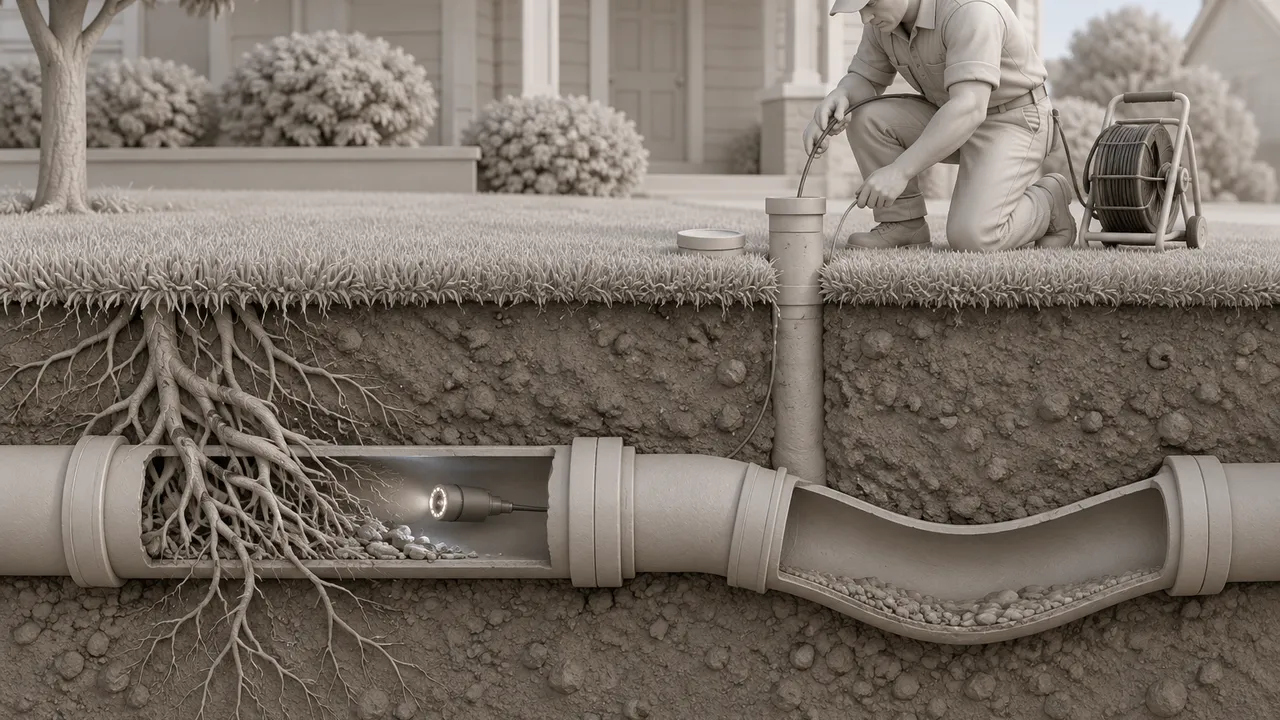
A backed-up sewer can make any promise of a quick, dig-free repair sound attractive. But “trenchless” describes an installation approach, not a diagnosis. Cured-in-place pipe lining creates a new pipe within the old one; pipe bursting replaces the old pipe along its route. Neither automatically solves every underground defect. Choosing between them requires separating damage to the pipe wall from problems with alignment, slope and surrounding soil.
The deciding evidence should be a recorded camera inspection, supported by locating and measurements where needed. Before authorizing work, homeowners need to know what failed, where it failed and whether the proposed method corrects the cause—not merely opens the drain temporarily.
1. Identify the pipe, not just the blockage
Ask the contractor to identify material, diameter and transitions along the inspected run. Older US homes may have clay, cast iron, concrete or bituminous-fiber pipe commonly called Orangeburg, sometimes patched with plastic. Material affects cleaning, liner preparation and bursting equipment. Camera appearance alone may not conclusively identify a badly deteriorated pipe.
Clay cracks and separated joints can be lining candidates if geometry and preparation permit. Cast iron often needs careful descaling before its condition is clear. Flattened or delaminating Orangeburg requires particular scrutiny. Material changes can also hide diameter reductions or repairs that interfere with liner installation or bursting.
For uncertain dimensions, ask how the installer will verify the actual internal diameter before ordering a liner. Nominal pipe size may not reflect corrosion buildup, deformation or mismatched repairs; those differences affect sizing and installation.
- Record suspected material and diameter for each segment.
- Mark every transition, repair sleeve and significant restriction.
- Flag suspected asbestos-cement pipe for specialized regulatory review before disturbance.
2. Separate structural damage from a grade problem
Lining can bridge some cracks and joint defects, but it needs a traversable, adequately prepared path and a design suited to the deterioration. A collapse may prevent inspection or liner installation until a spot excavation restores access. A camera that stops at debris has not established what lies beyond it.
A belly is a low section that holds water. Lining generally follows that shape; bursting generally follows the existing route and does not reliably correct grade. Persistent ponding needs further assessment, sometimes including elevation measurements. Excavation may be necessary to rebuild the slope and supporting bedding.
Ask whether standing water remains after household discharge stops and downstream obstructions are cleared. Water backed up behind a blockage can resemble a belly on video; document the remaining ponded section before prescribing slope correction.
| Camera finding | Likely implication |
|---|---|
| Cracks; alignment retained | Lining may be feasible |
| Collapsed or flattened section | Access restoration or excavation may be needed |
| Standing water obscures pipe | Assess sag and grade separately |
| Severe joint offset | Evaluate localized repair or replacement |
3. Trace roots and connection defects to their source
Roots usually enter through an opening: a cracked wall, leaking joint or defective connection. Cutting them restores flow but does not seal that entry. Obtain footage after cleaning, because a root mass can conceal missing pipe, displaced joints or a larger structural failure.
Connections deserve their own close-ups. A protruding branch can obstruct equipment; an offset or broken connection may need a separate repair. Lining can cover branch openings that must be reopened and, where necessary, separately sealed. A mainline liner alone does not necessarily rehabilitate every connection.
When a branch’s purpose is unclear, have the contractor trace it using controlled fixture discharge or another suitable test. Do not approve permanently closing an apparently unused opening until its service and ownership are established.
- Identify active branches and how service will be restored.
- Specify treatment of root-entry joints and connection leaks.
- Show liner termination points and proposed end seals.
- Confirm responsibility for work at the public sewer connection.
4. Obtain footage that supports the recommendation
Request the complete recording, not selected screenshots or a sales summary. It should identify the property, inspection date, entry point, direction and distance reference. The contractor should explain where visibility is limited by water, scale or debris and which portions were not inspected. Keep a downloadable copy.
Footage should cover the proposed work limits and the downstream connection where accessible and authorized. Have critical defects located from the surface, with estimated depth recorded; a camera’s distance counter alone is not an excavation map. If cleaning is needed for diagnosis, require a post-cleaning inspection before final method selection.
If the camera cannot pass a defect, ask whether inspection from another access point can document the unseen segment. A second approach may reveal additional failures that would otherwise become surprises after mobilization or excavation.
- Continuous video with distance readings and narrated findings.
- Still images keyed to major defects and footage locations.
- A sketch showing access points, route and proposed repair limits.
- Written limitations and any additional testing recommended.
5. Make the written scope match the evidence
Require a method-specific proposal identifying work limits, access excavations, preparation, connection repairs, permitting, inspection and restoration. For lining, request the proposed system, structural design basis, finished diameter and curing verification. For bursting, require the replacement material and diameter, launch and receiving locations, utility-clearance assessment and treatment of nearby structures. Bursting displaces the old pipe outward, so surrounding conditions matter. Ask who evaluates capacity if diameter changes.
The contract should state acceptance criteria, post-installation video requirements, applicable testing, warranty exclusions and who pays if hidden conditions force excavation. Separate optional work from required corrections. Identify responsibility for landscaping, pavement and sewage management during the outage. Compare bids covering the same defects and endpoints; trenchless work can still involve substantial digging. Confirm inspection sign-off and change-order procedures before paying a deposit.
Tie final payment to delivery of the agreed inspection records and correction of documented installation defects. For lining, specify how obstructed branches, unacceptable wrinkles or incomplete curing will be evaluated and remedied under the contract.
As of October 2026, verify local method approvals, permits and ownership boundaries with the sewer utility and building department, and asbestos requirements with state agencies or EPA; this is general guidance.
AI Assistance Used — AI assistance was used in researching and drafting this article. It was reviewed, edited, and fact-checked by Nadia Clarkson before publication.