Build a School-Morning Routine That Needs Less Nagging
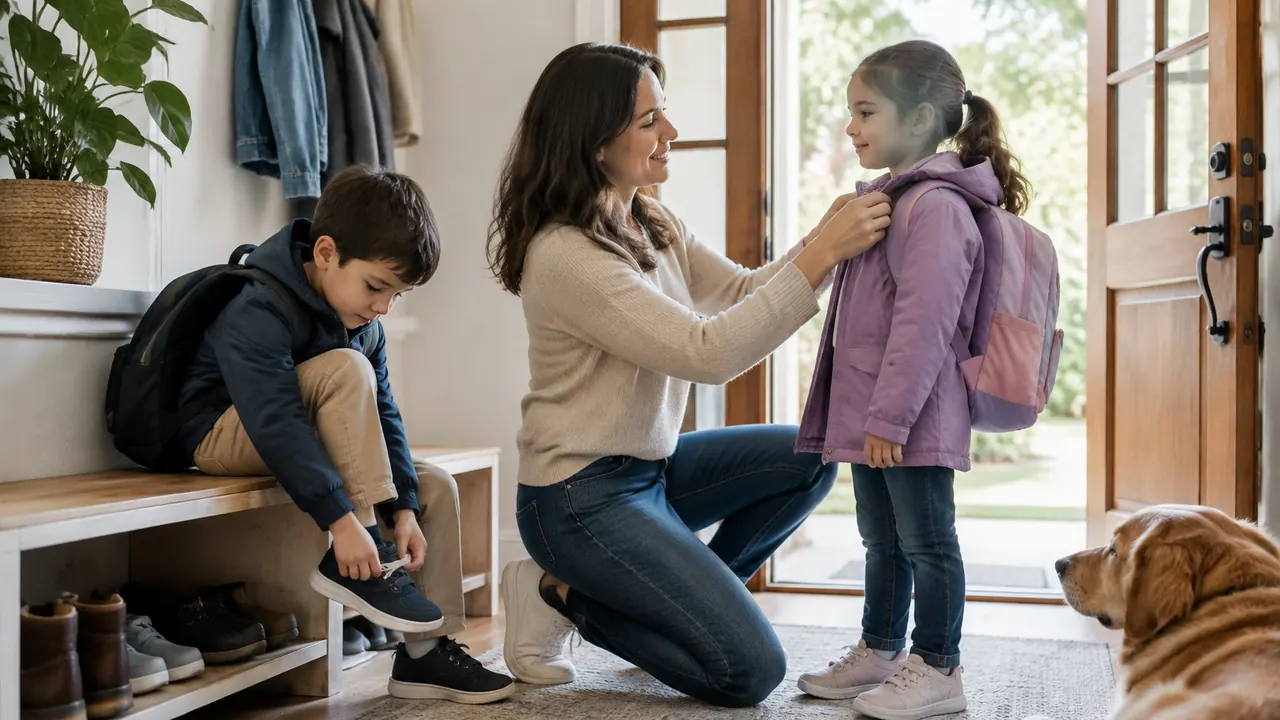
By the third reminder to put on shoes, a school morning can feel like a test nobody studied for. Yet repeated prompting often means the routine asks too much at the wrong moment: too many choices, a missing item, an uncomfortable shirt or an unrealistic departure time. The useful question is not simply why a child will not hurry. It is where the morning stops moving, and what would make that step easier.
For families navigating school in 2026, calendars, school apps and messages can keep information close without making the morning manageable. A workable routine turns those demands into a few visible steps, with supplies ready and enough time to change activities. Start with the biggest bottleneck rather than redesigning everything. The goal is not a silent, perfectly independent household; it is a predictable path out the door, with support matched to each child.
1. Find the point where the morning stalls
For three ordinary school days, notice when your child wakes, gets dressed, begins breakfast and reaches the door. Approximate times are enough; this is observation, not a performance review. Record what happens just before a delay. Does dressing stall because clothes are missing, because choosing is hard or because a seam hurts? Does breakfast run long because food is not ready, appetite is low or everyone starts talking about an unfinished assignment?
Look for the earliest repeatable snag. A departure problem may actually begin with a late wake-up, while apparent dawdling may be a child trying to remember four instructions. Ask about the hard part at a calm time: 'What gets in your way before school?' Their answer may differ from yours. Choose one change and try it for several school days before adding another. Otherwise, you will struggle to tell what helped.
- Track the process, not whether a child was 'good' or 'bad.'
- Separate occasional disruptions from problems that happen most days.
- Include adult bottlenecks, such as looking for keys or checking messages.
| Where it stalls | What to check | First adjustment |
|---|---|---|
| Waking | Sleep opportunity and wake-up difficulty | Review bedtime and allow a gentler start |
| Dressing | Choices, fit and sensory discomfort | Set out one acceptable outfit |
| Breakfast | Preparation time and appetite | Offer two familiar options |
| Departure | Missing gear and underestimated tasks | Create a launch spot and departure buffer |
2. Move useful work to the evening
Evening preparation helps when it removes a real morning task without creating an exhausting second shift. Pick a short reset attached to something that already happens, such as clearing dinner or starting bedtime. Check the next day's weather and school schedule, gather materials and return essentials to a consistent place. A basket, hook or cleared corner can work; you do not need a matching storage system or a new routine app.
Make responsibility specific and age-appropriate. 'Get ready for tomorrow' is vague; 'Put your library book in your backpack' has a clear finish. Younger children may pack alongside an adult, while older children can use a short list that an adult checks only where necessary. Keep refrigerated food cold overnight and use appropriate cold storage for perishable lunches. Leave a visible cue by the backpack for anything that cannot be packed yet.
- Choose clothes, including socks, underwear and any required school items.
- Place shoes, jackets and packed bags where children can reach them.
- Check school messages at a planned time rather than during departure.
- Put forms and activity gear together; assign an adult to anything requiring a signature.
3. Make waking a supported transition
A morning routine cannot reliably compensate for insufficient sleep. General sleep recommendations are 10 to 13 hours per 24 hours for children ages 3 to 5, including naps; 9 to 12 hours for ages 6 to 12; and 8 to 10 hours for teenagers. These are ranges, not a promise that every child wakes easily. Count backward from the necessary wake-up time, allowing for how long falling asleep usually takes. Do not solve every delay by setting an earlier alarm.
Agree on the wake-up approach ahead of time. Some children manage an alarm; others need an adult, gradual light or a few quiet minutes before conversation. Keep the first instruction small and concrete: sit up, then put feet on the floor. Avoid turning the bedroom into a briefing about the whole day. If waking remains unusually difficult despite adequate sleep opportunity, or a child snores, gasps during sleep or is persistently sleepy in daytime, discuss it with their clinician.
4. Reduce dressing decisions and friction
Dressing goes more smoothly when acceptable choices have already been narrowed. Offer two outfits the night before rather than opening the entire closet under time pressure. Check fit, weather suitability and school requirements then, too. Keep a backup outfit available for spills or a sudden change in comfort. If clothing causes distress, take the complaint seriously: a child may be reacting to tags, seams, tight waistbands or temperature, not trying to derail the morning.
Break the job into steps only as much as your child needs. A simple picture strip might show underwear, shirt, pants and socks; a confident older child may need only 'dressed' on a checklist. Teach tricky fasteners when nobody is racing a bus. In the morning, help with the part that blocks progress instead of withholding assistance to prove a point. Independence grows through practice and usable supports, not through being left stuck.
- Store everyday clothes at an accessible height and in predictable places.
- Choose manageable fasteners and comfortable alternatives when possible.
- Keep siblings' dressing areas separate if crowding or teasing slows everyone.
- Use a brief check for essentials instead of restarting arguments over harmless preferences.
5. Give breakfast a simple plan
Breakfast needs an available option, a place in the sequence and enough time to eat safely. It does not need a rotating menu. Choose two or three familiar meals that suit your budget, dietary needs and preparation time. Foods such as oatmeal, yogurt, eggs, fruit or toast can fit different combinations; leftovers may work, too. Prepare what you can ahead, and avoid introducing an unfamiliar food when the household is already late.
If appetite is low immediately after waking, try dressing first and eating later in the routine. Where school breakfast is available, verify the actual serving window, eligibility or cost, and whether your child's arrival allows time to eat. Keep a simple backup, but do not make eating while walking or rushing the default, especially for younger children. Persistent low intake, feeding distress or growth concerns deserve a conversation with a healthcare professional rather than a daily battle at the table.
6. Plan for leaving, not just being ready
Work backward from when your child must actually reach the bus stop, school entrance or supervised drop-off point. Include the walk, traffic variability and any arrival procedures. Then account for shoes, jackets, bathroom needs and moving everyone outside. These transitions are real tasks, not empty space between tasks. Use your observations to choose a realistic buffer, perhaps starting with five to 10 minutes and adjusting. A crowded elevator or mobility needs may require more.
Make the departure sequence visible near the exit. A paper checklist often works better than instructions buried in a phone. If you use a timer or smart speaker, choose a neutral cue and check that it helps rather than startles. 'When this chime sounds, we put on shoes' is more useful than a last-minute countdown shouted across rooms. Decide in advance which nonessential tasks can wait on a late morning, while preserving safe travel, necessary medication and required supervision.
- Keep keys, transit passes and adult essentials at the launch spot, too.
- Give one transition warning, then one clear instruction for the next step.
- Avoid opening school apps or work messages during the final departure sequence.
7. Match support to the child, then review
Children with ADHD, autism, anxiety, learning differences, motor difficulties or other support needs may require more than a shorter checklist. Try a visual schedule, one instruction at a time, extra processing time or an adult working quietly alongside them. Ask before using touch or physical guidance. A child who becomes overwhelmed may need fewer spoken reminders and a calmer environment, not a louder cue. Keep helpful supports available rather than removing them simply because a child succeeds once.
After a week, review the routine together outside the morning rush. Ask what felt easier and where help is still needed. Notice specific progress: 'Your bag was ready when we needed it.' If school-related distress repeatedly blocks departure, involve the teacher, school counselor or clinician to explore causes and coordinate support. Adjust expectations during illness, family changes or disrupted sleep. Less nagging does not mean less parenting; it means replacing repeated demands with a system children can understand and adults can realistically maintain.
Consult your child's healthcare professional about persistent sleep, feeding or school-related distress, and verify current school breakfast and arrival arrangements directly with the school.
AI Assistance Used — AI assistance was used in researching and drafting this article. It was reviewed, edited, and fact-checked by Jordan Singh before publication.