Clean, Salvage, and Rebuilt Titles: What Each Does and Does Not Mean
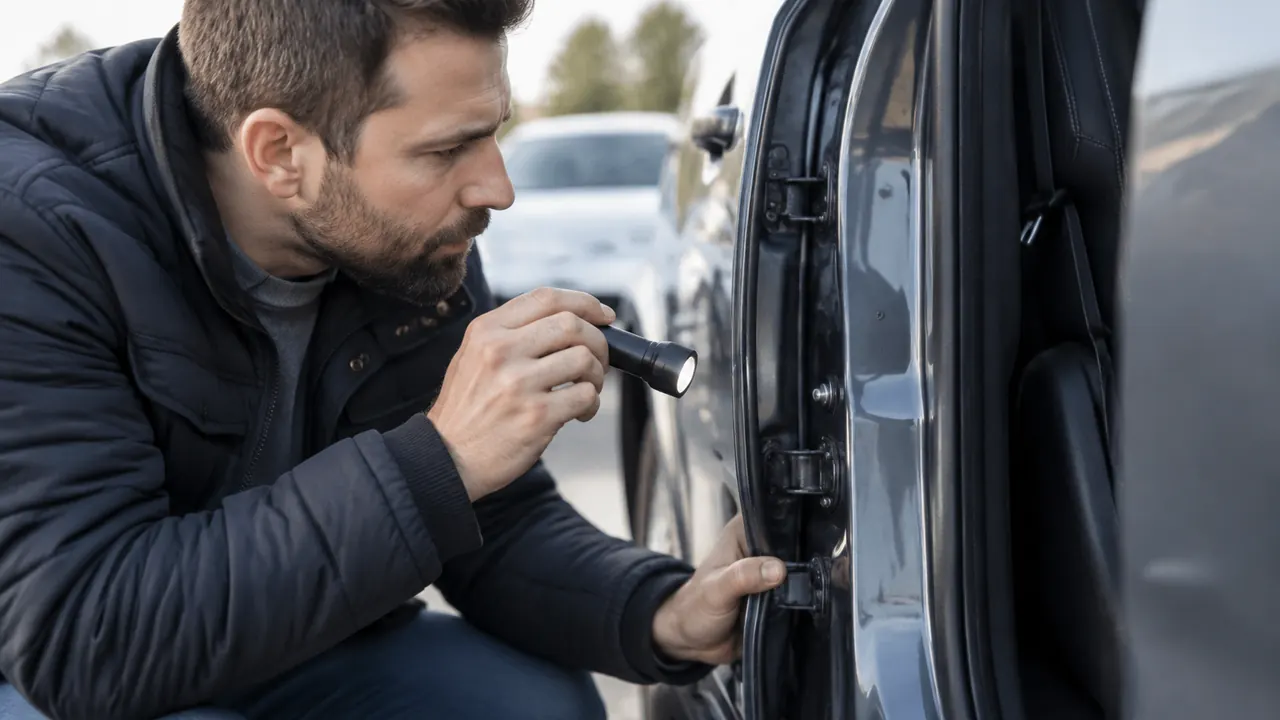
A used car can look immaculate and still carry a history that changes whether you can register it, finance it or get the insurance you need. Conversely, an unbranded title can belong to a vehicle with substantial previous damage. The document is an important starting point, but it is not a mechanical inspection, a complete accident record or a promise about future reliability.
For buyers shopping in September 2026, the practical distinction remains straightforward: clean generally means no recorded title brand, salvage generally identifies a seriously damaged or otherwise qualifying vehicle, and rebuilt generally means a previously salvage vehicle completed a state’s return-to-road process. The details are not nationally uniform. Before paying a deposit, check the title history, your state’s requirements and the actual condition of the specific vehicle.
1. Start with the label, then check the state’s definition
A title establishes ownership and may carry a brand describing a vehicle’s history or status. “Clean title” is usually marketplace shorthand for an unbranded title, not a certification issued after a comprehensive safety examination. Salvage and rebuilt terminology varies: a state might use “reconstructed,” “revived salvage” or another designation. Some states also have distinct categories for flood damage, junk or vehicles that cannot return to road use.
Read the actual document or official electronic title record, not just the seller’s advertisement. Confirm the vehicle identification number, the owner, any lien and every listed brand. If the vehicle came from another state, ask your motor vehicle agency how it treats that state’s designation and what it requires for registration. An unfamiliar label is a reason to investigate, not assume equivalence. Also distinguish the title from the registration: registration authorizes road use under state rules, while the title concerns ownership and recorded status. A lien can exist on an otherwise clean title, so “clean” does not necessarily mean the seller owns the car free and clear.
| Common label | What it generally indicates | What it does not establish |
|---|---|---|
| Clean or unbranded | No brand shown on the current title | No prior crashes, flooding or repairs |
| Salvage | Damage or another event met applicable salvage rules | Eligibility for immediate road registration |
| Rebuilt or reconstructed | A previously salvage vehicle completed the applicable state process | Factory-quality repairs or long-term reliability |
| Junk or nonrepairable | A status generally barring a return to road use | Eligibility for a rebuilt title; verify state rules |
2. A clean title does not mean an undamaged car
An unbranded title can coexist with crash repairs, replaced airbags, corrosion or water intrusion. Damage may not have met the applicable branding threshold, may have been repaired without an insurance claim or may not yet appear in reporting systems. A vehicle can also have extensive repairs without ever becoming an insurer’s total loss. Treat “clean title” as a limited statement about the title record, not shorthand for excellent condition.
Use several sources to build the history. A report from an approved National Motor Vehicle Title Information System provider can show title information, brands and reported salvage or total-loss history. A separate commercial history report may add accident, service or other records. Neither is guaranteed to capture every event. Compare those records with repair invoices, available auction photographs and what an inspector finds. For a 2026 purchase, a report obtained months ago is not enough; check current records before committing.
- Match the VIN on the vehicle, title, sale documents and history reports.
- Investigate mileage inconsistencies, unexplained ownership changes and gaps in repair records.
- Ask directly about collisions, flooding, airbag deployment and structural repairs.
- Resolve conflicting records with the issuing agency; a missing brand does not erase prior history.
3. Salvage describes a status, not a uniform amount of damage
Salvage rules often relate to repair cost compared with vehicle value, but there is no single nationwide percentage. States differ in their formulas, reporting obligations, age exceptions and treatment of particular losses. An insurer’s decision that repairs are economically impractical is also not identical to every state’s legal test for branding. An older vehicle can become a total loss after damage that would be repairable economically on a more valuable car.
The underlying event matters as much as the label. Collision damage can affect the passenger compartment or suspension mounting points. Flooding can leave electrical faults and corrosion that emerge later. Hail damage or a theft recovery may present a different repair picture, but neither description proves the vehicle escaped hidden damage. A salvage vehicle generally cannot simply be registered and driven as an ordinary road car. Verify the rules before buying, including transport arrangements and whether that particular title permits rebuilding.
- Get the loss date, damage description and original estimate when available.
- Look for photographs taken before repairs, not only polished after-repair images.
- Confirm whether a junk, parts-only or nonrepairable designation blocks registration.
- Budget for towing, inspections, taxes, title fees and additional repairs.
4. Rebuilt means a process was completed, not that every repair was validated
A rebuilt designation generally follows repairs and a state-required process for a previously salvage vehicle. The scope varies significantly. Depending on the state, an examination may focus on vehicle identity, receipts and stolen-parts prevention, with separate or additional safety requirements. Do not assume the examiner measured every structural dimension, tested every airbag component or confirmed every manufacturer repair procedure. Ask what the inspection actually covered.
Request the full rebuilding file: before-and-after photographs, itemized labor and parts invoices, inspection documents and any structural measurement or alignment reports. For vehicles with driver-assistance features, ask for documentation of required camera and radar calibration. For hybrids and electric vehicles, request relevant high-voltage system and battery assessments, especially after an underbody impact or water exposure. Missing paperwork does not prove bad work, but it increases uncertainty and should affect your willingness to buy. A fresh inspection sticker, where required, is not a substitute for that record. If the seller says the car is “state certified,” ask to see the precise certification and verify its meaning with the issuing agency.
5. Financing and insurance need approval before the deposit
Some lenders will not finance salvage or rebuilt vehicles. Others consider rebuilt cars but may limit the eligible vehicles, loan amount or terms. A lower lender valuation can leave you needing more cash even when the asking price looks affordable. Get approval for the specific VIN and disclosed title history, rather than relying on a general preapproval or a dealer’s assurance that financing should be available.
Insurance requires the same early checking. Availability of liability, comprehensive and collision coverage varies by insurer, state and vehicle status. A company willing to insure a registered rebuilt car for liability may decline physical-damage coverage or require additional documentation. A salvage vehicle awaiting rebuilding is a different underwriting situation. Ask how prior damage and title history would affect a future claim valuation; do not assume your purchase price would be the payout.
- Disclose the brand and prior loss before requesting written coverage confirmation.
- Confirm the lender’s required coverage, deductibles and any restrictions.
- Check whether gap coverage excludes branded-title vehicles before paying for it.
- Review service-contract eligibility separately; an available policy is not proof of sound repairs.
6. Resale value depends on more than today’s discount
Rebuilt vehicles typically attract fewer buyers because financing, coverage and condition are harder to evaluate. Some dealers will not accept them as trade-ins; others may make substantially lower offers. There is no reliable universal discount that makes every branded vehicle a bargain. The model, age, loss type, repair documentation, local demand and current condition all matter. Compare it with other vehicles carrying similar history, not only clean-title examples.
Calculate the total ownership cost rather than celebrating the difference in sticker price. Include immediate repairs, inspection expenses, borrowing costs, insurance and the possibility of a difficult sale. If you may need to replace the car quickly, limited resale options deserve extra weight. Keep every repair and inspection record, and check your state’s disclosure obligations when selling. A later title issued elsewhere should not be treated as proof that documented salvage history vanished. Also verify any factory warranty directly with the manufacturer using the VIN; salvage or total-loss history can affect coverage under applicable terms. The same caution applies to a seller’s promised warranty: read the actual exclusions and who is responsible for paying claims.
7. Make an independent structural inspection a condition of purchase
For a rebuilt car or any vehicle with suspected major damage, a routine mechanical check alone is not enough. Hire an independent collision-repair or structural specialist, alongside a qualified mechanical inspector where needed. Choose someone experienced with the vehicle’s construction and the manufacturer’s repair procedures, not simply someone recommended by the seller. Ask for a written scope and report; some concerns require measurements, specialist diagnostics or limited disassembly with the owner’s permission.
An inspection cannot guarantee future reliability, but it can identify reasons to stop. Do not road-test a vehicle that is not legally registered and insured for that use. If the seller refuses independent inspection, cannot establish ownership or pressures you to pay before resolving title questions, walk away.
- Request checks of structural dimensions, welds, seams, corrosion protection and suspension attachment points.
- Have airbags, seat belts, warning lights and relevant diagnostic codes evaluated; no warning light is not proof of integrity.
- Check for water intrusion, wiring damage, uneven tire wear and evidence of incomplete repairs.
- Get repair-cost estimates for identified defects and confirm registration, financing and insurance before committing.
Verify current state title and registration rules, lender and insurance terms, and vehicle-specific repair requirements with the relevant agency or qualified professional before purchasing.
AI Assistance Used — AI assistance was used in researching and drafting this article. It was reviewed, edited, and fact-checked by Nadia Clarkson before publication.