Where to Store Medicines When the Bathroom Cabinet Is a Bad Fit
The bathroom cabinet is convenient, but convenience does not make it the right home for every medicine. Steam from showers, changing temperatures and easy access can work against the instructions on a bottle or carton. A kitchen cabinet beside the stove has similar drawbacks. Moving everything into the refrigerator is not the answer, either: Some products need refrigeration, while others can be damaged by cold or freezing.
A better setup starts with the medicines your household actually uses and the people and animals who might reach them. For a family reorganizing in 2026, the most useful tools are still straightforward: readable labels, a suitable storage location, secure access and a repeatable checking routine. Think in terms of separate storage needs, not one perfect cabinet for every prescription, vitamin, cream and emergency treatment.
1. Let each label set the storage rules
Gather medicines from drawers, bags, counters and bedside tables, then read the storage directions on each product. Include over-the-counter drugs, supplements, medicated patches and pet prescriptions. Directions may appear on the pharmacy label, manufacturer’s carton or accompanying leaflet. If instructions are missing or appear inconsistent, ask the pharmacist to confirm the requirements for that exact product and formulation.
Many medicines call for controlled room temperature, often around 68 to 77 degrees Fahrenheit, but allowable ranges and brief temperature excursions vary. That common range is not a universal rule. Liquids, suppositories, injections and compounded preparations can have different requirements, even when they contain a familiar ingredient. Do not assume two versions of the same drug belong in the same place.
Separate the collection into room-temperature products, refrigerated products and items with special access or handling needs. Keep anything questionable apart until a pharmacist advises you. A medicine can look normal after improper storage, so appearance alone cannot establish that it remains suitable to use.
- Check for directions about light, moisture, freezing and upright storage.
- Look for separate instructions before opening and after first use.
- Record any discard deadline tied to mixing, opening or removal from refrigeration.
2. Choose a stable location, then make it secure
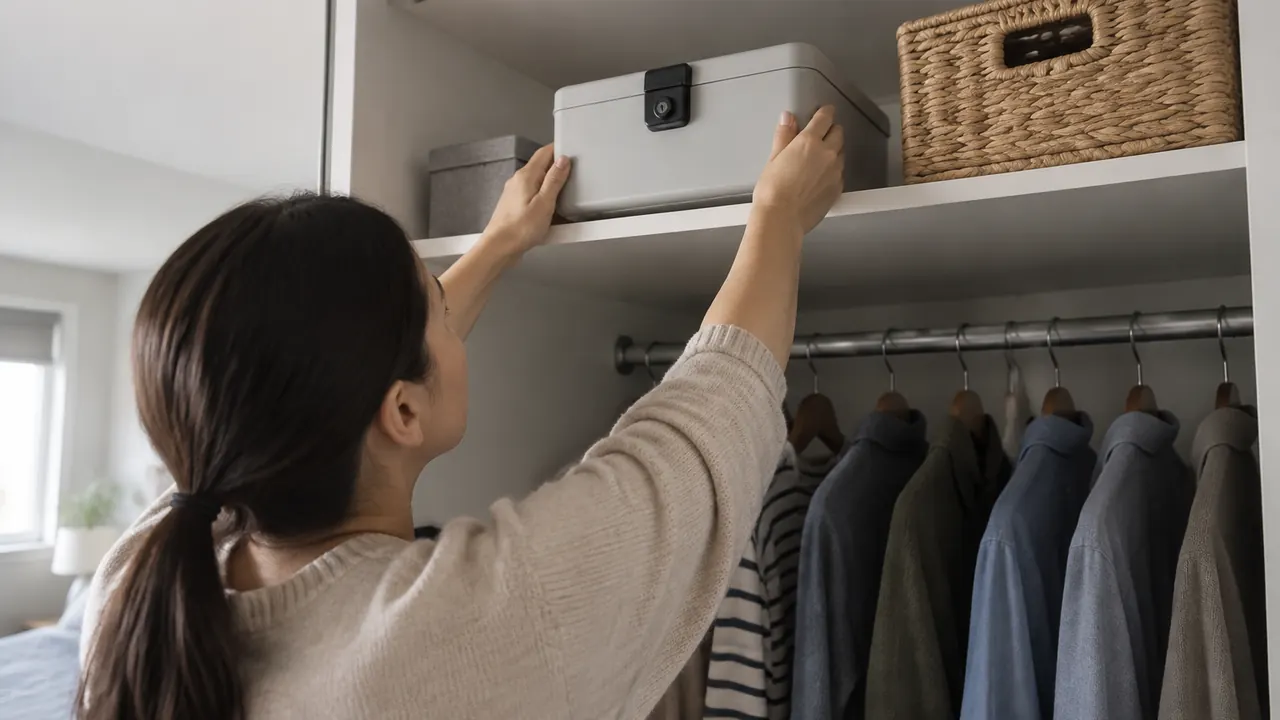
A high shelf in an interior bedroom closet can be a good candidate for room-temperature medicines if the closet stays within the label’s range. A dry hallway cabinet may also work. Avoid shelves against a hot exterior wall, near a radiator or beneath a leak-prone pipe. Check the actual conditions during hot weather; an upstairs room without reliable cooling may be unsuitable.
For households with children, a locked container or cabinet adds an important barrier. Height alone is not protection against a climbing child, and a child-resistant cap is not childproof. Choose a lockbox large enough to hold the original containers without crushing cartons or bending packaging. Keep its key or code inaccessible to children, while ensuring responsible adults can get necessary medicines promptly.
- Keep storage away from sinks, showers, stoves and sunny windows.
- Avoid garages, attics and cars, where temperatures can swing widely.
- Secure the box so it cannot easily be pulled down or carried off.
| Location | Main concern | What to verify |
|---|---|---|
| Bedroom closet | Heat buildup or climbing access | Stable temperature and secure storage |
| Hallway cabinet | Shared household access | A working lock and dry conditions |
| Bathroom cabinet | Shower moisture and heat | Whether conditions meet each label |
| Kitchen cabinet | Cooking heat, steam and food confusion | Distance from appliances and secure access |
3. Keep packaging that protects and identifies the medicine
Original packaging does more than identify a drug. A manufacturer’s bottle, blister pack or carton may protect it from moisture or light. The pharmacy-dispensed container also carries essential directions and patient information. Keep medicines in the packaging in which they were supplied unless a pharmacist confirms an alternative is appropriate. Leave protective packets in place when directed, and never treat them as something to swallow.
Weekly organizers can help people follow a schedule, but not every medicine is suitable for repackaging. Some must stay sealed in individual blisters until use. Ask about the specific products before filling an organizer, and remember that many organizers have no child-resistant features. Store a filled organizer securely rather than leaving it on a breakfast table.
Do not combine leftover tablets in one bottle or use a food container for loose doses. Keep the dispensing label readable, retain useful instructions and store each liquid’s dosing device with that medicine. For multiple family members, use clearly marked bins inside the secure storage area. Separate human and veterinary medicines, and make sure the organization helps adults distinguish patients rather than merely sorting similar-looking bottles together.
4. Give refrigerated medicines their own plan
Only refrigerate medicines when their instructions call for it. Many refrigerated products specify 36 to 46 degrees Fahrenheit, but the exact label controls. Some have different rules before first use and afterward; others allow a limited period at room temperature. Insulin products, for example, do not all share one in-use storage period. Confirm the product name, formulation and device when asking for advice.
Choose a refrigerator location with stable temperatures, generally away from the door and from surfaces or vents that might freeze the medicine. Keep the original packaging when required for light protection. A refrigerator thermometer helps identify problems, although a single reading cannot show what happened during an overnight outage. Use a designated container to separate medicines from food, and ask about a lockable option if children can access the refrigerator.
During a power outage or equipment failure, note the likely time and temperature exposure and contact the pharmacist or manufacturer for product-specific guidance. Do not assume putting a warmed medicine back in the refrigerator restores its permitted storage time. Avoid direct contact with ice or frozen packs, which may freeze the contents. For an essential treatment, arrange advice about replacement or a safe interim plan promptly rather than simply skipping it.
5. Plan for children, pets and overnight guests
A locked household cabinet does not address medicines in a visitor’s handbag, a grandparent’s weekly organizer or a teenager’s backpack. Before relatives arrive, offer secure storage without making it awkward: Explain that the household keeps medicines locked away and provide a place for theirs. Discuss refrigerated items separately. Do not move another adult’s medicine without telling them where it went and how to retrieve it.
Pets create another access problem. Dogs may chew through bottles or bags, and dropped tablets can disappear quickly. Keep medicines off nightstands and counters, including veterinary products that pets may find appealing. Close containers and return them to secure storage immediately after each dose. Build that step into the routine, even when the phone rings or someone interrupts.
- Check guest rooms and accessible bags, with visitors’ permission.
- Give children’s medicines to a responsible adult rather than leaving doses out.
- Keep pet medicines separate and verify the animal’s name before dosing.
- For suspected human poisoning, call Poison Control at 1-800-222-1222; call 911 for collapse, seizures or trouble breathing.
- For suspected pet poisoning, contact a veterinarian or animal poison service promptly.
6. Balance fast access with routine checks
Emergency medicines need an access plan, not automatic placement in the most difficult box to open. Epinephrine, rescue inhalers, naloxone and seizure rescue medicines have different storage instructions and uses. Ask the clinician or pharmacist how to keep each accessible to the intended user or trained caregiver while limiting unauthorized access. Tell relevant adults where it is and what to do in an emergency.
Choose a recurring date to review the entire collection, with additional checks before travel, school transitions or extended visits. Read both the printed expiration date and any shorter pharmacy-assigned or in-use deadline. A reconstituted antibiotic or compounded medicine may have a much shorter usable period than an unopened manufactured product. Write opening dates where they remain visible without covering instructions.
Set aside expired, unidentified or damaged products, and ask about medicines exposed to excess heat or moisture. Do not rely on smell, color or texture to clear them for use. Arrange replacements for essential treatments before the supply becomes unusable, and check current FDA recall notices if a recall may involve your product.
7. Dispose of leftovers according to the product
For most unwanted medicines, a drug take-back program or authorized collection site is the preferred disposal route. Check current DEA collection-site information or ask a pharmacy what it accepts; hours, services and restrictions can change. Some locations offer mail-back options. Keep unwanted medicines secured while awaiting disposal, and do not give someone else a leftover prescription.
If take-back is not readily available, check FDA disposal guidance for the specific medicine. Flush only medicines covered by FDA flush-list guidance or explicit disposal instructions when take-back is unavailable. For most other medicines suitable for household-trash disposal, FDA advises mixing them, without crushing tablets or capsules, with an undesirable material such as dirt, used coffee grounds or cat litter. Seal the mixture in a container or bag before placing it in the trash, and obscure personal information on empty packaging.
Do not apply that method to everything. Needles and other sharps require an appropriate sharps container and disposal consistent with local rules, not loose placement in trash or recycling. Inhalers, certain patches and other specialized products may have separate directions. Follow the product instructions and local waste guidance so cleanup does not create another exposure risk.
Consult a pharmacist about storage conditions, temperature exposure and disposal instructions for each specific medicine.
AI Assistance Used — AI assistance was used in researching and drafting this article. It was reviewed, edited, and fact-checked by Lisa Barber before publication.