Repair or Replace Your Roof? The Evidence to Ask a Roofer For
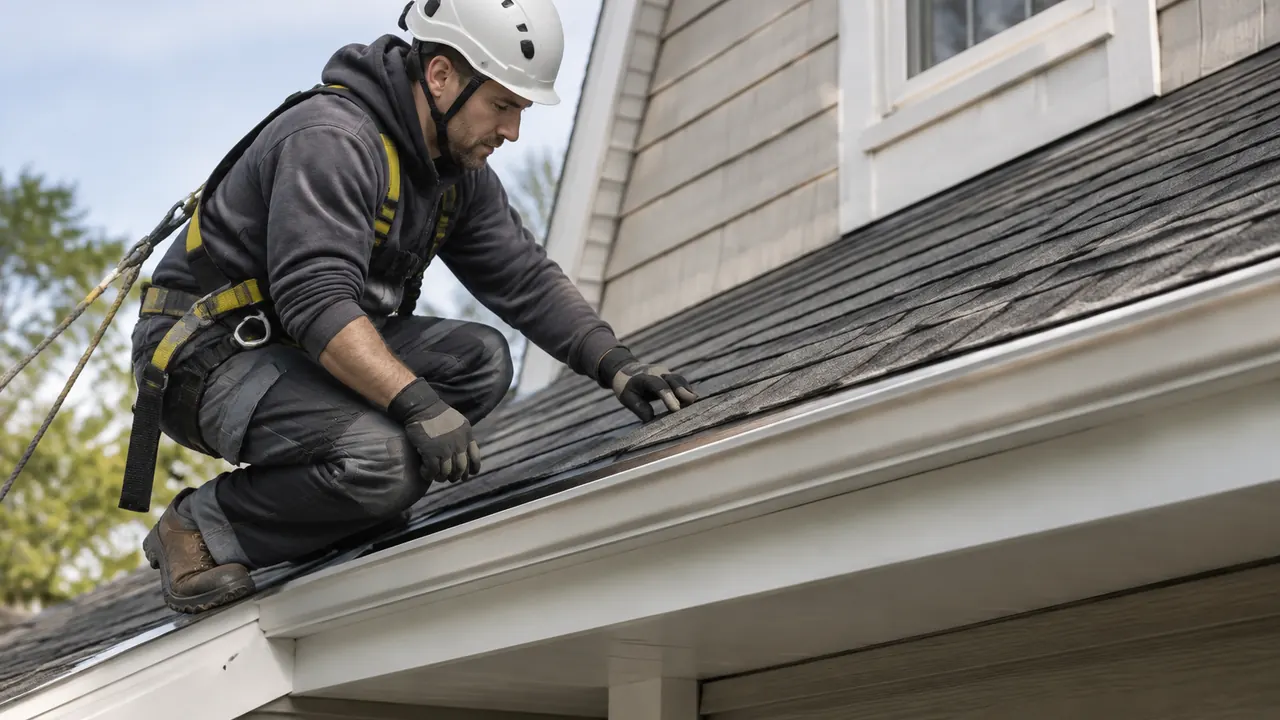
A ceiling stain can make a new roof sound urgent. So can a contractor pointing to your roof’s age and warning that it is time. Neither, by itself, tells you whether replacement is the right purchase. The useful question is whether the problem is confined to a repairable area or reflects wear and failures across the roof system. That distinction should rest on evidence you can review, not just a recommendation delivered from a ladder.
For homeowners comparing roofing proposals in 2026, the strongest starting point is a documented inspection: labeled photos, a leak history, an explanation of flashing and drainage conditions, and a realistic discussion of remaining service life. Most examples below concern asphalt shingles, but the decision process applies more broadly. Tile, metal and low-slope roofs need material-specific expertise; an attractive surface can conceal deteriorated components underneath.
1. Ask for a roof map, not a handful of alarming photos
Ask the roofer to identify each roof slope and mark where every reported defect sits. A close-up of cracked shingles proves those shingles are cracked; it does not establish how much of the roof is affected. Request wide views alongside detail shots, including areas the roofer considers sound. Photos should be tied to your house and the inspection date, with a simple description of what each image shows.
The report should distinguish observed damage from suspected hidden damage. A roofer may see soft decking or water staining from an accessible attic, but concealed underlayment and wood often cannot be fully evaluated until roofing is lifted or removed. Ask what was actually inspected, what was inaccessible and whether any exploratory opening is justified. Drone images can document broad conditions without putting you on the roof, but they do not replace hands-on examination where needed.
- Request labeled photos of each slope, valleys, penetrations, roof edges and visible problem areas.
- Ask for attic photos when access is safe, including staining, damp insulation and visible decking deterioration.
- Have the roofer estimate the affected area and explain whether defects are isolated, clustered or widespread.
2. Reconstruct the leak before choosing the remedy
Water does not always enter directly above the ceiling stain. It can travel along framing, decking or other surfaces before appearing indoors. Give the roofer a timeline: when the leak began, whether it occurs during ordinary rain or wind-driven storms, and whether snowmelt has been involved. Note plumbing or HVAC work, rooftop equipment installation and previous repairs. Some apparent roof leaks are plumbing leaks or condensation, so the diagnosis should account for other possible sources.
Repeated leaks matter, but their pattern matters more than their number. One badly detailed chimney can leak repeatedly while the surrounding roof remains serviceable. New leaks appearing at unrelated locations, especially alongside general material deterioration, are more concerning. Ask the contractor to connect the proposed work to the likely entry point and explain how success will be checked. A controlled water test may help in selected cases, but it should be performed by someone qualified to avoid causing damage.
- Keep dated interior photos and note the weather associated with each leak.
- Share prior invoices and ask whether earlier work corrected the source or only patched a symptom.
- Ask what follow-up is included if the same leak returns after repair.
3. Separate isolated damage from roof-wide deterioration
A few wind-damaged shingles, a localized impact or a failed pipe boot can support a targeted repair when surrounding materials remain sound. The roofer should explain how adjacent shingles will be lifted and resealed without breaking them. On a brittle roof, a small repair can become larger because nearby shingles crack during handling. Availability also matters: a matching product may be discontinued, although a cosmetic mismatch alone does not prove the whole roof needs replacement.
Replacement becomes more compelling when inspection shows deterioration across multiple slopes, widespread loss of flexibility, recurring failures at unrelated locations or extensive decking problems. Granule loss needs context: some shedding can occur on newer shingles, while substantial exposed asphalt and other wear indicators are different concerns. Ask whether the evidence shows reduced weather protection, merely a visual change or uncertainty requiring further investigation. Neither a lone close-up nor one neat age-based rule answers that question. If only one slope is failing, ask whether partial replacement is technically sound and code-compliant, and what limitations it creates.
| Finding | May favor repair | May favor replacement |
|---|---|---|
| Damaged shingles | Small area; surrounding shingles workable | Broad damage or brittle surrounding materials |
| Leak pattern | One identifiable, correctable source | Multiple sources with widespread deterioration |
| Flashing failure | Accessible detail can be rebuilt properly | Failures distributed across a worn roof |
| Decking condition | Localized damage with a defined repair | Extensive deterioration requiring broad access |
4. Make flashing and hidden components part of the decision
Flashing directs water away from joints and penetrations, including chimneys, walls, skylights and vent pipes. It deserves its own inspection findings, not a vague promise to seal everything. Ask whether metal is corroded, displaced, missing or incorrectly integrated with the surrounding roof and wall materials. Sealant can be appropriate in specified details, but repeated surface caulking is not a substitute for rebuilding a defective water-shedding assembly.
A repair may require removing sound-looking shingles or siding to reach the problem. Conversely, replacing shingles while leaving defective flashing in place can preserve the original leak. Have the proposal identify which flashing will be replaced, which may be reused and why. The roofer should also evaluate drainage and accessible signs of ventilation or moisture problems. New roofing will not automatically fix an attic receiving moist indoor air through leaks in the ceiling.
- Ask for close-ups and an explanation of flashing at each leaking junction.
- Require a plan for deteriorated decking, including how added work will be documented and priced.
- Confirm that proposed details meet applicable local requirements and the roofing manufacturer’s installation instructions.
5. Treat age as context, not an expiration date
Roof age helps frame the inspection, but it does not measure condition on its own. Installation quality, material type, sun exposure, storm history, drainage and attic conditions all affect performance. A relatively young roof can have serious workmanship defects; an older roof can still have serviceable areas. Establish the installation date from permits, invoices or reliable records when possible, and distinguish the latest covering from older layers underneath.
Ask for an estimated remaining service-life range, the observations supporting it and the uncertainties. That estimate is not a guarantee. A warranty term is not a prediction of leak-free life, either; coverage can depend on the product, installation, transfer rules and exclusions. The practical question is whether a repair is likely to provide a useful period of reliable service given the roof’s overall condition. An insurance renewal requirement is a separate consideration: request the insurer’s current written criteria rather than treating its age threshold as an engineering conclusion. If documentation is missing, the roofer should acknowledge that uncertainty rather than assign an exact age from appearance alone.
| Information | What it helps establish | What it cannot establish alone |
|---|---|---|
| Installation date | Time in service | Present condition |
| Warranty documents | Potential coverage and conditions | Actual remaining service life |
| Inspection findings | Observed wear and defects | Condition of every concealed component |
| Insurer’s written rules | Coverage or renewal requirements | Whether repair is technically adequate |
6. Buy an independent opinion when the stakes justify it
An independent assessment is especially useful when one contractor recommends a modest repair and another calls for complete replacement without reconciling the evidence. It can also help with recurring unexplained leaks, unusual roof systems or a large proposed job based mainly on age. Look for a roof consultant or inspector experienced with your roofing material who is paid for the assessment and does not stand to profit from selling the installation.
Ask about qualifications, relevant experience, insurance and financial relationships with contractors. Licensing requirements and professional titles vary by state and locality, so a title alone is not enough. Agree on the scope and written deliverable: photos, observed defects, inspection limitations, repair feasibility and replacement triggers. Structural movement, significant sagging or suspected load problems may warrant a licensed structural engineer. A second sales estimate can be useful, but it is not the same as an independent diagnosis.
- Send each evaluator the same leak timeline and prior repair records.
- Ask the independent reviewer to address the specific disagreement between proposals.
- Clarify whether the fee includes a follow-up discussion or review of revised contractor scopes.
7. Compare written scopes and set a follow-up plan
Request repair and replacement options when both are technically reasonable. Each should state the work area, materials, flashing treatment, disposal, permits where required, and workmanship warranty. For replacement, clarify tear-off versus any proposed overlay, applicable layer limits and treatment of hidden damage. Compare decking allowances and unit prices so a low starting bid does not obscure likely additions. Request current local prices rather than relying on national averages.
Weigh the repair’s cost against its expected useful life and the consequences of another leak, not an arbitrary percentage of replacement cost. A documented repair can be sensible if it addresses a defined defect on an otherwise serviceable roof. Replacement is easier to justify when broad failures make dependable repair impractical. Whichever you choose, keep before-and-after photos, invoices and warranty documents. Agree on when the roof should be rechecked and what new symptoms warrant a call. During an active leak, prioritize safe temporary protection and prompt drying; avoid climbing onto the roof yourself. Bulging ceilings, suspected electrical hazards or visible structural distress require urgent professional help.
Before authorizing work, verify current local code, permit and insurance requirements, written pricing and warranty terms, and consult a qualified professional about your roof’s specific condition.
AI Assistance Used — AI assistance was used in researching and drafting this article. It was reviewed, edited, and fact-checked by Jordan Singh before publication.