A Leak in Your Rental: What to Do in the First Hour
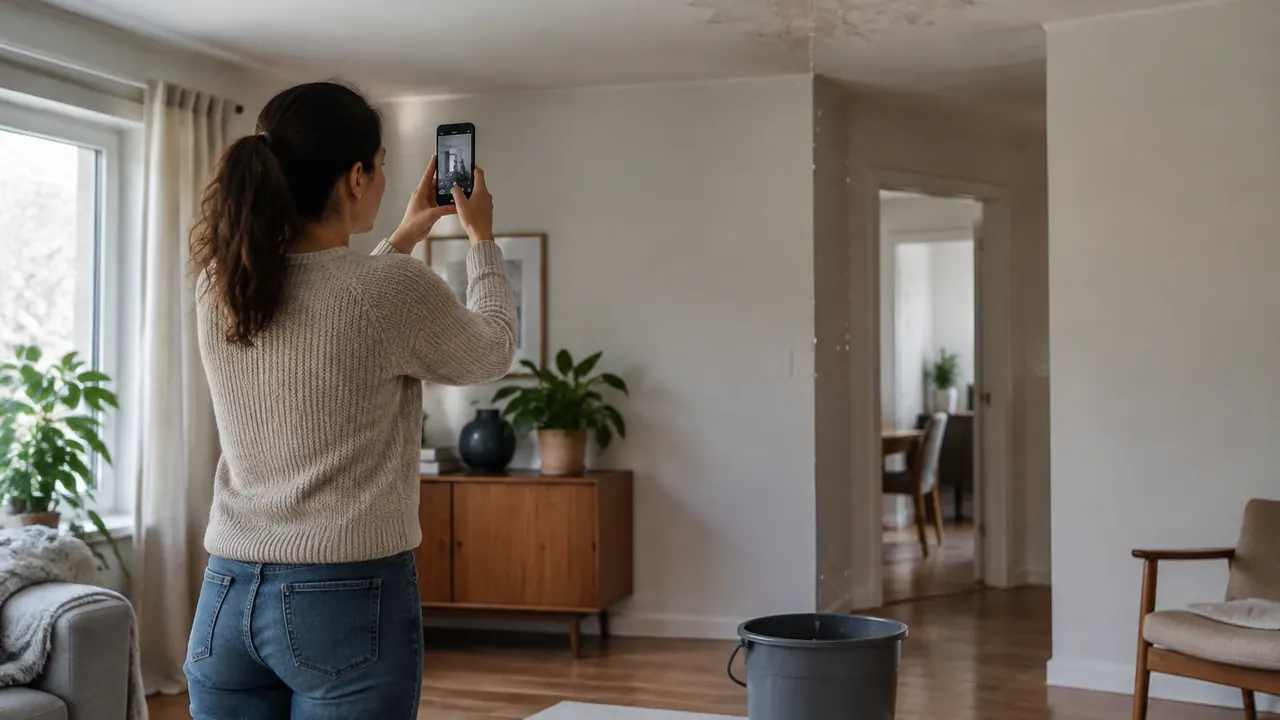
The first hour of a leak in your rental is not about finding a permanent fix. It is about keeping people away from danger, getting the right help moving and creating a record of what happened. A slow ceiling drip can conceal soaked materials overhead; water near a light fixture can create an electrical hazard before a puddle looks especially large.
Use the sequence below as a guide, not a reason to wait. If the situation looks dangerous, skip the photographs and belongings and leave the affected area. In 2026, many landlords use maintenance portals, but an online ticket alone is not enough for an active emergency. Pair written notice with the emergency contact method your building provides, and keep copies you can access outside the apartment.
1. First, decide whether you need to leave
Pause at a dry, safe spot and look without approaching the leak. Get children, pets and anyone who needs assistance away from the affected room. Watch for a sagging or bulging ceiling, falling plaster, rapidly spreading water, sparks, smoke or unusual buzzing. Do not stand under a swollen ceiling, poke it to release water or move ceiling tiles. Waterlogged materials can fall without much warning.
Leave the apartment if you cannot remain safely separated from the hazard, water is cutting off your exit, or you suspect structural failure. Call 911 from safety for fire, sparking, an immediate collapse risk, trapped people or other immediate threats to life. A gas odor also calls for leaving without operating switches or using a phone inside; contact 911 or the gas utility from outside. For a contained drip without immediate danger, call emergency maintenance rather than assuming every leak requires emergency responders. Never delay leaving to collect evidence.
- Use a dry, safe exit; do not cross standing water that could be energized.
- Avoid an elevator affected by water, and follow building evacuation instructions.
- Stay out of any closed-off area until the appropriate responder or qualified professional clears it.
2. Treat electricity and unknown water as hazards
Water near outlets, appliances, extension cords, a breaker panel or ceiling fixtures is a reason to back away. Do not test a switch, unplug a wet device or reach through water to retrieve electronics. Standing water may be energized even when nothing is sparking. Turning off a wall switch does not establish that a wet fixture or nearby wiring is safe.
Do not approach a wet panel or walk through water to reach one. Only consider switching off a clearly identified circuit if you can reach a dry, undamaged panel by a completely dry route and operate it safely. If there is any uncertainty, leave isolation to emergency personnel or a qualified electrician. Do not reset tripped breakers or restore power to affected equipment yourself. Also avoid contact with sewage, toilet backups and water of unknown origin. Keep pets away, and do not use a household vacuum to collect water.
| What you notice | Safer immediate response |
|---|---|
| Water coming through a light fixture | Leave the area; do not touch the fixture or switch. Request urgent help. |
| A bulging ceiling | Clear the room and report a possible collapse hazard. |
| Sewage or drain-backup water | Avoid contact and keep people and pets out. |
| A small drip away from electrical equipment | Report promptly; contain it only if the surrounding area is safe. |
3. Notify the landlord through two channels
Call the landlord’s or property manager’s emergency maintenance number as soon as you are safe. Check your lease, resident app or posted building information. Give your unit number, the leak’s location, when you first noticed it and whether it is still flowing. State hazards first: water through a fixture, ceiling movement, sewage or an unsafe exit. Say if you have left and where you can be reached.
Then send a timestamped text, email or portal message with the same facts. For example: “At 6:10 p.m. today, I found active water dripping from the bedroom ceiling near the light. We have left that room. I called emergency maintenance at 6:14 p.m. Please confirm receipt and arrange urgent assessment.” Describe what you observed, not an unverified cause. If nobody answers, leave a voicemail and try the backup contact. An automated ticket receipt confirms submission, not that someone is on the way.
- Ask who is responding, the expected arrival time and what to do if conditions worsen.
- Explain any access instructions and whether someone can safely remain to admit maintenance.
- Save the ticket number, messages, call times and the names of people you reach.
4. Limit damage only where it is safe
Once hazards are ruled out, take modest steps to protect belongings. Move dry items away from the drip and off a threatened floor, prioritizing medications, identification, essential paperwork and portable valuables. Put a bucket beneath a small drip only if doing so does not place you beneath damaged ceiling material or near electricity. Keep containers and moved furniture out of walking paths. Do not lift heavy furniture alone or return to a dangerous room for possessions.
If water is coming from a plumbing fixture in your unit, a familiar, accessible shutoff may help. You can close a toilet’s or sink’s local supply valve if it is dry, reachable without tools and turns normally. Do not force a stuck valve, dismantle plumbing, open walls, climb onto a roof or operate an unfamiliar building-wide shutoff. Ask maintenance for direction rather than experimenting. Do not enter another tenant’s apartment to trace the source. If an upstairs neighbor can be contacted safely, alert them, but keep the landlord informed. A leak that stops still needs assessment: moisture may remain inside ceilings, walls or flooring, and the underlying failure may recur.
5. Photograph the scene and start a simple timeline
Document from a stable, dry location after making the emergency calls. Take a wide view showing the affected room, then closer views of the leak, staining, pooled water and damaged belongings when safe. A short video can show active dripping. Do not move toward a hazard for a better angle. Preserve original files, including their available metadata, and back them up somewhere accessible if your phone is lost or damaged.
Start one running note with the date, discovery time and what you saw. Record changes in the flow, any spreading stain and each call or message. Label estimates honestly: “noticed around 6 p.m.” is better than inventing precision. If you move something before photographing it, note that. Avoid saying a neighbor caused the damage unless that has been established. Keep the record factual and private rather than posting neighbors’ names or apartment interiors publicly.
- List affected belongings with approximate age, brand or model, condition and purchase information when available.
- Save receipts, order histories and earlier photos that help establish ownership and condition.
- Record maintenance arrival times, observations shared with you and work performed.
- Keep originals; send copies and save screenshots or exports of portal updates.
6. Contact your insurer without assuming coverage
If belongings are damaged or the apartment may be unsafe to occupy, contact your renters insurer promptly or review its claim-reporting instructions. Explain the known facts and ask what documentation it needs. Renters insurance commonly covers certain sudden, accidental water losses, but coverage depends on the cause, policy terms and exclusions. Flooding from outside, sewer backup and gradual leakage can raise different coverage issues. A landlord’s property policy generally does not insure your personal belongings.
Ask about your deductible, any applicable limits, temporary lodging and whether expenses require advance approval. Additional living expense coverage may help after a covered loss makes the home unfit to live in, subject to policy conditions; it is not automatic for every leak. Before paying for a hotel or cleanup service, seek guidance if time and safety allow. If you must leave immediately, prioritize safety, then save itemized receipts and explain why the expense was necessary. Do not discard damaged items until the insurer tells you what evidence it needs, unless keeping them poses a health or safety risk. Photograph any necessary disposal and record what was removed.
7. End the hour with a clear handoff
Before the first hour ends, if possible, send a concise update: whether the water is continuing, which rooms are affected, what protective steps you took and whether you are staying elsewhere. Ask for confirmation of the repair plan and an assessment of wet materials, not just a promise to repaint. Drying needs depend on what got wet, how deeply and whether the water was contaminated. Do not aim fans at sewage or potentially contaminated materials.
If urgent help has not arrived, follow up through the emergency contact chain. For unresolved unsafe conditions without an immediate life threat, local housing or code enforcement may explain the next reporting step; tenant legal aid can advise on local remedies. Do not assume you can withhold rent, deduct repair costs or hire a contractor at the landlord’s expense. Those rights and procedures vary by jurisdiction. Keep communications, expenses and photographs together. Your goal is a documented handoff: the responsible parties know what is happening, residents are out of danger, and qualified people are arranging assessment and repairs.
Check your current lease, insurance policy and local tenant rules, and consult qualified emergency, repair or legal professionals for advice specific to your situation.
AI Assistance Used — AI assistance was used in researching and drafting this article. It was reviewed, edited, and fact-checked by Jordan Singh before publication.