Removing Someone From a Mortgage: Why Changing the Deed Is Not Enough
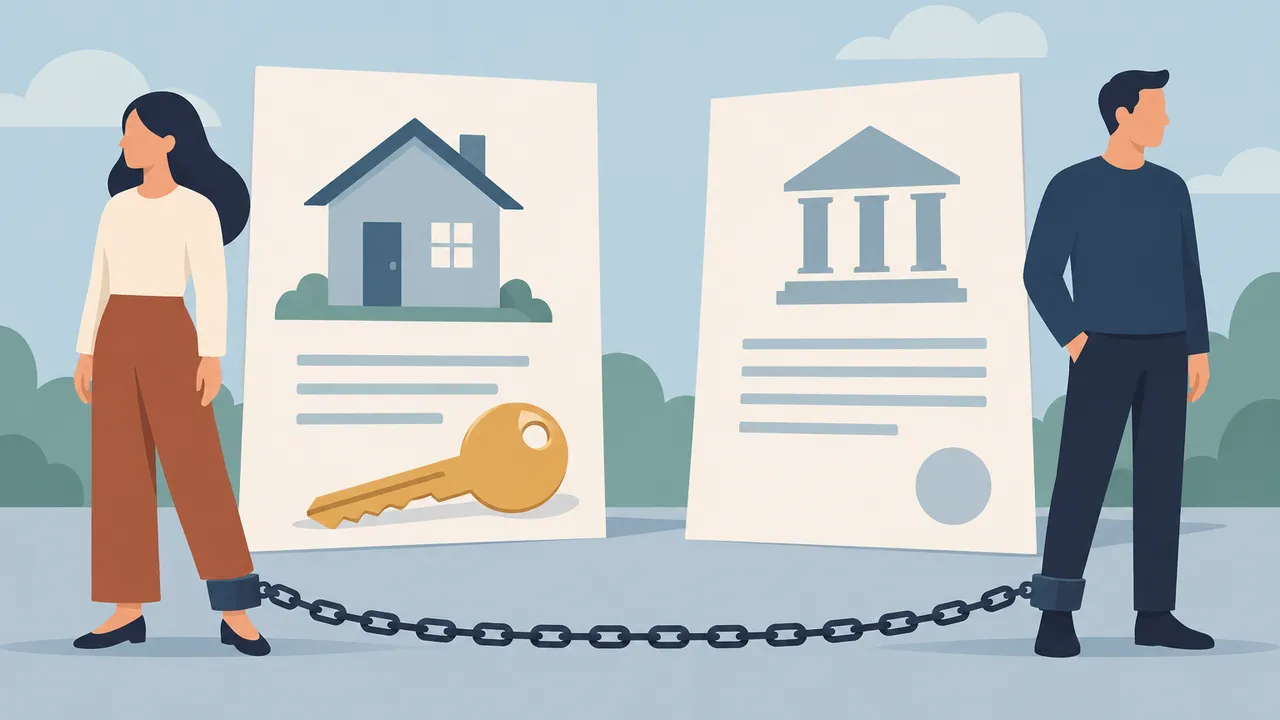
When partners separate, agreeing who keeps the house is only half the job. A deed identifies ownership; the promissory note establishes responsibility for repayment. Signing a quitclaim deed generally gives up an ownership interest without removing the signer from the mortgage debt—a risky combination if the remaining borrower stops paying. The unresolved debt can also complicate the departing borrower’s ability to qualify for a mortgage on another home.
For US co-borrowers navigating a separation in October 2026, the central question is not simply whose name appears in county records. It is whether the lender has formally ended the departing borrower’s liability. That usually requires refinancing, an approved assumption with a release, another lender-authorized release, or paying off the loan.
1. Separate ownership from the obligation to repay
The deed, note and mortgage or deed of trust serve different purposes. The deed conveys title. The note contains the repayment promise. The mortgage or deed of trust secures that debt against the property. Changing title does not rewrite the note or eliminate the lender’s rights against a borrower.
A divorce decree can assign payments to one spouse, but it generally does not bind a lender that has not agreed to release the other. Missed payments can therefore affect both borrowers’ credit. Before signing anything, gather the documents and identify exactly which obligations and ownership interests must change.
Check whether the note imposes joint and several liability. If it does, each borrower can be responsible for the entire balance, not merely the share assigned in a separation agreement.
- Check the recorded deed through the county land records office.
- Review the note and latest statement for borrower names.
- Ask the servicer to identify the loan type and investor.
- Have a local attorney review any proposed transfer or settlement.
2. Compare the available exit routes
Refinancing replaces the existing mortgage with a new loan, ideally in the remaining owner’s name alone. The old debt is paid off at closing. An assumption instead lets an approved borrower take responsibility under the existing loan’s terms. A standalone release may be possible, but lenders do not routinely offer one.
Ask the servicer which options apply to this specific loan before shopping or transferring title. FHA, VA and USDA loans may offer assumption pathways, subject to program rules and approval. Conventional loans are often not freely assumable, although protected transfers and investor policies can create different procedures for separating spouses.
An assumption does not itself supply cash for an equity buyout. If savings are insufficient, ask whether secondary financing is permitted and how its payment would affect approval and affordability.
| Route | Main advantage | Critical condition |
|---|---|---|
| Refinance | Replaces joint debt | New borrower qualifies; old loan is paid |
| Approved assumption | May preserve existing terms | Obtain an explicit liability release |
| Standalone release | May avoid replacement financing | Lender and investor must permit it |
| Sale | Can end shared mortgage responsibility | Proceeds or other funds cover payoff |
3. Test whether one borrower can qualify
The remaining borrower usually must demonstrate sufficient income, acceptable credit and manageable debts. Underwriting may consider the full housing payment, including taxes, insurance and association dues. A refinance also depends on property value, equity and loan limits. Approval for the original joint mortgage does not establish eligibility for a solo loan.
Include any equity buyout in the calculation: compensating the departing owner can require cash or a larger mortgage, potentially changing pricing or loan classification. Alimony or child support may count when program documentation and continuation requirements are met; borrowers generally need not disclose it unless relying on it to qualify.
Avoid opening credit accounts or financing furniture before closing. Lenders may recheck credit and employment, and a new monthly obligation or job change can jeopardize an otherwise workable approval.
- Gather pay records, tax returns and account statements.
- List debts and legally required support payments.
- Compare Loan Estimates for rate, fees and cash needed.
- Budget for repairs, insurance changes and emergency savings.
4. Secure approval and a written release
Send the servicer a written request for its assumption or release process, required documents, fees and expected timeline. Certain divorce-related, spousal and inheritance transfers receive federal due-on-sale protections. Those protections can prevent acceleration solely because of the transfer, but they do not automatically remove anyone’s personal liability or guarantee an assumption.
For an assumption, confirm in writing that the departing borrower is released, rather than merely receiving permission to transfer ownership. On a VA loan, release of liability and restoration of entitlement are separate issues; ask the servicer and VA about both. Keep all approval documents and continue payments until the transaction closes.
Have counsel check the release’s effective date, loan number and borrower names. If the account has arrears or deferred amounts, obtain written confirmation of whether any obligations survive the release.
5. Coordinate the deed, closing and follow-up
Arrange the ownership transfer with the attorney or closing professional handling the financing. Coordinating the deed and debt release helps prevent one person from surrendering ownership while remaining liable. State rules determine signing, notarization and recording requirements, and transfers can also affect taxes, homestead benefits and insurance.
If solo financing fails, consider a sale or a carefully documented temporary arrangement with a deadline and fallback plan. A private promise to pay does not protect the other borrower from the lender. After closing, verify the payoff or release and check subsequent mortgage statements and credit reports for errors.
Confirm who receives any escrow refund after payoff and how it will be divided. Update automatic payments only after verifying the final old-loan payment and the replacement loan’s first due date.
- Obtain the recorded deed and final closing documents.
- Update insurance, tax notices and association records.
- Confirm any HELOC or second mortgage is separately resolved.
Verify current requirements with your servicer, applicable federal housing agency and local recording office; this overview is not personalized legal, tax or lending advice.
AI Assistance Used — AI assistance was used in researching and drafting this article. It was reviewed, edited, and fact-checked by Lisa Barber before publication.