Raised Garden Beds: Compare Materials, Soil Needs and Total Cost
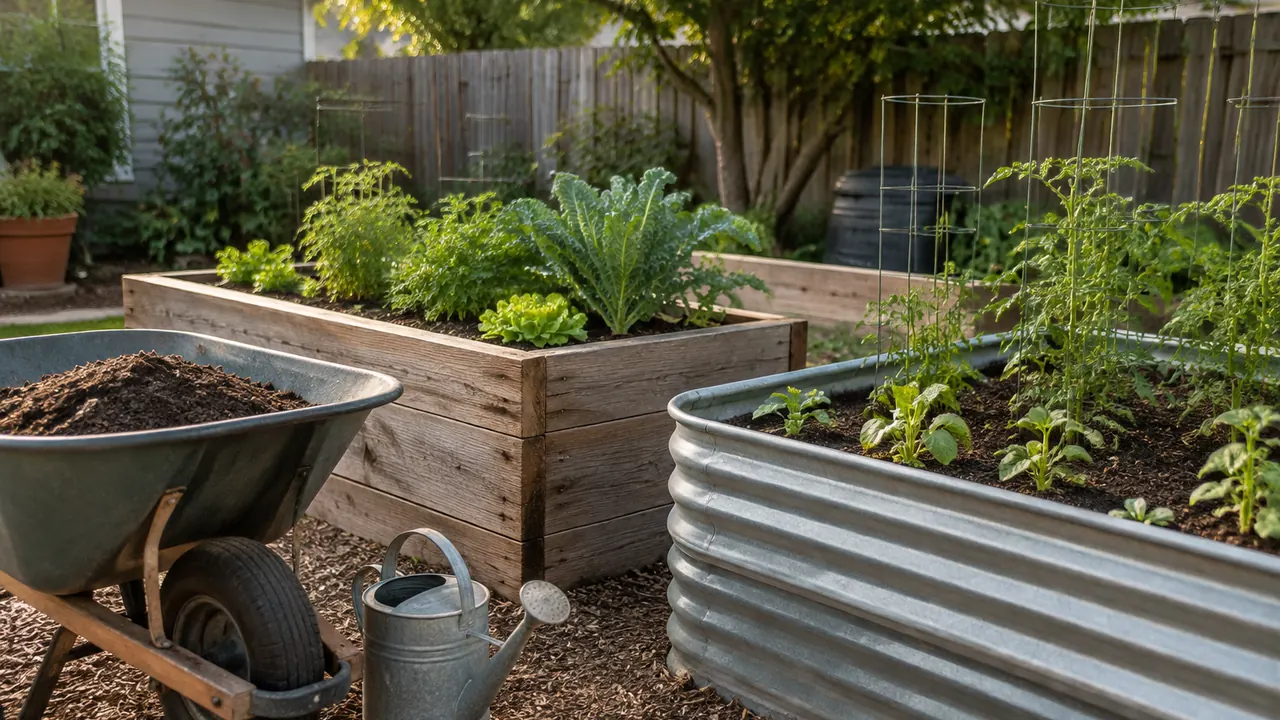
A raised garden bed can make a small backyard easier to plant, weed and harvest, but the frame is only part of the purchase. Soil, delivery, site preparation and access can cost as much as the structure, sometimes more. Before shopping in summer 2026, decide what problem the bed needs to solve: compacted ground, awkward bending, poor drainage or simply keeping vegetables separate from the lawn.
Wood, metal and masonry can all work well. The better choice depends on the specific product, the site and your ability to assemble, fill and maintain it. An inexpensive frame that is difficult to reach is not a bargain, and a tall bed does not automatically drain well. Start with dimensions and placement, then compare materials and price the entire project before ordering.
1. Compare the complete structure, not just the material
Durability depends on construction as much as the material name. A thin wooden board against wet soil behaves differently from a thick, rot-resistant board. A metal panel’s coating, gauge, fasteners and bracing matter; masonry needs a stable base and a design that can hold back damp soil. Avoid treating any advertised lifespan as a promise for your climate.
For first-time growers, wood usually offers straightforward sizing and repairs, while metal kits can simplify assembly if all parts and instructions are included. Masonry suits a permanent layout but is harder to relocate. None is automatically accessible: wall height, usable reach, edges and pathways determine whether working the bed is comfortable.
Compare equivalent footprints and heights when requesting quotes. Check actual interior dimensions, not just the outside measurements used in an advertisement. Ask whether corners, cross-braces, caps, hardware and delivery are included. For metal, verify the manufacturer’s intended gardening use and warranty exclusions. For wood, identify the species and treatment. For masonry, ask what foundation and reinforcement the proposed height requires.
| Material | Durability considerations | Access and drainage | Installation effort |
|---|---|---|---|
| Wood | Decay varies with species, treatment, thickness and moisture | Easy to customize; broad caps need support; base controls drainage | Cutting, fastening, leveling and sometimes bracing |
| Metal | Coating damage, corrosion and panel strength matter | Check protected edges and heat exposure; base controls drainage | Kit assembly, leveling and manufacturer-specified bracing |
| Masonry | Long-lasting units; settlement, frost and mortar can cause trouble | Thick walls reduce reach; drainage needs deliberate design | Heavy handling, base preparation and possibly skilled construction |
2. Choose height and reach before buying
Place the bed where your intended crops receive enough sunlight and a hose can reach without crossing a busy walkway. Many fruiting vegetables perform best with roughly six to eight hours of direct sun. Observe the location rather than assuming the brightest spot at noon stays sunny all day. Leave room for mature plants, irrigation fittings and harvesting.
A bed about 3 to 4 feet wide is common when both long sides are reachable, but that is not an accessibility standard. A narrower bed may be better for children, seated gardeners or anyone with limited reach. If only one side is accessible, reduce the width substantially. Mock up the edge and test reaching toward the center without leaning dangerously.
Greater height can reduce bending but increases soil volume and pressure on the walls. A 24-inch-tall bed filled to the top takes twice as much material as the same footprint at 12 inches. An elevated planter with a bottom is different: it needs structural support for wet soil, drainage outlets and, when necessary, knee clearance.
- Test pathway width with your actual walker, wheelchair or wheelbarrow, including turns.
- Choose smooth, protected edges; do not assume a decorative cap can support sitting.
- Keep stakes, braces and irrigation lines out of walking and reaching spaces.
- On decks or balconies, verify load capacity with a qualified professional before filling.
3. Make drainage a site decision
An open-bottom raised bed normally drains into the ground below it. If that ground is compacted, seasonally saturated or at the bottom of a slope, adding walls does not eliminate the problem. Watch the site after rain. Redirecting runoff may require more than a gardening fix, especially near foundations or neighboring property.
For clean ground with reasonable drainage, remove persistent weeds and loosen compacted surface soil where practical. A thin layer of plain cardboard can help suppress grass, but remove tape and avoid coated material; cardboard is not a contamination barrier. Where burrowing pests are a concern, securely attached, corrosion-resistant hardware cloth may help. Avoid routinely lining the entire bottom with impermeable plastic.
Do not add gravel beneath soil as a universal drainage remedy. An abrupt change in texture can hold water above the interface rather than improving drainage. On concrete, use a purpose-designed arrangement that permits water to escape without creating slippery runoff or staining problems. Where existing soil may be contaminated, seek local extension or environmental-health guidance on testing and separation. A fabric liner alone should not be assumed to block contaminants or plant roots.
4. Calculate soil volume before comparing prices
Use interior dimensions and the intended settled fill depth: length in feet multiplied by width in feet multiplied by depth in feet equals cubic feet. Divide by 27 for cubic yards. A bed with an interior measuring 4 by 8 feet, filled 12 inches deep, needs 32 cubic feet, or about 1.19 cubic yards. At 10 inches deep, it needs about 26.7 cubic feet.
That 32-cubic-foot example equals sixteen 2-cubic-foot bags before allowing for settling or losses. Bag sizes vary, so compare price per cubic foot rather than price per bag. Bulk suppliers may sell in fractions of a yard, impose minimum orders or round deliveries. Ask how volume is measured and whether the quoted product is suitable for raised beds.
Use a blended growing medium that holds moisture while preserving air space. Mineral topsoil blended with mature compost can work for open-bottom beds; suitable proportions depend on texture, climate and ingredients. Straight garden soil may compact, while straight compost can shrink substantially and supply excessive nutrients. For elevated planters, choose a container-appropriate mix that accounts for drainage and weight.
- Ask for the blend’s ingredients, intended use and available test results, including pH and salts.
- Confirm that compost is mature and ask about screening and feedstock quality controls.
- Leave watering space below the rim and budget for later topping up as the mix settles.
- Avoid filling the bottom with construction debris or unknown waste to save on soil.
5. Build a delivered, filled-bed budget
For a July 2026 purchase, compare current local quotes rather than relying on a national frame-only price. The following figures are hypothetical budgeting inputs, not surveyed market prices. Suppose your chosen frame costs $150, and sixteen 2-cubic-foot bags cost $8 to $12 each. Filling the example bed would cost $128 to $192, before tax or any delivery charge.
For comparison, suppose a bulk supplier charges $75 per cubic yard, allows a 1.25-yard order and charges $90 for delivery. The soil would cost $93.75 and the delivered total would be $183.75. That order provides 33.75 cubic feet, slightly more than the calculated requirement. Bulk is not automatically cheaper for a single small bed once delivery is included.
Add your own allowance for hardware, ground preparation and irrigation. Using $35 for those extras produces the example totals below, but your needs may differ considerably. Include tax, tool purchases, labor and removal costs separately. Confirm where the truck can unload: moving soil from a driveway to the backyard takes time, physical effort and suitable equipment. Bagged soil avoids a loose pile but still requires lifting, transport and packaging disposal.
| Illustrative expense | Bagged-soil option | Bulk-soil option |
|---|---|---|
| Frame | $150 | $150 |
| Soil | $128–$192 | $93.75 |
| Delivery | $0 assumed; verify | $90 |
| Miscellaneous allowance | $35 | $35 |
| Example total before tax and labor | $313–$377 | $368.75 |
6. Treat unknown reclaimed materials cautiously
Reclaimed materials can reduce spending, but appearance cannot establish safety around food crops. Find out what the material is, where it was used and whether it contacted pesticides, fuels, solvents or industrial waste. If the history cannot be established, choose a known product for the vegetable bed and reserve questionable pieces for an appropriate non-food use or disposal.
Avoid railroad ties and creosote-treated lumber around edible gardens. Older pressure-treated wood may contain arsenic-based preservatives; color and age guesses are not reliable identification methods. Modern residential treated lumber often uses different preservatives, but it is not interchangeable with every salvaged treated board. Confirm the treatment label, intended use and applicable guidance before buying.
A liner does not turn unidentified material into a verified safe choice: it can tear, leave edges exposed or interfere with drainage. Do not sand, cut or burn suspect painted or treated materials merely to make them look cleaner. If lead paint is possible, obtain appropriate testing or professional advice before disturbing the surface.
- Pallet stamps may identify treatment, but do not establish a clean cargo history.
- Reject containers that previously held chemicals unless their suitability is reliably established.
- Check reclaimed metal for sharp edges, unknown coatings and severe corrosion.
- Ask about masonry’s source, coatings and contamination; avoid unidentified demolition rubble.
7. Plan for maintenance, not just planting day
Before filling, level the bed, square the corners and install all required bracing. Wet soil pushes outward with considerable force. Follow the kit instructions or a sound construction plan rather than assuming extra screws can compensate for an unsupported wall. Taller masonry beds may need professional design, particularly on slopes or where they retain ground beyond the bed itself.
Over time, inspect wooden joints, metal fasteners and masonry movement. Repair coating damage according to the manufacturer’s directions, and correct sharp edges promptly. Exposed metal can become hot in direct sun, but root-zone conditions depend on climate, moisture, shading and bed size, not just wall material. Check moisture before watering; raised beds can dry faster than surrounding ground.
Start with one manageable bed if the full project strains your budget. Test the growing medium before adding fertilizer routinely, mulch after planting and track soil purchases and repairs. Those records reveal your actual ongoing costs and make the next bed easier to size, fill and maintain.
Verify current local prices, product specifications and delivery terms before ordering, and consult a qualified professional about structural loads or suspected contamination.
AI Assistance Used — AI assistance was used in researching and drafting this article. It was reviewed, edited, and fact-checked by Lisa Barber before publication.