Printer Ink Subscriptions, Cartridges or Tanks: Which Costs Less?
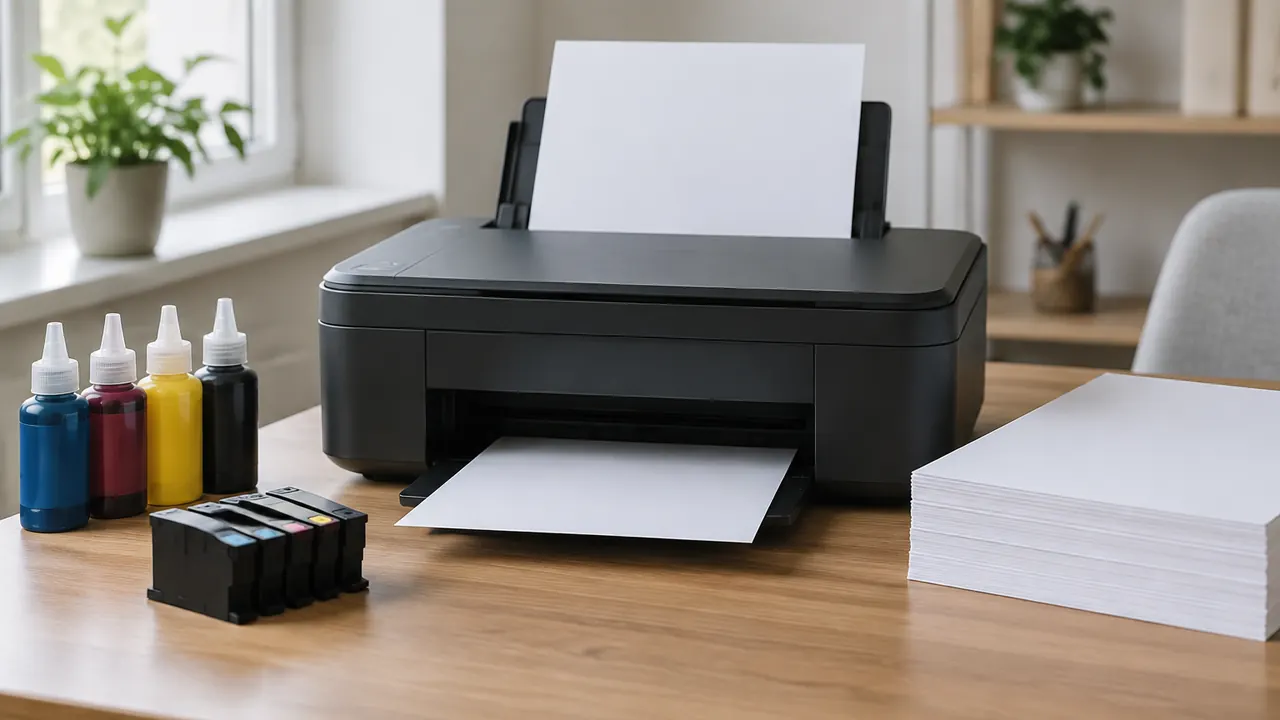
A cheap printer can become expensive one cartridge at a time. But paying a monthly ink bill is not automatically cheaper, and a refillable tank printer can take years to justify its higher purchase price in a household that rarely prints. The right choice depends on your page count, your color needs and whether those pages arrive steadily or in bursts.
For shoppers comparing options in April 2026, the useful number is total ownership cost, not the advertised price of a cartridge, bottle or subscription. This comparison uses three realistic household workloads: 20 pages a month for occasional printing, 100 for schoolwork and home administration, and 300 for a busier household. The dollar figures below are illustrative calculations, not current offers from a particular brand. Use them as a worksheet, then substitute the prices, yields and subscription terms for the printer you are considering.
1. Start with pages, not how often you hit Print
Count printed sides rather than sheets. A 10-sheet document printed on both sides usually represents 20 subscription pages, although you should verify the service’s definition. For cartridge and tank printers, ink consumption depends on coverage: a sparse shipping label and a full-page color illustration do not consume the same amount. Paper is a separate expense for most ink-only plans.
Before shopping, check your printer’s page counter or keep a six-week log. Separate black text, ordinary color documents and photos. Note school breaks and deadlines, too. A household averaging 100 pages monthly might actually print 25 in July and 250 in September. That pattern matters much more to a capped subscription than to ink already sitting in a printer. If several family members share the device, count their jobs together rather than estimating only your own.
- Occasional use: 20 pages monthly, or 240 annually, for tickets, forms and a few labels.
- Schoolwork: 100 pages monthly, or 1,200 annually, with worksheets, reports and occasional color projects.
- Higher volume: 300 pages monthly, or 3,600 annually, across homework, household records and work documents.
2. Compare running costs with the same assumptions
For a transparent example, assume 75% black-text pages and 25% ordinary color pages. Give the cartridge printer an ink cost of 6 cents per black page and 16 cents per color page. Give the tank printer costs of 0.4 cent and 1 cent, respectively. Those assumptions produce blended costs of 8.5 cents and 0.55 cent per page. They are plausible comparison inputs, not guarantees for every model.
For subscriptions, use hypothetical monthly tiers of $5 for 50 pages, $8 for 100 and $15 for 300. The table excludes hardware, paper, tax, maintenance and overages. It also treats every page as consuming purchased ink; bundled starter ink can materially change actual spending, especially for tanks. Read these figures as long-run operating estimates, not a prediction of checkout spending during the first year.
- Replace assumed ink costs with cartridge or bottle prices divided by applicable published yields.
- For color, use the combined ink cost per color page, not the cost of just one color cartridge.
- Check the yield-testing basis. Photos, heavy coverage and cleaning can make your actual cost substantially higher.
| Monthly printed sides | Illustrative subscription | Cartridge ink | Tank ink |
|---|---|---|---|
| 20 | $5.00 | $1.70 | $0.11 |
| 100 | $8.00 | $8.50 | $0.55 |
| 300 | $15.00 | $25.50 | $1.65 |
3. Occasional printing: avoid paying for empty months
At 20 pages a month, the example subscription costs 25 cents per printed page because 30 of its 50 included pages go unused. The cartridge estimate is only $20.40 a year in consumed ink, compared with $60 in subscription fees. However, buying replacements happens in lumps: you may need a costly cartridge long before you have used its theoretical yield if it dries out or the printer requires another color to continue.
A tank’s estimated annual ink consumption is tiny here, but that alone does not make buying one economical. If your current cartridge printer works, keeping it can beat replacing it simply to save a few dollars of ink each year. Occasional users should also compare local printing services, allowing for travel, convenience and document privacy. For mostly black text with long idle gaps, a basic monochrome laser printer is worth pricing separately; toner does not dry like liquid ink.
A subscription can still suit an occasional user who prints ink-heavy color pages and values automatic delivery. Check photo eligibility and paper-size restrictions, and remember that the subscription generally buys an allowance rather than ownership of freely usable replacement ink.
4. Schoolwork: rollover and overages can decide the winner
Around 100 pages monthly, the example subscription and cartridge costs are close: $8 versus $8.50. A single busy month can reverse that result. Suppose the hypothetical 100-page plan charges $1.50 for each additional block of 10 pages. Printing 145 pages without available rollover would require five extra blocks, adding $7.50. Its $15.50 bill would exceed the illustrative cartridge ink cost of about $12.33.
Unused allowances help only when the plan lets you carry them forward and you actually use them. Rollover may have a cap, an expiration rule or restrictions after changing tiers. It is not generally a cash credit. Read the rules for the order in which current, rollover and extra pages are consumed, and whether unused pages from purchased extra blocks carry forward. School calendars make these details especially important.
- Check when upgrades take effect and whether they cover pages already printed during that billing cycle.
- Verify when downgrades apply and what happens to accumulated rollover after switching to a smaller tier.
- Set page-count alerts before project season; failed prints, accidental copies and reprints may still count toward usage.
5. Higher volume: tanks can recover their premium faster
At 300 pages monthly, tank ink has a substantial advantage in the example: $1.65 against $25.50 for cartridges and $15 for a subscription. The remaining question is the printer’s purchase price. Suppose a suitable tank model costs $160 more than a comparable cartridge model. Dividing that premium by the estimated cartridge-to-tank ink savings gives a rough recovery period.
This screening calculation ignores included ink, financing, repairs and differences in features. It is not a complete ownership quote. Starter supplies matter: a tank printer may include enough ink to postpone bottle purchases considerably, while a cartridge printer may ship with lower-yield introductory cartridges.
For a real three-year budget, add the purchase price to replacement supplies needed after the included ink runs out, plus fees and upkeep. Do not charge yourself twice for bundled ink. Compare equivalent features, too: an automatic document feeder, duplex printing and adequate paper capacity may be worth more to a busy household than the absolute lowest ink cost.
| Monthly pages | Monthly ink savings versus cartridges | Approximate time to recover $160 |
|---|---|---|
| 20 | $1.59 | 101 months |
| 100 | $7.95 | 20 months |
| 300 | $23.85 | 7 months |
6. Cancellation can leave subscription cartridges unusable
An ink subscription is not always an ordinary cartridge purchase spread across monthly payments. Subscription cartridges may remain tied to an active account and stop working after cancellation takes effect, even with ink left inside. You may need compatible retail cartridges to keep printing. Check the final billing date, any extra-page charges and whether unused allowances disappear when service ends.
Distinguish an ink-only subscription from a plan that supplies or leases the printer itself. A hardware-inclusive plan can have a minimum commitment, an early cancellation charge or a return requirement. Promotional free months also need scrutiny: establish the regular price, whether extra pages cost money during the trial and when paid billing starts. Save the applicable terms when enrolling.
Connectivity is another practical cost. Many services need an internet-connected printer to report usage and trigger shipments, though offline operation rules vary. Ask what happens during a prolonged connection failure or delayed delivery. Keep a backup route for urgent assignments rather than assuming automatic shipping guarantees ink will arrive before a deadline. Before enrolling, also confirm that your exact printer model and address qualify.
7. Include maintenance before making the final choice
All inkjet options can lose ink to cleaning and servicing, not just to pages you keep. Tanks are not immune to clogged nozzles, and repeated cleaning cycles can consume ink while filling a waste-ink pad or maintenance box. Check whether that part is user-replaceable, what it costs and whether servicing requires shipping the printer. Also investigate printhead coverage: a replacement can outweigh years of projected savings.
Follow the manufacturer’s guidance on storage, power and periodic use rather than running unnecessary deep cleans. Compare replacement cartridge configurations as well. A combined three-color cartridge may require replacement when one color runs out; individual cartridges let you replace colors separately. Third-party supplies can lower purchase costs, but verify compatibility, firmware restrictions, return policies and applicable warranty terms instead of assuming every inexpensive refill will work.
The practical verdict: occasional households should resist recurring fees they cannot use; schoolwork households should compare their busiest billing cycles, not just their average; frequent printers should seriously price a tank model. Choose a subscription when its predictable page charges and delivery convenience outweigh unused allowances and exit restrictions. Choose using your actual printing pattern, with room in the budget for maintenance.
Caveat: Verify current printer prices, supply yields, subscription terms and maintenance charges before buying; all example calculations are illustrative.
AI Assistance Used — AI assistance was used in researching and drafting this article. It was reviewed, edited, and fact-checked by Lisa Barber before publication.