Prescription Discount Card or Insurance: Which Actually Costs Less?
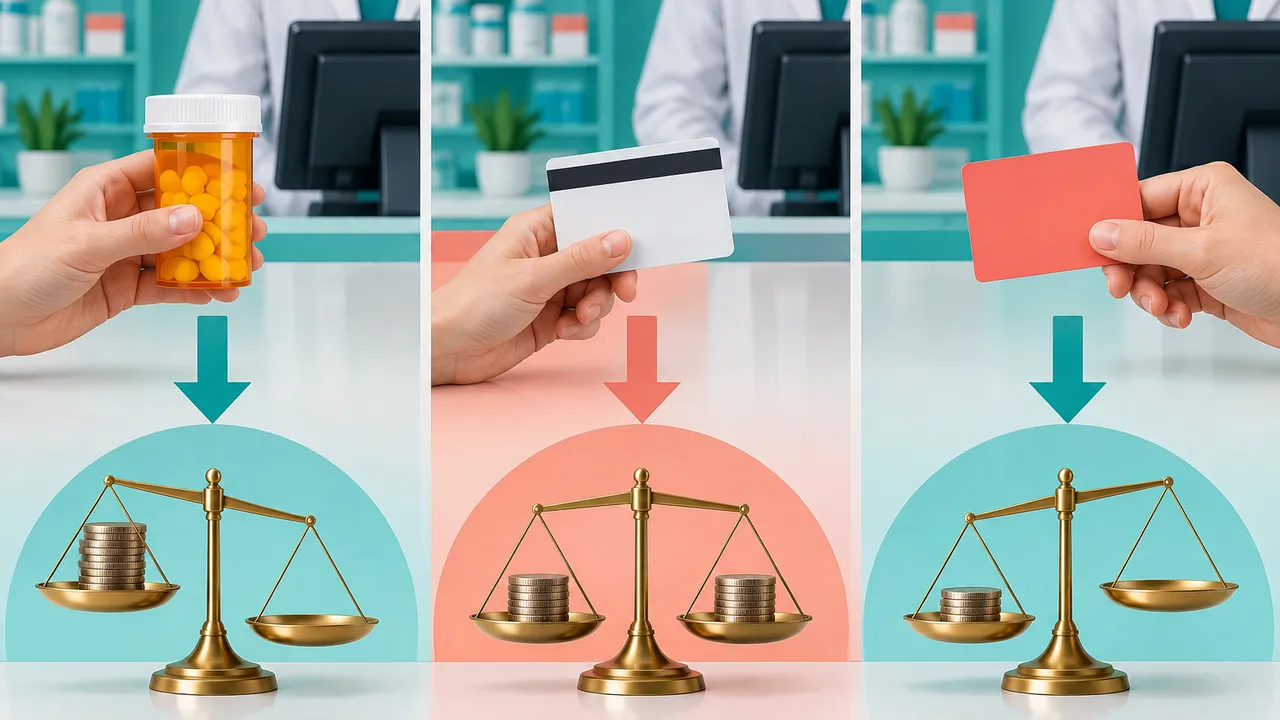
Insurance does not automatically deliver the lowest prescription price. A discount card can beat a copay, especially for some generic drugs, while a pharmacy’s own cash price can undercut both. The useful comparison is not the advertised percentage saved. It is what you would pay for the identical prescription at checkout.
But today’s cheapest option may not be cheapest over the year. A purchase outside insurance usually does not automatically count toward your deductible or out-of-pocket limit. As of October 2026, the practical approach remains: compare the actual prices, then check how your plan credits each purchase.
1. Make every quote match
Start with the prescription label or your prescriber’s order. Different strengths, dosage forms and quantities can produce dramatically different quotes. A tablet is not necessarily interchangeable with a capsule, and extended-release medication is not the same as immediate-release medication. Do not change the prescription simply to match a cheaper listing.
Ask each pharmacy to price the same fill, available now, rather than relying on a search result marked “starting at.” Discount prices can depend on the pharmacy, location and product stocked. If a substitution is proposed, have the pharmacist confirm that it is appropriate and permitted. Record the quote date because prices can change between refills.
- Match the drug name, including brand versus generic.
- Match strength, dosage form and release type.
- Match quantity and days’ supply.
- Confirm the pharmacy location and stock availability.
2. Compare three checkout routes
Request your insurance price, the price using a specific discount card and the pharmacy’s price without either. An insurance estimate is most reliable when the pharmacy checks your current benefits; an online formulary alone cannot show your exact charge. Ask whether any membership fee is required to obtain a quoted cash price.
These are alternative payment routes for the same fill. A discount card generally cannot be stacked with insurance to reduce the copay. The pharmacist may need to reverse an insurance claim before processing the discount transaction. Confirm which route was actually used before paying, and retain the itemized receipt.
| Route | What to compare | Deductible or limit credit |
|---|---|---|
| Insurance | Your final patient charge | Eligible cost-sharing generally counts under plan rules |
| Discount card | Price for that card and pharmacy | Usually not automatic; ask about reimbursement |
| Pharmacy cash | Direct price, including required fees | Usually not automatic; ask about reimbursement |
3. Check what counts toward your limits
A deductible is the amount you pay for applicable covered care before the plan begins paying under its terms. An out-of-pocket limit caps eligible patient spending, not every medical expense. Your plan may have a separate prescription deductible, and some drugs may have copays before you meet it. Premiums generally do not count toward either threshold.
For employer or individual coverage, ask the insurer or pharmacy benefit manager whether an outside purchase can be submitted for reimbursement or spending credit. Acceptance is not guaranteed, and the credited amount may differ from what you paid. Get the answer in writing or save a call reference number. A pharmacy receipt by itself does not establish that the plan will count the expense.
- Is this drug covered, and is this pharmacy in network?
- Will this purchase count toward my deductible, out-of-pocket limit, both or neither?
- What claim form, documentation and filing deadline apply?
4. Look beyond one refill
Consider a hypothetical monthly prescription: insurance charges $20, while a discount card charges $12. That is an $8 immediate saving, assuming no added fees. If you are unlikely to reach your deductible or out-of-pocket limit, taking that saving may make sense. But if you expect substantial covered spending, bypassing insurance could mean paying more later because the purchase received no credit. Compare expected annual spending, not just the next refill.
Medicare requires special attention. A stand-alone discount card is different from a manufacturer copay coupon, which generally excludes people using federal health programs. Medicare Part D has an annually updated out-of-pocket cap, but purchases outside Part D generally do not automatically count toward it. Ask your plan whether the particular purchase qualifies for submission and credit. Verify the current cap and rules through Medicare’s official website; Medicaid members should check state program rules before paying cash.
5. Choose safely, then recheck
Use the lowest verified price that fits your coverage needs, but do not delay essential treatment while chasing a small difference. If a medication remains unaffordable, ask the pharmacist or prescriber about covered alternatives, a formulary exception or legitimate assistance programs. Manufacturer assistance has separate eligibility rules; it is not interchangeable with a general discount card.
Recheck after a plan-year reset, coverage change or price increase. If you use multiple pharmacies, give each pharmacist your complete medication list so interaction checks do not depend on fragmented records. The best deal is a price you can verify, with clear coverage consequences and reliable access to the medication.
- Compare the total cost of any longer fill, including likely waste.
- Review discount-card privacy terms before sharing personal information.
- Verify unfamiliar online pharmacies through state pharmacy boards or FDA consumer resources.
- Keep receipts and check insurance claims for reversals or unexpected charges.
Verify prices, eligibility and spending-credit rules with your pharmacy, health plan and official program sources; this is not personalized medical or insurance advice.
AI Assistance Used — AI assistance was used in researching and drafting this article. It was reviewed, edited, and fact-checked by Jordan Singh before publication.