After a Power Outage: What to Keep or Toss from the Fridge
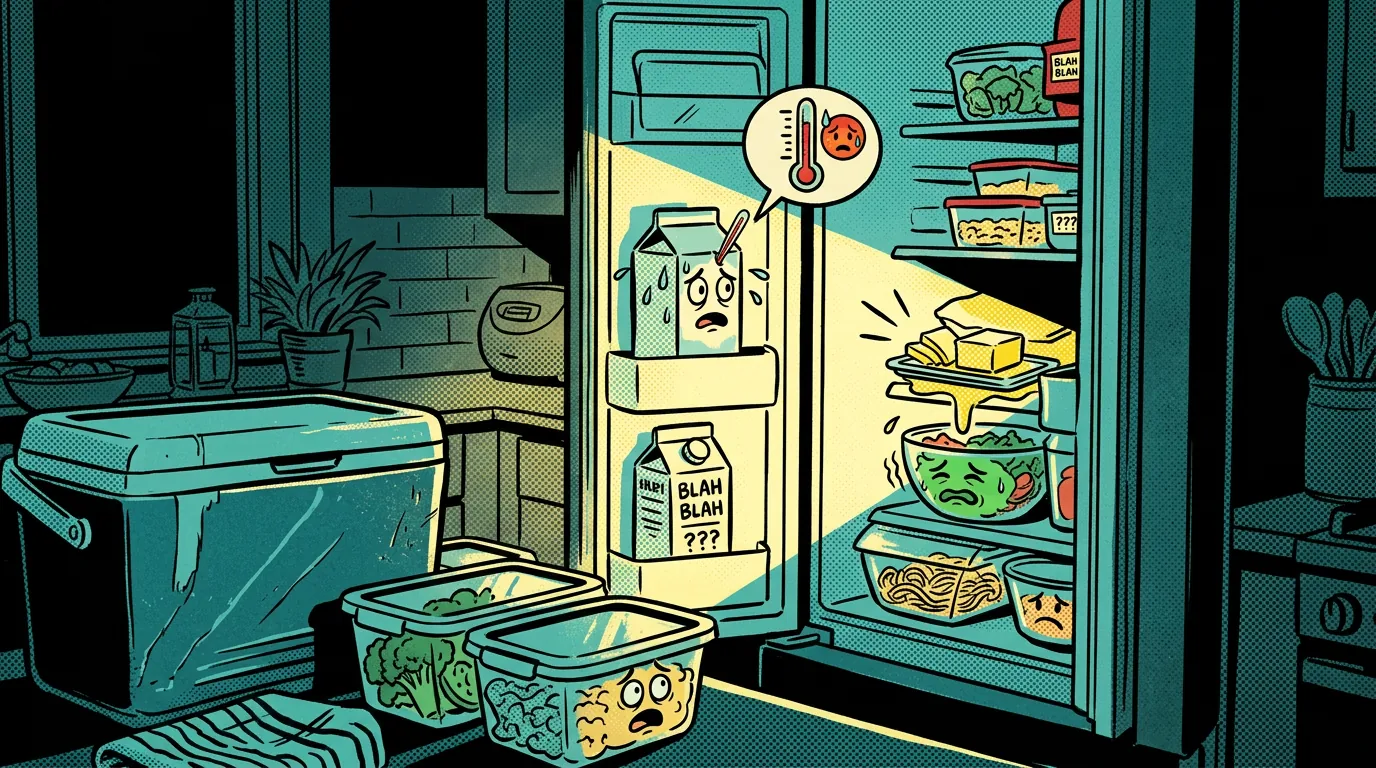
When the electricity comes back, a refrigerator full of groceries presents an expensive question: What is still safe to eat? The answer depends on how long the power was out, whether the door stayed closed and what temperatures the food reached. A working light or a newly cold carton of milk cannot tell you what happened while the refrigerator was warming.
For summer storm season in 2026, the practical starting point remains the guidance from the U.S. Department of Agriculture, the Food and Drug Administration and FoodSafety.gov: Keep cold food at 40°F or below, keep doors shut during an outage and discard vulnerable foods when safe time or temperature limits have been exceeded. This checklist helps separate foods that need dependable refrigeration from those that can usually survive a warming fridge. When the history of a perishable item is uncertain, protecting your health takes priority over saving it.
1. Start with the outage clock, not the refrigerator light
Write down when the power failed and when it returned. If you were away, check utility alerts or ask someone who was home. A refrigerator with its door closed generally keeps food safely cold for about four hours. That is an estimate, not a promise for every appliance, particularly in a hot kitchen or a refrigerator opened repeatedly.
After roughly four hours without power or another cold source, USDA guidance is to discard refrigerated perishables such as meat, fish, eggs, milk and leftovers. Do not treat the four-hour estimate as permission to ignore a thermometer showing unsafe conditions earlier. Conversely, food transferred in time to a properly iced cooler may remain safe because its refrigeration effectively continued.
Make your first assessment promptly when power returns, before the appliance has had time to chill everything again. Record any available temperatures and sort by food type. If the outage duration is unknown and you cannot establish that perishable food stayed safely cold, discard it. A utility restoration notice establishes when electricity returned, not when food became cold again.
| Situation | Practical starting point |
|---|---|
| Refrigerator closed; outage under four hours | Food is generally safe; check available temperatures and any unusual warming. |
| Refrigerator without power or added cooling beyond four hours | Discard refrigerated perishables unless reliable evidence establishes safe cold holding. |
| Perishable food above 40°F for more than two hours | Discard under the refrigerated-food guidance. |
| Full freezer kept closed | Approximately 48 hours of cold retention; assess food before keeping it. |
| Half-full freezer kept closed | Approximately 24 hours of cold retention; assess food before keeping it. |
2. Use temperatures correctly, including their limits
An appliance thermometer helps you monitor the refrigerator, which should stay at 40°F or below; the freezer should be at 0°F or below. A clean food thermometer can check individual foods when appropriate. Measure promptly and clean the probe between items, especially after contact with raw meat. Feeling a package with your hand is not an adequate temperature check.
FoodSafety.gov’s refrigerated-food chart generally calls for discarding vulnerable foods held above 40°F for more than two hours. That is different from the estimated four hours a closed refrigerator can retain safe cold temperatures. The first rule concerns exposure above the threshold; the second estimates how long an unopened appliance can protect its contents. They are not extra allowances to add together.
A current reading cannot reconstruct the entire outage. Food that warmed too much and then cooled after power returned may read below 40°F yet still need discarding. A maximum-recording thermometer or temperature logger is more informative than a single late reading. For food sitting out during sorting, the usual limit is two hours, reduced to one hour when the surrounding temperature exceeds 90°F.
- Check the thermometer before opening the refrigerator repeatedly.
- Record the time and temperature rather than relying on memory.
- Check more than one vulnerable item; different areas can warm unevenly.
- Keep acceptable food cold while you assess the rest.
3. Put high-risk refrigerated foods on the discard list
Start with foods that depend on refrigeration to control harmful bacterial growth. Raw and cooked meat, poultry, seafood, dairy products, eggs and many ready-to-eat foods belong in this group. Being unopened does not make a refrigerated product shelf-stable. Vacuum packaging, a tight lid or an intact carton also does not rescue food that has exceeded safe limits.
For these foods, apply the time-and-temperature rules rather than making exceptions for price or appearance. Leftover pizza, cooked rice, cooked pasta, soups and casseroles can be risky even when they contain little or no meat. Cut produce also requires attention: FoodSafety.gov lists cut fresh fruit, cut vegetables and packaged pre-cut, pre-washed leafy greens among foods to discard after excessive warming.
Use the item-by-item refrigerated-food chart at FoodSafety.gov when a product is not obvious. Ingredients and preparation matter, and broad labels such as “cheese,” “salad” or “sauce” cover foods with different recommendations. If a mixed dish contains an ingredient that requires discarding, do not pick that ingredient out and keep the rest. Treat the dish as a whole.
| Food category | Discard after more than two hours above 40°F |
|---|---|
| Meat and seafood | Raw or cooked meat, poultry, fish, deli meats and hot dogs |
| Milk and soft dairy | Milk, cream, yogurt, sour cream, cottage cheese and soft cheeses |
| Eggs | Shell eggs, hard-cooked eggs and egg dishes |
| Cooked meals and starches | Leftovers, soups, casseroles, cooked rice, pasta and potatoes |
| Prepared produce | Cut fruit and vegetables; packaged pre-cut, pre-washed leafy greens |
4. Save foods that do not share the same refrigeration risk
Not everything in a refrigerator must go into the trash after a prolonged outage. Some foods are refrigerated primarily for quality, while others resist bacterial growth because of their composition. FoodSafety.gov identifies hard cheeses, butter or margarine, whole fresh fruits and vegetables, and several common condiments as items that can generally be kept after warming.
Be precise about the product. A block of cheddar is not the same as shredded cheese, which the federal chart places on the discard list after excessive warming. A plain loaf of bread is different from a cream-filled pastry. Fresh produce that remained whole is different from produce that was cut. Read the label and consult the specific chart entry rather than guessing from a neighboring product.
These keep recommendations do not cover contamination from leaking raw meat, floodwater or other dirty water. Discard otherwise salvageable food if it has been contaminated, and do not assume that wiping a package makes everything inside safe. Foods intended to be shelf-stable before opening may also have different storage needs afterward.
- Usually keep: hard cheeses such as cheddar, Swiss and Parmesan.
- Usually keep: butter, margarine and whole, uncut produce.
- Usually keep: bread, rolls and muffins without perishable fillings.
- Check the specific entry: mustard, ketchup, pickles, olives, jams and jelly.
- Do not generalize: creamy dressings and opened sauces have differing recommendations.
5. Never use a taste test to settle the question
Food can contain dangerous bacteria without smelling sour, changing color or developing an unusual texture. Spoilage and foodborne illness are not the same thing: Some organisms create obvious warning signs, while illness-causing microbes may leave food looking normal. A bad smell is a reason to reject food, but a normal smell is not evidence that temperature-abused food is safe.
Do not take even a small bite to test questionable leftovers, milk or deli meat. Tasting creates exposure without providing a useful safety answer. Reheating is not a dependable rescue plan either. Although sufficient cooking kills many bacteria, some toxins produced while food was held improperly can survive ordinary cooking temperatures.
Be especially conservative when food will be served to pregnant people, children younger than 5, adults 65 and older, or anyone with a weakened immune system. These groups face greater risks from foodborne illness. Do not pass questionable groceries to a neighbor or donate them to avoid waste; uncertainty follows the food, regardless of who eats it.
6. Check frozen food separately and clean up safely
The freezer has a different timetable from the refrigerator. With the door closed, a full freezer generally holds its temperature for about 48 hours, compared with about 24 hours for a half-full freezer. These estimates depend on conditions, so check individual packages rather than assuming everything thawed or everything stayed safe.
Frozen food that still contains ice crystals or measures 40°F or below can generally be refrozen or cooked, although its texture and flavor may suffer. Apply the federal frozen-food chart to exceptions and uncertain items: Ice cream and frozen yogurt should be discarded after thawing, rather than treated like frozen meat. Discard vulnerable thawed foods that exceeded safe exposure limits.
Bag discarded food securely and keep it away from children and pets. Wash refrigerator shelves, drawers and other affected surfaces with hot, soapy water, then sanitize as appropriate using product-label directions. Never mix cleaning chemicals. Wash your hands after handling spoiled food or leaking packages, and verify that the refrigerator is holding 40°F or below before restocking.
7. Build a cold-storage plan before the next outage
Preparation can prevent both illness and unnecessary waste. Put appliance thermometers in the refrigerator and freezer now, rather than buying them after a storm. Know where to obtain ice, and identify a cooler large enough for essential perishables. Move food while it is still safely cold; a cooler cannot undo earlier unsafe warming.
Freeze water containers and gel packs ahead of severe weather, leaving expansion room in water containers. Keep raw meat in leakproof packaging, separated from ready-to-eat foods. During an outage, use a written inventory to minimize door openings. Check the cooler with a thermometer and replenish ice to maintain 40°F or below.
- Keep refrigerator and freezer thermometer readings in your routine checks.
- Save the FoodSafety.gov refrigerated- and frozen-food charts for offline access.
- Plan where ice and coolers will come from before stores become busy.
- Note outage times and cooler transfers on paper or your phone.
- Store shelf-stable meals and drinking water so opening the fridge is unnecessary.
- Use USDA or FDA guidance for food; ask a pharmacist separately about refrigerated medicines.
Consult current USDA, FDA and FoodSafety.gov guidance for product-specific decisions, and contact a healthcare professional if you suspect foodborne illness.
AI Assistance Used — AI assistance was used in researching and drafting this article. It was reviewed, edited, and fact-checked by Lisa Barber before publication.