Plan a Small Pollinator Garden That Blooms Beyond Spring
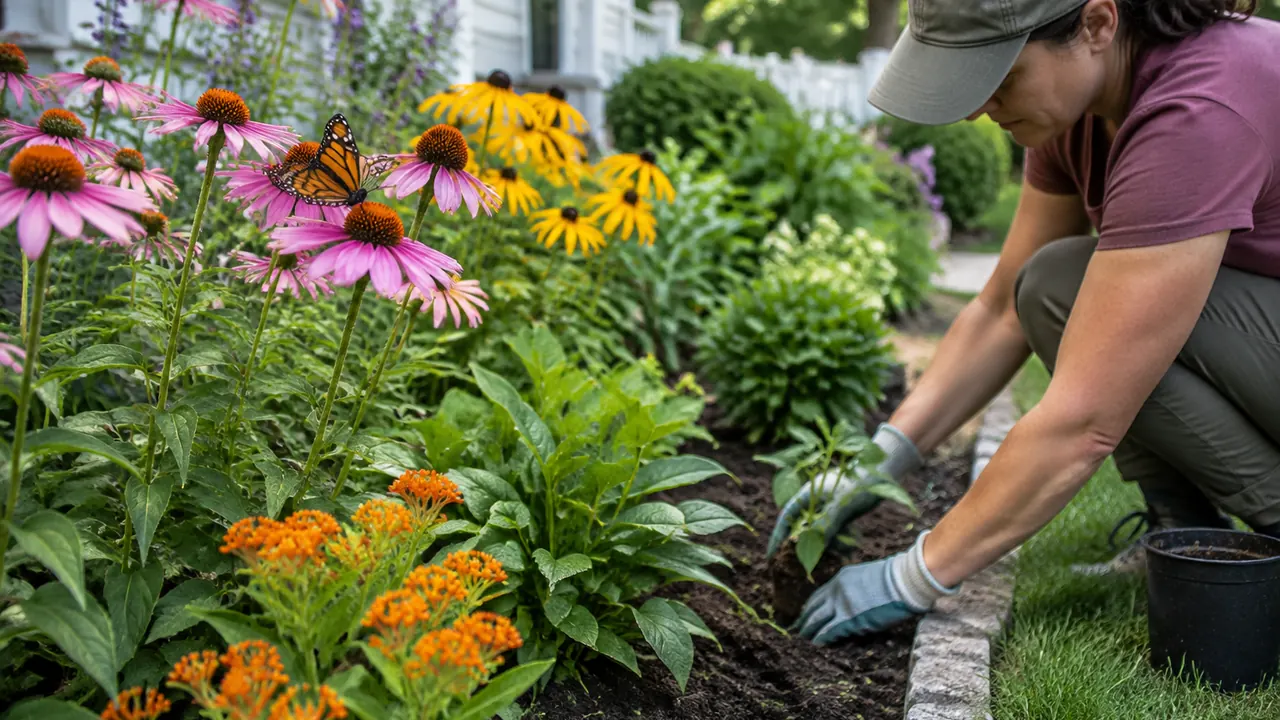
A pollinator garden does not need to fill the yard, and it should not finish its work when spring flowers fade. A narrow border or a few generously sized pots can offer food through several seasons if you choose plants for your location rather than their appearance on a nursery bench. The goal is a succession of useful flowers, with enough overlap that one fading plant does not leave the entire garden without blooms.
For anyone planning in August 2026, the immediate opportunity is to spot summer gaps and prepare for the next suitable planting window. In some regions, fall is excellent for establishing perennials; elsewhere, extreme heat, drought or an early freeze makes waiting wiser. Start with the site you have, then build a small, maintainable planting that includes both flowers for adult insects and food plants for their young.
1. Read the site before buying plants
Watch your proposed garden during a clear day and record when direct sunlight reaches it. Full sun generally means at least six hours daily, but afternoon sun against a west-facing wall can be much harsher than morning light. Trees, fences and buildings also change exposure across seasons. Many familiar flowering perennials need abundant sun; a shaded yard calls for a different plant list, not simply fewer sun-loving plants.
Check the soil after rain and again during dry weather. A spot that stays soggy needs moisture-tolerant plants, while a sandy strip beside pavement may demand drought-adapted choices. Regional suitability does not erase those differences. Before digging a new bed, arrange utility marking through 811 and check for private lines that the service may not locate.
- Measure the usable bed, leaving room for paths, hose access and plants at their full width.
- Note roof runoff, reflected heat, windy corners and places where winter snow gets piled.
- Use a soil test through a suitable local service before adding lime, fertilizer or other corrective amendments.
- Keep a water source within practical reach; even drought-tolerant plants need attention while their roots establish.
2. Make a regional shortlist, not a national shopping list
Use your state university extension service, regional native plant society or a reputable public garden to identify plants suited to your area. Look for guidance specific to your county, elevation or ecoregion when available. The USDA Plant Hardiness Zone Map describes average annual extreme minimum winter temperatures; it does not tell you whether a plant will tolerate humid summers, desert heat, wet roots or your local rainfall pattern.
Ask nurseries for botanical names, mature dimensions and the plant's native range. A label saying native may mean native somewhere in North America, not necessarily where you live. Named cultivars are not automatically poor choices, but altered flower structures can affect access to pollen and nectar. Favor accessible, open flowers over heavily doubled forms, and seek local evidence when choosing cultivars.
- In much of the East, locally native asters, goldenrods and mountain mints may supply summer or fall flowers; verify species and spreading habits.
- In suitable western regions, locally native buckwheats, penstemons and asters are possibilities, with different species filling different bloom windows.
- For the Southwest, investigate locally adapted desert milkweeds, globemallows and other regional choices rather than importing an eastern meadow mix.
- Check your state's invasive plant guidance before accepting divisions or buying unfamiliar ornamentals online.
3. Build an overlapping bloom calendar
Write down when each candidate usually flowers locally, using regional references rather than a catalog's nationwide season label. Aim for at least one dependable flowering choice in each major part of your local growing season, with two overlapping wherever space allows. Bloom dates shift with latitude, elevation, weather and plant age. A newly planted perennial may not deliver its mature display in its first season.
For a small starter bed, three to five carefully chosen species can be more manageable than a collection of unrelated single plants. Repeat compatible plants in small groups so insects can forage efficiently and you can recognize new growth. Let the calendar expose gaps before you shop: three spring favorites do not compensate for an empty late-summer border.
The categories below are planning targets, not universal planting dates. In mild climates, cool-season flowers may matter; in dry climates, summer dormancy can be normal. Ask what naturally blooms during your region's difficult months. Keep a monthly photo record this year and use it to adjust next season's choices rather than buying replacements impulsively.
| Bloom window | What to seek | What to verify locally |
|---|---|---|
| Early growing season | Flowers for insects active early | Frost tolerance and actual bloom dates |
| Late spring to early summer | A bridge after early flowers fade | Overlap with the earliest plants |
| Midsummer | Flowers suited to seasonal heat | Water needs and summer dormancy |
| Late summer through fall | Reliable flowers before winter | Bloom timing before local freezes |
4. Size the garden for the plants they will become
Nursery pots conceal future scale. Read mature height and spread, then sketch plants as full-sized circles on paper. A perennial expected to grow three feet wide is not a sensible permanent resident of a one-foot gap. Check whether it forms a gradually expanding clump, spreads through underground stems or reseeds freely. Those habits can matter more than height in a modest yard.
A bed roughly four feet deep and eight feet long can support a useful planting without becoming a major project, but its plant count depends on mature widths. Put taller plants where they will not shade shorter sun lovers, and leave access for weeding. Along a sidewalk, keep floppy stems and thorny growth away from passing feet. Do not crowd young plants just to make the first season look finished.
- Choose fewer species and repeat them, allowing each plant the spacing recommended for that species.
- For narrow borders, seek compact, regionally appropriate selections and confirm that compact refers to mature size.
- Contain aggressive spreaders only if you can maintain the barrier; otherwise, select a less demanding alternative.
- Leave some visible ground between new plants rather than filling every opening with another permanent perennial.
5. Include host plants and room for insect life
Flowers supply nectar and pollen, but butterfly and moth caterpillars often need particular host plants to eat. Milkweeds support monarch caterpillars; the appropriate species depends on your region. Other butterflies use particular grasses, violets, shrubs or trees. Consult a regional butterfly or extension resource to pair a host plant with insects that actually occur near you. An attractive butterfly visiting flowers does not mean the garden supports its entire life cycle.
Treat chewed leaves on a host plant as expected use, not automatic evidence of a problem. Place that plant where some leaf damage will not bother you. Avoid choosing tropical milkweed simply because it is available: in some warm regions, persistent growth can complicate monarch disease and migration concerns. Follow current local recommendations on suitable milkweeds and seasonal management.
- Retain a little leaf litter beneath plants where it will not obstruct paths or smother small crowns.
- Leave some standing stems through winter when practical; stem-nesting insects may need them beyond early spring.
- Preserve a small patch of undisturbed, well-drained bare soil for ground-nesting bees instead of mulching every surface.
- Skip insect hotels unless you can maintain them properly; varied plants and suitable habitat are a stronger starting point.
6. Make containers useful without making them difficult
Containers work well on a sunny stoop, patio or small balcony, provided their weight and placement are safe. Match plants to the actual exposure, including reflected heat from walls. Large pots usually buffer drying better than tiny ones, but they become heavy when watered. Choose containers with drainage holes and use a potting mix intended for containers rather than digging soil from the yard.
A practical arrangement is three substantial pots with compatible growing needs but different bloom periods. Give a larger perennial its own container, or combine smaller plants only when their mature root space, moisture needs and vigor fit. Locally appropriate compact asters, penstemons or other regional perennials may work; suitability varies by species. A container host plant can help, too, though caterpillars may consume much of a small specimen.
Check moisture frequently during hot or windy weather and water thoroughly when needed, letting excess drain. Do not leave roots standing in a water-filled saucer. Perennial roots in aboveground pots face greater cold exposure than roots in the ground, so ask locally about winter protection, moving pots or choosing hardier plants. For edible herbs allowed to flower, harvest and insect visits can share the same pot.
7. Protect the planting and improve it gradually
Ask sellers whether plants were treated with insecticides, including systemic products that can move into plant tissues. A pollinator-friendly tag is not a treatment history. If the seller cannot answer, look for a nursery with clearer growing practices. At home, avoid routine pesticide applications. Identify the insect or disease first, tolerate minor damage and try hand removal or other targeted nonchemical measures when intervention is necessary.
If a pesticide is truly needed, follow its label exactly, including pollinator restrictions. Organic does not mean harmless to bees. Avoid contaminating flowers, and remember that spraying at night does not eliminate risks from persistent residues or systemic products. Check how nearby lawn or mosquito treatments could drift onto the bed; tell any hired applicator where the pollinator planting is.
During establishment, check soil moisture and pull weeds before they seed. Use mulch judiciously, keeping it off crowns and retaining some suitable bare ground. Deadhead selectively if it encourages useful repeat blooms, while leaving some seedheads and habitat. Record which plants flower, spread or struggle. A successful small garden becomes easier through observation, not constant expansion: replace poor fits, fill real seasonal gaps and keep the workload within your available time.
Consult your local extension service or a qualified horticulture professional for current regional plant, pesticide and planting-season guidance.
AI Assistance Used — AI assistance was used in researching and drafting this article. It was reviewed, edited, and fact-checked by Leah Fornier before publication.