Oat, Soy or Almond Milk: What Changes Nutritionally?
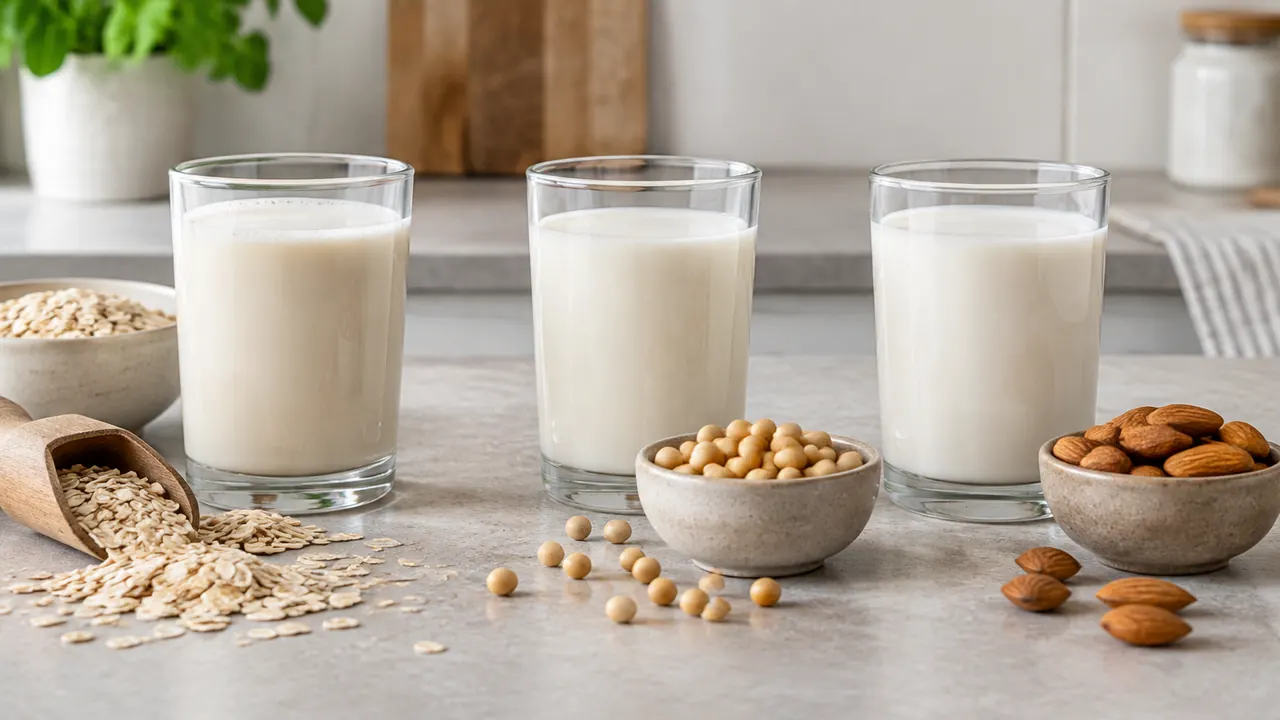
The milk aisle in 2026 offers plenty of choices, but the cartons do not all do the same nutritional job. A splash of oat beverage in coffee is one thing; replacing the milk you drink every morning is another. Dairy milk supplies substantial protein and naturally occurring calcium. Plant beverages can supply useful nutrients, too, but their protein, added sugar and fortification vary enough that the front label cannot tell the whole story.
For most adults, the best choice depends on the rest of their diet, their taste preferences and any allergy or digestive concerns. Compare equal serving sizes, usually one cup, and decide which nutrients you actually need the beverage to deliver. Infants and young children need a separate decision process: a drink that fits an adult's breakfast may be an inadequate replacement for a child's usual milk or formula.
1. Start with protein, not the plant pictured on the carton
Regular dairy milk generally provides about 8 grams of protein per cup, whether it is whole, reduced-fat or fat-free. Soy beverage is usually the closest of these three plant options, often providing around 7 to 9 grams. Standard oat and almond beverages typically contain much less. Added pea or soy protein can change that comparison, so treat the table as a starting point rather than a promise about every carton.
The difference matters most when the drink is supposed to anchor a meal. Almond beverage poured over a low-protein cereal will not supply the protein that dairy or soy would. But an adult eating eggs, tofu, beans or another substantial protein source may not need much protein from a beverage. Consider the whole meal rather than declaring one carton universally healthier.
Protein quality also differs. Dairy and soy provide all nine essential amino acids in useful proportions; oat and almond beverages generally contribute smaller amounts of protein overall. Adults eating varied diets do not need every food to match dairy's protein profile. They do need to notice if repeated substitutions quietly remove a meaningful protein source, especially when appetite is low or meals are small.
| Beverage, one cup | Typical protein | What to verify |
|---|---|---|
| Dairy milk | About 8 grams | Flavored or filtered versions can differ |
| Soy beverage | About 7–9 grams | Protein amount and fortification |
| Oat beverage | About 2–4 grams | Added protein and serving size |
| Almond beverage | About 1–2 grams | Higher-protein blends can differ substantially |
2. Separate total sugar from added sugar
Plain dairy milk contains roughly 12 grams of naturally occurring lactose per cup, generally with no added sugar. That does not make it equivalent to a sweetened beverage containing the same amount of added sugar. Lactose-free dairy milk usually has similar total carbohydrate and protein to regular milk. Its lactose has been broken into simpler sugars, which can make it taste sweeter without adding table sugar.
Plant beverages range from unsweetened to heavily sweetened, and words such as original or vanilla do not reliably tell you which you are buying. Oat beverages deserve particular attention: processing can break oat starch into sugars, and sugars created through controlled enzymatic breakdown are generally declared as added sugars under FDA labeling guidance. A carton can therefore show added sugars even when cane sugar is absent from its ingredient list.
For everyday use, an unsweetened option is often a straightforward way to limit added sugar. Still, read both the Nutrition Facts panel and ingredients. People managing diabetes should compare total carbohydrate per actual serving, not just the added-sugars line; oat beverages can contain appreciable carbohydrate even when their added sugar is low.
- Compare the same volume, not a coffee splash with a full cup.
- Check Total Sugars and Includes Added Sugars separately.
- Recheck flavored, chocolate and barista versions; their recipes can differ.
3. Fortification can close gaps, but it is not automatic
Calcium on a plant beverage's label often comes from added minerals, not from the oats, soybeans or almonds alone. Vitamin D and vitamin B12 may also be added. Some fortified products provide calcium amounts comparable to dairy milk or higher, while unfortified versions can provide very little. Organic labeling does not guarantee fortification, and a short ingredient list is not automatically a nutritional advantage.
Dairy naturally supplies calcium and B12, and vitamin D is commonly added to U.S. milk. It also contributes nutrients such as potassium and iodine. Plant beverages do not consistently match that entire package, even when their calcium numbers look similar. Iodine is an especially easy gap to miss because it is not routinely listed on Nutrition Facts panels. People avoiding dairy should review their broader iodine sources rather than assume fortification covers it.
Check the actual amounts and percent Daily Values for nutrients important to you. On standard adult labels, Daily Values provide comparison benchmarks, not individualized requirements. Shake fortified beverages as directed, since minerals can settle. Homemade plant drinks are usually unfortified, and straining removes some solids; they should not be assumed nutritionally equivalent to a fortified store-bought carton.
| Nutrient | Dairy milk | Plant beverage check |
|---|---|---|
| Calcium | Naturally present | Look for added calcium and compare amounts |
| Vitamin D | Commonly added | Confirm it is included |
| Vitamin B12 | Naturally present | Do not assume it is added |
| Iodine | Contributes iodine; amounts vary | Often not added or listed |
4. Match calories, fat and fullness to your needs
Lower calorie is not always better, and creamier does not necessarily mean more nourishing. Unsweetened almond beverages often provide relatively few calories because they contain little almond material per cup. Oat beverages commonly contain more carbohydrate, and some include oil for texture. Dairy calories vary substantially with fat level, while soy's combination of protein and fat may make it a useful meal component.
Compare saturated fat as well as total fat. Whole dairy milk contains more saturated fat than lower-fat versions. Many oat, soy and almond beverages are low in saturated fat, but blends containing coconut ingredients can be higher. Barista products may contain additional oil or carbohydrate to improve steaming and mouthfeel. Those ingredients serve a purpose, but coffee performance is not a measure of nutritional equivalence.
- For a protein-focused breakfast, favor dairy, soy or a verified higher-protein blend.
- For a lower-calorie coffee addition, compare unsweetened products and your usual pour.
- For low appetite or unintended weight loss, discuss calorie and protein needs with a clinician.
- For cholesterol management, consider saturated fat within your overall eating pattern.
5. Distinguish an allergy from difficulty digesting lactose
Lactose intolerance means difficulty digesting milk sugar; milk allergy is an immune reaction to milk proteins. Lactose-free dairy milk can help with the former but is not safe for someone with a milk allergy. Goat and sheep milk are not dependable alternatives for milk allergy either, because their proteins can cross-react. Anyone with a diagnosed allergy needs an avoidance plan appropriate to their reaction history.
Soy and almonds introduce their own major allergens. Oats are not one of the nine major allergens requiring special identification under U.S. federal labeling law, but oat allergy is possible. For people with celiac disease, oat beverages require attention to gluten cross-contact; choose appropriately gluten-free-labeled products and follow your clinician's advice about oats. A beverage's plant-based identity does not make it universally allergy-friendly.
Read ingredients and allergen information each time, especially after packaging changes. Precautionary statements such as may contain are voluntary, so their absence does not prove the absence of cross-contact. In cafes, shared pitchers, blenders and steam equipment can complicate avoidance. Ask how drinks are prepared rather than relying only on the menu's milk alternatives list.
6. Infant feeding and toddler nutrition follow different rules
For infants younger than 12 months, ordinary dairy milk and retail oat, soy or almond beverages should not replace breast milk or infant formula as the main drink. Their nutrient balance is not designed for infants. Soy infant formula is a specially formulated product, not the same thing as soy beverage. Never dilute formula or substitute homemade plant drinks to stretch a supply; contact the child's clinician for help.
After the first birthday, pasteurized whole cow's milk is generally recommended through age 2, unless the child's clinician advises otherwise. If a family avoids dairy, fortified, unsweetened soy beverage is generally the closest plant alternative nutritionally, but the child's overall diet still needs review. Oat and almond beverages usually do not provide equivalent protein, energy and fat for a simple one-for-one substitution.
The appropriate choice depends on growth, solid-food intake, allergies and any medical or feeding concerns. Children with milk and soy allergies may need a different clinician-directed strategy. Excessive beverage intake can also displace iron-rich foods. Parents should ask about both the type and daily amount rather than applying an adult's lower-calorie preference to a toddler.
7. Make the final choice by the role it plays
Start with your nonnegotiable needs: allergy safety, protein, carbohydrate management or avoiding animal products. Then compare a few cartons on the shelf. A fortified, unsweetened soy beverage may be a practical dairy substitute for many adults, while oat or almond can fit well when protein and other nutrients come from elsewhere. No single option has to win every category.
Revisit the label when changing brands or formulations. A beverage used by the cup deserves more nutritional scrutiny than a tablespoon in tea, and a household may reasonably keep different options for different people. If dairy avoidance accompanies a very restricted diet, kidney disease or another condition affecting nutrient needs, get individualized guidance instead of relying on a generic milk ranking.
- Set the serving size you actually use.
- Compare protein, added sugar, calcium, vitamin D and B12.
- Check ingredients, allergens and saturated fat.
- Decide how the rest of your diet fills any gaps.
Product formulations and guidance can change; check current labels and consult a pediatrician or registered dietitian for infant feeding, children's diets or individualized medical needs.
AI Assistance Used — AI assistance was used in researching and drafting this article. It was reviewed, edited, and fact-checked by Nadia Clarkson before publication.