Taking Medication Abroad: What to Verify Before You Pack
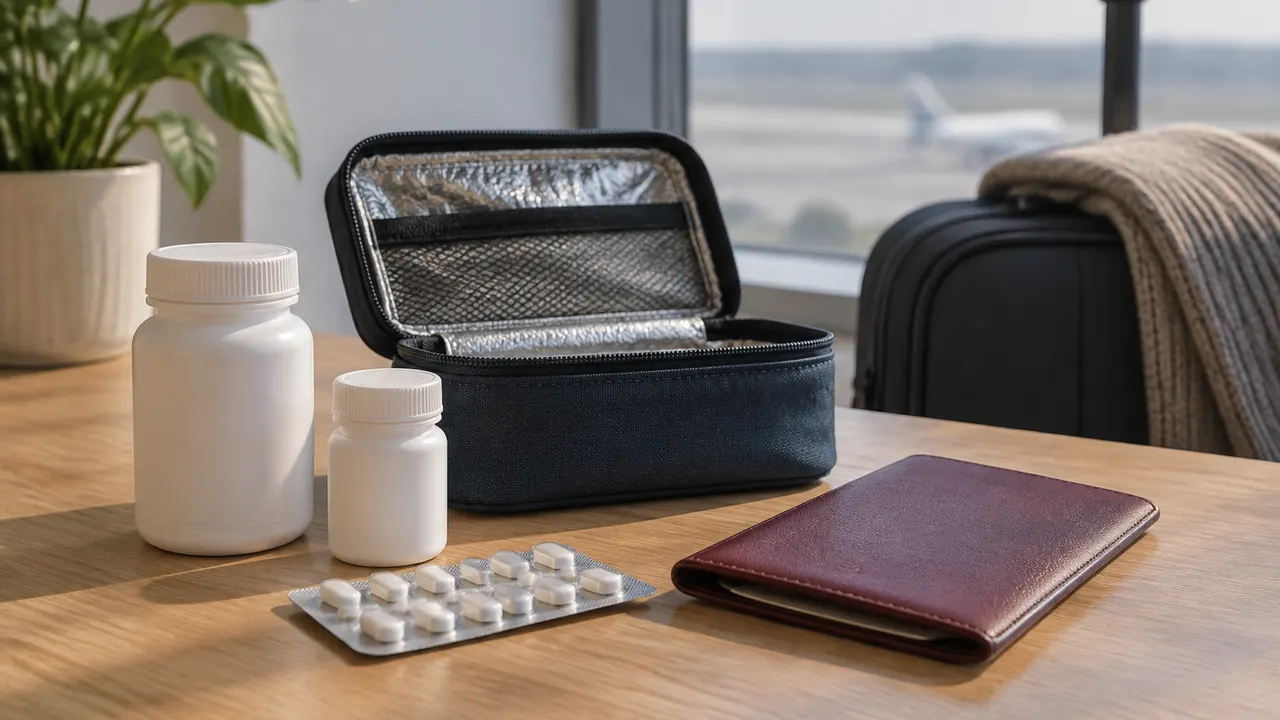
Your medication may be routine at home and restricted at your destination. A US prescription establishes that a clinician prescribed it; it does not automatically authorize you to import, possess or use it in another country. Some medicines require advance permission, some have strict quantity limits, and others may not be allowed at all. That can include prescription drugs, over-the-counter remedies and products marketed as supplements. For a 2026 trip, check the current rules for your exact medicine and itinerary rather than relying on what worked on a previous vacation.
Start before buying a nonrefundable ticket if interrupted treatment would make travel unsafe. You need two separate plans: one for lawful entry and another for keeping the medicine usable throughout the journey. Official destination guidance answers the first question; your pharmacist and prescriber help with the second. Neither an airline's approval nor a successful airport security screening settles a country's import requirements.
1. Check every country on the itinerary
List your destination, stopover countries and any place where you could pass through immigration to collect luggage or change airports. Transit rules can matter even when you expect to remain airside, so check rather than assume an exception. Start with the destination government's customs agency, health ministry or medicines regulator. Its embassy or consulate in the United States can help identify the responsible authority when guidance is unclear.
The US State Department's country pages at travel.state.gov provide useful starting points, while the International Narcotics Control Board at incb.org publishes country information for travelers carrying controlled medicines. Neither replaces current instructions from the country itself, and a missing listing is not proof that a drug is unrestricted. Find the page that specifically addresses travelers' personal medication, not commercial imports or postal shipments. Those may follow different rules.
Save the official page, its date and any written response with your travel documents. If instructions conflict, ask the responsible destination authority to clarify before departure. Describe your itinerary and medicine precisely; a general inquiry about whether prescriptions are permitted may produce an answer that misses an ingredient-specific restriction.
2. Identify the ingredient, not just the brand
Give officials the generic or internationally recognized ingredient name, strength, dosage form, prescribed daily dose and total quantity you intend to carry. Brand names vary internationally, and a familiar name may identify a different formulation elsewhere. Combination products deserve special attention because one ingredient can trigger a restriction even when the others do not. Ask your pharmacist to help translate the label into an unambiguous medication list.
Controlled medicines often need closer review, including certain treatments for ADHD, anxiety, insomnia and pain. Some cold remedies also contain regulated ingredients. Do not infer the destination's classification from US scheduling or from whether a product is sold without a prescription at home. A country may prohibit an ingredient, restrict it to a permit holder or allow only a limited personal supply.
If a medicine is not allowed, contact your prescriber promptly about whether a lawful alternative is medically appropriate. Substituting or stopping treatment can require supervision and lead time. Do not conceal the product, relabel it or assume mailing it to your hotel is a workaround; shipments may face separate import restrictions.
- Check every active ingredient in combination tablets, liquids and topical products.
- Include sleep aids, supplements and nonprescription medicines on your review list.
- Check cannabis and CBD products separately; US legality does not establish overseas legality.
3. Confirm the quantity limit and required documents
There is no universal international allowance for a 30-day or 90-day medication supply. Limits may depend on the ingredient, the destination's classification and the length of your stay. Ask whether an allowance is calculated by days of treatment, units or total amount of active ingredient. An extra supply for delays is sensible only within the destination's legal limit. If your trip exceeds that limit, arrange an authorized plan before leaving.
Some countries require an import permit or other approval before arrival. Others request a prescription copy, a clinician's letter or a declaration at the border. Verify the application deadline, accepted language, required signatures and whether documents need translation or authentication. Do not treat an application receipt as an approval. Also ask whether you need to carry the original authorization or whether a digital copy is accepted.
A clinician's letter can explain your medical need, dose and associated equipment, but it is not a substitute for a permit. Keep printed copies accessible and secure digital backups separately. Share medical details through official application channels, and avoid sending sensitive documents to unofficial services that promise guaranteed clearance.
| Item | What it helps establish | What to verify |
|---|---|---|
| Prescription copy | Prescribed treatment and dose | Required format and language |
| Clinician's letter | Medical need and equipment | Required details and signatures |
| Import authorization | Permission under destination rules | Validity, quantity and entry dates |
| Customs declaration | Disclosure at the border | When and how to submit it |
4. Keep original packaging and readable labels
Keep medicines in their original labeled containers whenever possible, and check whether the destination specifically requires this. For pharmacy-dispensed prescriptions, that usually means the container supplied by the pharmacy with its dispensing label, rather than an unlabeled travel bottle. Keep manufacturer blister packs and their labeled outer boxes together when practical. Loose pills are harder to identify and may leave you unable to demonstrate what you are carrying.
Make sure labels remain readable and the patient's name can be matched to travel identification. If your names differ, ask the pharmacy and relevant authority what documentation will resolve the discrepancy. A pill organizer may be convenient for daily use, but it should not replace required labeled packaging for border crossings. Do not combine different medicines in one bottle to save space.
Ask your pharmacist about smaller labeled containers if space is tight. Some products must stay in their manufacturer packaging to protect them from moisture or light, so repackaging is not always appropriate. Carry the written medication list separately; it remains useful if a container is lost or damaged.
- Inspect labels before departure, especially on refrigerated containers exposed to condensation.
- Keep medicine names, strengths and directions visible rather than covering them with tape.
- Photograph labels for backup, but do not assume a photograph replaces required originals.
5. Separate airport screening from border permission
Airport security checks and customs controls serve different purposes. In the United States, TSA allows medically necessary liquids in reasonable quantities above the usual carry-on liquid limit, subject to screening. Tell the officer about them at the start of the process. Consult TSA's current medication guidance at tsa.gov for liquids, cooling accessories, syringes and equipment; do not assume the same procedures apply at foreign airports or on your return connection.
Keep essential medication in your carry-on rather than checked baggage, which can be delayed, lost or exposed to unsuitable temperatures. Put it in a smaller bag you can remove if your cabin suitcase is gate-checked. Check airline requirements for needles, devices, batteries and onboard use of medical equipment. Where screening could affect a device, review its manufacturer's instructions and ask the screening authority about an alternative inspection.
Declare medication to customs when destination rules require it, even if security officers have already examined it. Traveling companions should not divide a patient's supply among themselves to evade quantity limits. If someone else must carry or administer your medicine, verify whether that arrangement is permitted and what supporting documents are necessary.
6. Build a temperature plan for the whole journey
Temperature-sensitive medicines need product-specific planning. Ask your pharmacist for the permitted storage range, allowable time outside refrigeration and instructions after opening or first use. Different products, and sometimes different presentations of the same drug, have different limits. A rule you remember for one insulin pen or injectable treatment may not apply to another. Get guidance for your exact product rather than relying on a generic travel checklist.
An insulated pouch slows temperature changes; it does not guarantee a safe temperature. Choose an appropriate cooling method with your pharmacist, avoid direct contact between medicine and frozen packs, and consider a suitable temperature monitor. Freezing can damage medicines that require refrigeration. Do not rely on a plane's refrigerator or a hotel minibar: onboard storage may be unavailable, and small hotel refrigerators can have freezing spots or unreliable settings.
Account for airport queues, ground transfers, hot vehicles and power interruptions, not just flight time. Confirm suitable storage at your accommodation before arrival. If the temperature goes outside the recommended range, record the conditions and duration, then contact your pharmacist or the manufacturer for instructions. Appearance alone cannot establish that a medicine remains effective.
- Pack enough cooling capacity for realistic delays, following product-specific advice.
- Keep medicine out of direct sunlight and away from freezer compartments.
- Check airline restrictions before using dry ice or battery-powered cooling equipment.
7. Prepare for dosing changes and replacement needs
Ask your pharmacist or prescriber how to handle time-zone changes, missed doses and disrupted meals. This is especially important for medicines whose timing affects safety or effectiveness. Request a written schedule if the transition is complicated. Do not double a dose or stretch a supply without professional advice, and make sure your legal quantity covers the agreed schedule.
Plan what to do if medicine is lost, stolen or becomes unusable. A US prescription may not be fillable locally, and the same ingredient or strength may be unavailable. Identify licensed medical care at your destination and ask your travel insurer about assistance, outpatient visits and prescription coverage. Keep your prescriber's and pharmacy's contact details accessible, including their hours and time-zone differences.
Shortly before departure, recheck official rules and confirm that approvals still match your dates, route and quantity. Carry accessible paperwork, labeled medicine and the storage supplies your pharmacist recommends. That final review is more reliable than reassurance from another traveler whose medicine, nationality or itinerary may have been different.
Medication rules and storage requirements can change; verify current destination guidance and consult your pharmacist or prescriber before traveling.
AI Assistance Used — AI assistance was used in researching and drafting this article. It was reviewed, edited, and fact-checked by Lisa Barber before publication.