Can You Live with an EV Without Home Charging?
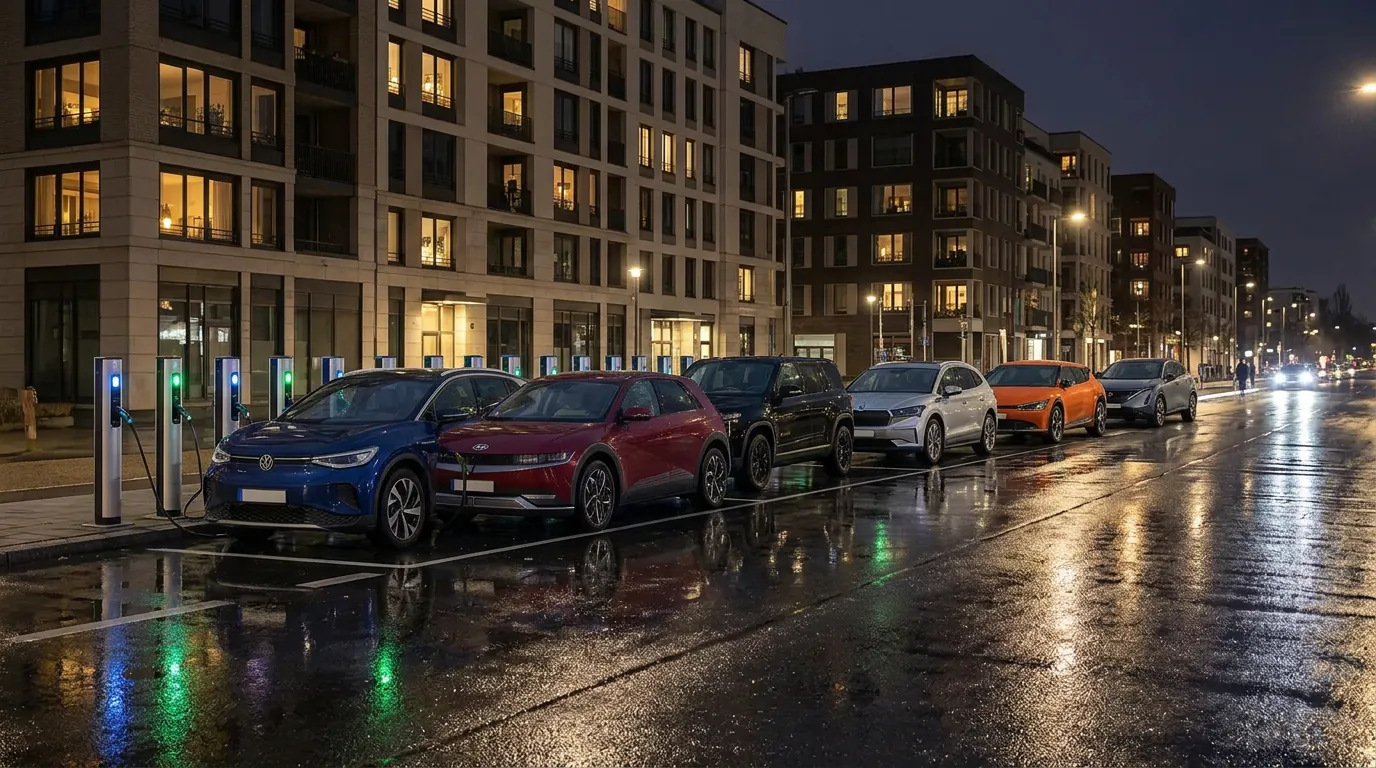
Yes, you can live with an electric vehicle without charging at home. But the workable version usually depends on a dependable routine, not a map sprinkled with charger icons. For renters and street parkers, the real question is whether charging fits into an ordinary week without creating expensive detours, parking headaches or another appointment you cannot miss. A charger beside your apartment may be less useful than one farther away where you already spend two hours.
For a buyer in 2026, connector choices and expanding charging access offer more possibilities, but they do not make every station usable by every car. Before buying, test the places you would actually use, at the times you would actually arrive. Then price the electricity, parking and extra travel together. The goal is not to prove that public charging is possible. It is to learn whether you would willingly keep doing it.
1. Start with your miles, not the advertised range
Write down two weeks of driving, including errands, school runs, weekend trips and the miles you would add to reach chargers. Use that record to estimate a normal week and a demanding one. Advertised range is not a weekly charging plan: highway speeds, cold weather, cabin heating, hills and cargo can increase energy use. You also need a reserve for unexpected trips rather than planning to reach every charger nearly empty.
For an illustrative budget, a driver covering 900 miles monthly in a car averaging 3 miles per kilowatt-hour uses about 300 kWh for driving. Purchased electricity will be higher because charging has losses; battery conditioning and other energy use can also affect the bill. Use the efficiency of the specific model you are considering, then build a less favorable winter scenario. Bigger batteries can mean fewer stops, but they do not automatically mean lower energy costs.
- Separate daily commuting from occasional long-distance travel; they may require different charging strategies.
- Record your longest unavoidable day, not just your average mileage.
- Choose a comfortable reserve based on weather, driving needs and the distance to a reliable backup.
2. Price the whole stop, not just the electricity
Public charging prices vary by operator, site, time and membership. Check the station listing and payment screen rather than relying on a network-wide headline rate. Some sites bill by energy, others by time where permitted, and separate session, parking or idle charges may apply. A low electricity price inside a paid garage can be worse than a higher price at a free parking lot.
The table uses hypothetical energy rates, not national averages or quoted 2026 tariffs. At 330 purchased kWh monthly, each 10-cent difference per kWh changes the bill by $33. Compare your estimated total with a gasoline vehicle that meets the same needs, using local fuel prices and realistic fuel economy. Include any charging subscription, garage fee and additional travel. Keep time separate from dollars, but do not pretend it is free.
A subscription deserves simple arithmetic: divide its monthly fee by the per-kWh discount to find the energy needed to break even, assuming no other differences. Verify that the discount applies at your actual stations and through your chosen payment method. An automaker benefit or promotional credit can help temporarily; calculate the routine again without it.
| Illustrative energy rate | Cost for 330 kWh | Not included |
|---|---|---|
| $0.25/kWh | $82.50 | Parking, subscriptions and other fees |
| $0.40/kWh | $132.00 | Parking, subscriptions and other fees |
| $0.55/kWh | $181.50 | Parking, subscriptions and other fees |
| $0.70/kWh | $231.00 | Parking, subscriptions and other fees |
3. Match charging speed to something you already do
Level 2 charging usually works best when the car can sit for hours while you work, sleep or attend a long activity. DC fast charging fits shorter stops, but the advertised maximum is not a promise. Your vehicle, battery temperature, starting charge and shared station power can all affect speed. Charging generally slows at higher battery levels, so regularly waiting for 100% can make public charging unnecessarily burdensome.
Check the car's AC charging capability as well as its fast-charging performance. A powerful Level 2 station cannot make a car accept more AC power than its onboard equipment allows. For fast charging, look for credible tests of the specific model's charging curve, not merely its peak rating. Then ask whether the stop matches your life: a grocery trip may finish before useful Level 2 charging does, while a restaurant visit may outlast your fast-charging session.
The best arrangement often combines a predictable slower charge with occasional fast charging. Judge each location by useful energy gained during time you would spend there anyway. A charger that requires a separate round trip and a wait in the car is a different proposition.
| Charging setting | Best potential fit | Main thing to verify |
|---|---|---|
| Workplace Level 2 | Several hours during a shift | Eligibility, availability and move rules |
| Neighborhood Level 2 | Long visits or permitted overnight parking | Street restrictions and total parking cost |
| Shopping-center fast charging | A shorter errand or meal | Actual charging speed and idle fees |
| Dedicated fast-charging stop | Primary charging or backup | Queues, detour and access hours |
4. Treat parking rules as part of the equipment
Visit candidate stations on foot or by car and read the signs. A charger can be publicly listed yet sit behind a gate, inside a garage that closes early or on property reserved for customers. Curbside charging adds another layer: meter hours, street cleaning, loading restrictions and residential permit rules may still apply. Being plugged in does not automatically exempt you from a parking limit or a ticket.
Check whether you must move when charging finishes, after a stated number of hours or when a grace period ends. Overnight Level 2 charging is useful only if both the charging terms and parking rules allow the stay. If you would need to walk back at midnight to relocate the car, include that disruption honestly. Also inspect lighting, pedestrian access and the walk home; a location that feels manageable on Saturday afternoon may not suit a late winter evening.
- Photograph posted restrictions and compare them with the operator's app; ask about conflicts.
- Check garage entry charges, charging fees and any separate validation requirement.
- Confirm that the cable reaches the proposed car's charge port without awkward or prohibited parking.
- Never assume an extension cord across a public sidewalk is a legal or safe alternative.
5. Verify workplace access and vehicle compatibility
Workplace charging can make an EV easy to own, but only if access is dependable. Ask facilities staff who qualifies, whether reservations or waitlists apply, what charging costs and whether employees must move vehicles during a shift. Consider hybrid schedules, holidays and a job change. Free electricity is a benefit, not infrastructure you control, and an office with several plugs may still have more demand than capacity.
For the car itself, verify connector and network access by exact model and model year. In 2026, the mix of J1772, CCS1 and NACS, standardized as SAE J3400, still requires attention. A matching plug or an adapter does not guarantee access to every station. AC and DC adapters serve different purposes, and some vehicles cannot use particular networks or equipment. Follow the automaker's approved compatibility guidance and confirm access with the charging operator.
- Ask whether workplace chargers are available outside your normal work hours.
- Confirm which adapter, if any, is approved and whether it is included or costs extra.
- Set up required accounts and verify payment options before relying on a site.
- Do not confuse a network access announcement with access already enabled for your particular car.
6. Run a two-week rehearsal before signing
Choose a primary charging location and at least two realistic alternatives. For two weeks, visit them during the windows you expect to use after buying. Record occupied and apparently unavailable stalls, access problems and the full detour from your normal route. Recent driver reports and live status in apps are useful clues, but neither guarantees an open, working charger when you arrive.
If possible, rent the same EV model or arrange an extended test drive with permission to charge it. Actually starting sessions reveals problems a drive-by cannot: payment failures, adapter confusion, short cables or disappointing speed. Follow the rental agreement's charging and return requirements. Without a plug-in trial, you can test parking and availability, but you have not fully validated the charging routine.
Log the whole experience, not just minutes connected. Include the drive there, any queue, setup, the walk to your destination and moving the car afterward. Try one session when your preferred site is unavailable. Set a personal limit for weekly charging overhead before reviewing the results; otherwise, enthusiasm can make an inconvenient routine seem acceptable. A quiet weekday morning should not stand in for your actual Sunday-evening charging window.
7. Build a backup plan—and know when to wait
A useful backup is more than another pin beside your primary station. Favor alternatives with different operators, access arrangements or locations so one app outage or locked garage does not defeat both plans. Keep enough battery reserve to reach them comfortably. For trips, identify alternatives along the route and consider weather and elevation rather than simply choosing the farthest station the navigation system says is reachable.
Buy only when the rehearsal shows an affordable routine you can sustain during a busy week. Frequent fast charging is not automatically disqualifying, but follow the vehicle's charging recommendations and budget for its real cost. If the plan works only with free workplace electricity, perfect availability or repeated late-night car moves, waiting can be the sensible choice. A conventional hybrid may reduce fuel use without adding a charging obligation.
- Green light: dependable access, tolerable weekly overhead and at least one tested backup.
- Yellow light: costs fit only while an introductory credit lasts or a workplace benefit remains.
- Red light: you routinely need a nearly empty battery to stretch between uncertain chargers.
- Revisit later if your landlord, employer or neighborhood adds access that materially improves the routine.
Charging prices, access, adapter compatibility and parking rules can change; verify current terms with the vehicle manufacturer, charging operator and property or parking authority before buying.
AI Assistance Used — AI assistance was used in researching and drafting this article. It was reviewed, edited, and fact-checked by Leah Fornier before publication.