An Entryway That Handles Wet Shoes, Coats and Everyday Bags
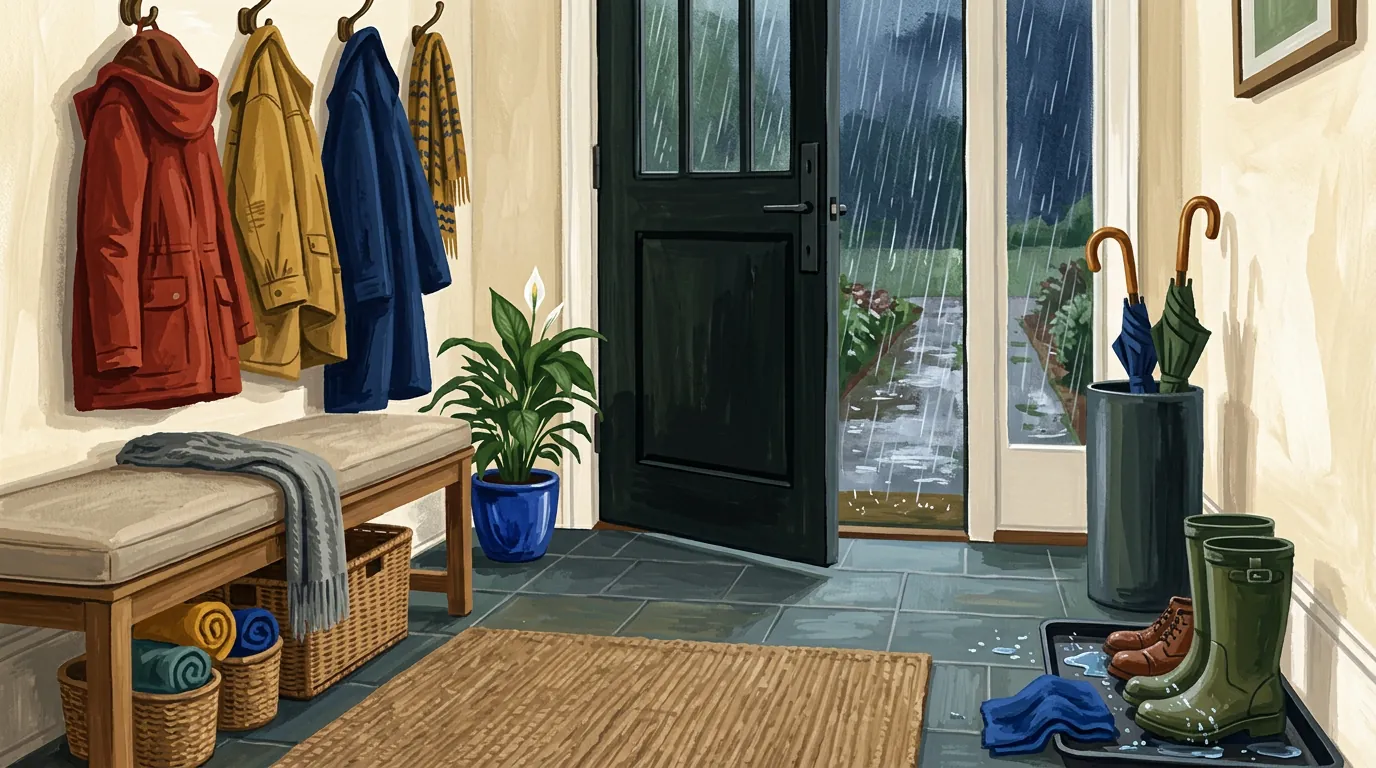
The best entryway is not necessarily the one with the most storage. It is the one that lets someone arrive with dripping shoes, a wet coat and a work bag without spreading water through the house or creating an obstacle at the door. That distinction matters in a rental hallway as much as in a house with a dedicated foyer. Adding another basket can make the problem worse if it collects damp clothing or narrows the only usable walking route.
For a practical 2026 refresh, start with the gear your household actually brings home, including larger backpacks, reusable shopping bags and wet-weather layers. Give water a contained landing spot, damp items an open drying position and dry belongings a separate home. Then test the arrangement with the door fully open and someone carrying groceries. The following layouts prioritize those everyday movements over matching furniture, with options that do not require a renovation or permanent changes to a rental.
1. Map the exit before choosing storage
Open the entry door through its normal swing and identify the route people use to reach the rest of the home. Include access to locks, light switches and any nearby closet. Measure furniture by its actual depth, then account for what hangs off it: a loaded backpack or bulky coat can project much farther than its hook. Tape a proposed footprint on the floor before buying anything, but remove the tape after testing.
Do not treat a single internet clearance measurement as permission to crowd an exit. Building and fire requirements vary with the property and location, and accessibility needs may call for more room. Keep the existing exit route unobstructed and check applicable requirements with the landlord, building manager or local authority when necessary. In an apartment building, the corridor outside your unit may be common space where personal storage is prohibited.
- Test the route with the largest bag you regularly carry, not just empty hands.
- Check that shoes cannot slide behind the door and prevent it from opening.
- Keep electrical panels, radiators, vents and safety equipment accessible.
- If a bench makes anyone turn sideways, try a smaller perch elsewhere rather than forcing it into the hallway.
2. Give wet gear a contained landing zone
Put a shallow, watertight boot tray on your private side of the doorway, outside the door swing and walking route. Choose a size that holds the household's usual wet arrivals without shoes spilling over the rim. A textured insert can lift soles above small puddles, but it should come out easily for cleaning. A tray is temporary drainage space, not permanent storage for every pair of shoes.
Use a low-profile, slip-resistant mat where people first step, checking that the door clears its edges. An absorbent mat catches surface water; a tray contains runoff. Neither protects a floor indefinitely if moisture collects underneath. Check compatibility with your flooring and finish, especially with rubber-backed products, and lift both pieces regularly so the surface below can dry.
After a downpour, empty pooled water rather than waiting for it to evaporate indoors. Remove grit before wiping the tray, and follow flooring instructions for cleaning salty or muddy residue. If the mat stays wet between arrivals, exchange it for a dry one and dry the first completely.
| Option | Useful job | What to check |
|---|---|---|
| Absorbent entry mat | Catches water from footsteps | Backing compatibility, grip and door clearance |
| Watertight boot tray | Contains drips from parked shoes | Leaks, overflow and moisture underneath |
| Removable raised insert | Keeps soles above shallow puddles | Stability and easy cleaning |
| Open shoe rack | Holds shoes after draining | Drips reaching lower shoes or the floor |
3. Make drying space different from coat storage
A coat closet is useful for dry outerwear, but a tightly packed, closed closet is a poor first stop for a soaked jacket. Reserve a few open hooks or a stable freestanding rack for damp layers. Space them so sleeves are not pressed together, and position the drip-catching surface below without putting it in the walking route. Let items dry before moving them into everyday storage.
Unfasten wet coats and empty pockets. Follow care labels, especially for waterproof shells, wool and leather; not every material tolerates direct heat or the same drying method. Boots may dry more effectively with removable insoles taken out and openings loosened, if the manufacturer permits it. Avoid laying wet gear on a radiator or placing a portable heater beside the rack.
Umbrellas need their own draining spot away from bags and charging equipment. Stand them securely in a washable drip container, then open them to dry in another safe area if space allows. If condensation, musty smells or persistent dampness develop, address ventilation and humidity rather than adding more hooks. A fan can help air circulate only where its cord and body stay dry and clear of traffic; it does not replace adequate ventilation.
4. Keep bags and everyday essentials on the dry side
Give handbags, backpacks and laptop bags a location beside the wet zone, not beneath it. A dedicated dry shelf, cubby or appropriately rated hook can work. A coat dripping onto a bag is still a problem even if both items look neatly organized. Keep electronics away from wet surfaces, and put keys and wallets in a small dish where they will not be knocked into the boot tray.
Avoid assuming that a slim wall hook can hold a fully loaded backpack. Check both the product's load rating and the fastening requirements for your wall. Adhesive hooks are not interchangeable with mechanically fastened hardware, and humidity, paint condition and surface preparation can affect performance. Renters should get permission for drilling where required and follow removal instructions for approved adhesive products.
- Assign one reachable bag spot per regular user instead of making a shared heap.
- Place children's dry storage within reach without encouraging climbing on a bench.
- Leave wet reusable shopping bags open to dry before folding and storing them.
- Return extra totes and seldom-used bags to a closet so the entry serves today's departures, not every possible outing.
5. Use one wall in a narrow hallway
In a narrow hall, start with a one-sided layout: a short wet-coat rail near the entrance, a tray directly below it and a separate dry-bag position farther along the same wall. Put dry shoes elsewhere if they would require a rack opposite the coats. Alternating storage between both walls may look balanced, but it can create a slalom of protruding bags, sleeves and furniture.
A bench earns its space only if people can sit, stand and pass without conflict. Measure it with someone seated, including their knees and feet. If that fails, place a sturdy chair in an adjacent room for changing shoes. A folding seat may save space when closed, but still needs suitable mounting and adequate room when open; it is not automatically a renter-friendly solution.
Use vertical space selectively. A shallow shelf above a dry-bag area can hold occasional items, provided it is securely installed and does not create a head-strike hazard. Avoid placing heavy objects overhead. Before committing, run a rainy-day rehearsal with coats hanging and shoes in the tray. The empty hallway is not the layout you actually need to evaluate.
6. Set boundaries at a shared doorway
Roommates and multigenerational households need a capacity rule more than they need identical baskets. Divide the private entry into clearly understood spots, with a shared wet landing zone and individual dry storage. Agree on how many shoes can remain there and where overflow goes. A simple rule such as one active pair per person can work if the tray actually holds that many.
Separate drying from ownership: anyone's wet coat uses an available drying hook, then moves to its owner's storage once dry. That keeps a permanently claimed hook from sitting empty while another person's coat drips onto a chair. Establish who empties the tray after heavy rain and who checks beneath the mat; chores that belong to everyone often get missed.
If the doorway itself is shared with another household, confirm the boundaries before placing anything outside your unit. Do not assume a neighbor's shoe rack establishes permission. Inside, leave room for visitors and mobility aids rather than filling every gap. Guests can use a temporary dry-bag spot in an adjoining room without turning the exit into overflow storage.
7. Build a two-stop routine when there is no mudroom
A front door that opens into a living room does not need a full mudroom imitation. Create a small arrival station at the door for draining shoes, then place dry storage farther inside. Wet coats can move to an open drying area with a washable surface underneath, provided carrying them there does not spread water across the floor. Choose that route deliberately rather than improvising every rainy evening.
A nearby bathroom or laundry area may offer useful drying space if it has ventilation, suitable surfaces and available room. Keep fixtures accessible, avoid crowding heat-producing appliances and remove dry items promptly. Do not put soaked gear into decorative woven baskets or against upholstered furniture simply because those containers fit the room's style.
Finish with a brief evening reset: empty the tray if needed, check the floor beneath it and move dry shoes and coats to storage. Keep only the next day's bags at the exit. Before wetter weather arrives, inspect loose hooks, curled mat edges and wobbling furniture. The goal is a repeatable routine that contains water, supports drying and leaves a clear way out.
Check current lease rules, product instructions and local exit requirements before installing storage, and consult a qualified professional when mounting or clearance is uncertain.
AI Assistance Used — AI assistance was used in researching and drafting this article. It was reviewed, edited, and fact-checked by Jordan Singh before publication.