The Old Electronics in Your Drawer That Are Actually Worth Money
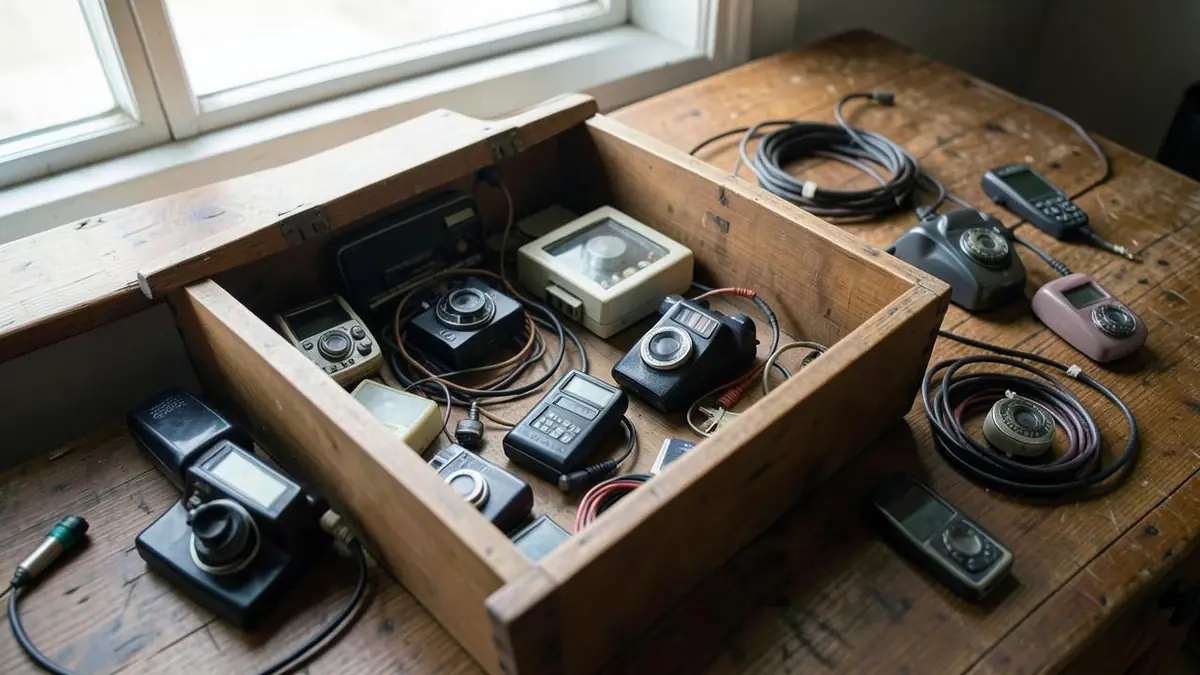
The drawer of dead electronics is a fixture of most homes: chargers for phones long gone, a camera from a holiday two decades ago, a handheld console, a calculator from school. The overwhelming majority of it is landfill or recycling. A small minority of it sells for more than the original purchase price.
The dividing line is not age or nostalgia. It is whether a device does something current equipment cannot do, or does it in a way a specific community still wants. Once you can spot that pattern, sorting a drawer takes twenty minutes.
Devices with a distinctive output
Film cameras, early digital compacts with unusual sensors, and certain camcorders hold value because the images they make cannot be replicated convincingly by a modern phone. Photographers buy them deliberately, not out of sentiment.
The same logic applies to audio hardware. Analogue synthesisers, particular microphones, and certain portable recorders are still bought and used professionally. If a device is still turning up in current production credits, it has a floor price.
Anything with a locked ecosystem
Handheld consoles and their cartridges hold value because the software cannot legally be moved to newer hardware. A working console with original packaging is worth several times a loose, scuffed unit.
Graphing calculators are the quiet example of the same effect. Exam boards specify particular models, which keeps a steady, price-insensitive demand alive for hardware that is technically decades out of date.
Professional tools, not consumer gadgets
Test equipment, laboratory instruments, and industrial controllers often retain value long after consumer electronics of the same vintage are worthless. They were expensive, they were built to be repaired, and replacements cost far more.
If a device has a calibration sticker, a metal case, and a serial plate, look it up before recycling it. That combination is a reliable signal of a product with a professional second-hand market.
Condition, completeness, and the boring details
Completeness routinely doubles a price. Original box, manual, cables, and any bundled accessories turn a used item into a collectable one, and buyers pay for the difference because it signals careful ownership.
Corrosion from a leaking battery is the single most common value-killer. Check every battery compartment now, remove old cells from anything you are storing, and photograph any damage honestly in a listing rather than hoping it goes unnoticed.
Where you sell changes what you get
General auction sites reach the most buyers and take the largest cut in fees and shipping risk. Specialist forums and dealer buy-back schemes pay less headline value but settle faster and with fewer disputes.
For bulky, fragile items, local collection avoids the single largest cost in this category, which is shipping something heavy that arrives broken. For small, high-value items, insured postage is worth the fee.
Wipe it before it leaves the house
Old phones, tablets, cameras with internal storage, and laptops carry accounts, photos, and saved passwords. A factory reset is the minimum; for laptops, removing or securely erasing the drive is better.
Check for removed SIM cards and memory cards, which are frequently posted out inside devices by accident. Two minutes of checking prevents the one genuinely serious risk in an otherwise low-stakes exercise.
Second-hand values fluctuate constantly. Check completed sale prices, not asking prices, for the specific model and condition before selling.
AI Assistance Used — AI assistance was used in researching and drafting this article. It was reviewed, edited, and fact-checked by Leah Fornier before publication.