Metal vs. Asphalt Roofing: Compare More Than the Installation Price
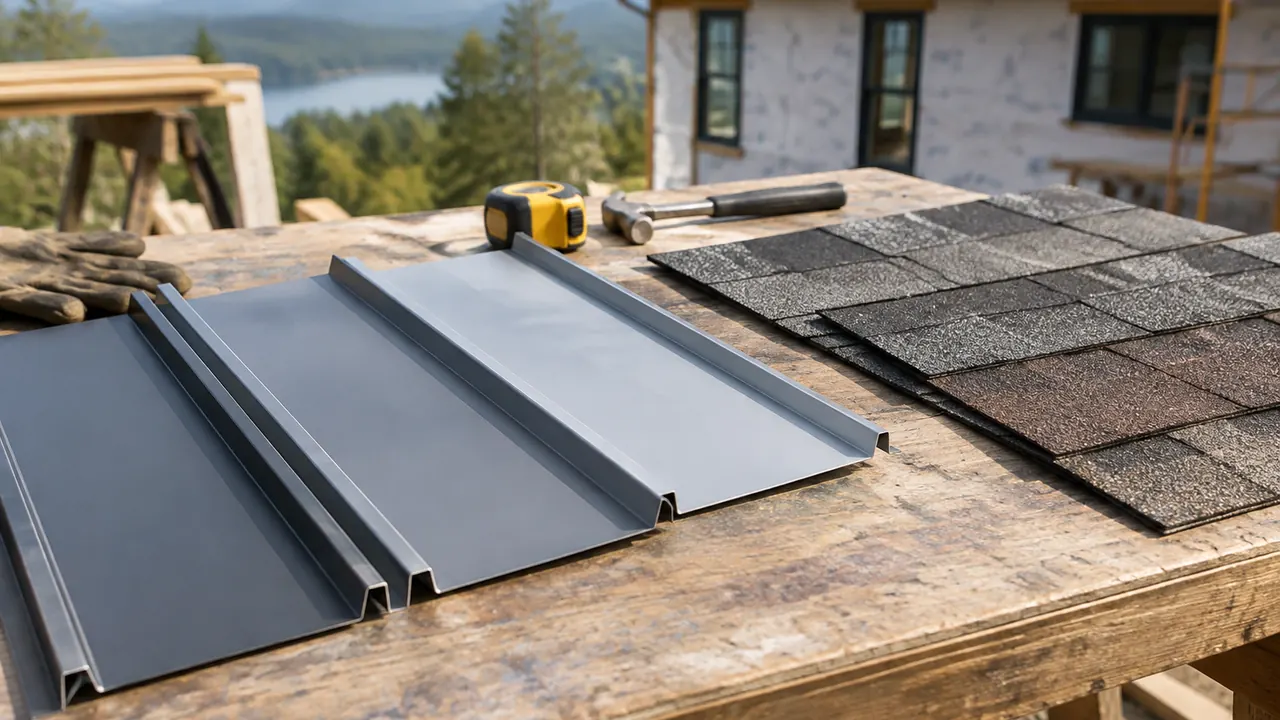
Choosing between metal and asphalt roofing in 2026 means comparing two roof systems, not just two material prices. Asphalt shingles generally cost less to install and are familiar to more residential roofers. Metal usually requires a larger upfront investment, particularly for standing-seam panels, but can offer a longer service life. Neither choice automatically delivers better value: The details beneath and around the visible roofing can determine whether it stays dry.
Start with your house, local weather and ownership plans. A straightforward gable roof in a mild climate presents a different decision from a steep, shaded roof with valleys, skylights and heavy snowfall. Ask contractors to price comparable scopes, explain likely repairs and identify the exact products they propose. The useful comparison is what each complete installation will cost and demand over your expected time in the home—not whether one material wins every category.
1. Compare installed costs on equal terms
For early budgeting in 2026, a broad planning range is roughly $5 to $10 per square foot of roof area for professionally installed asphalt shingles and $10 to $20 or more for standing-seam metal. These are not national price quotes or firm limits. Local labor, product specifications, tear-off requirements and roof complexity can move bids outside those ranges. Exposed-fastener metal can cost less than standing seam, while specialty metals and premium shingles can cost substantially more.
Roof area is not the same as your home's floor area. Pitch, overhangs and attached roof sections change the quantity, and contractors commonly price roofing by the square: 100 square feet. On 2,000 square feet of roof, those planning ranges translate to about $10,000 to $20,000 for asphalt and $20,000 to $40,000 or more for standing seam. Confirm what is included before treating either number as your project budget.
- Request separate amounts for tear-off, disposal, permits, flashing, ventilation and any gutter work.
- Get unit prices for replacing damaged decking, plus a written approval process for unexpected repairs.
- Compare the exact shingle line or metal thickness, coating, fastening system and accessories—not just material labels.
- Keep financing costs separate from the cash price so monthly payments do not hide a higher total.
2. Treat longevity and maintenance as separate questions
Asphalt shingles commonly provide roughly 15 to 30 years of service, while properly specified and installed metal roofing may last 40 to 70 years or longer. These are broad expectations, not promises. Product quality, climate, ventilation, installation and maintenance can shorten or extend useful life. A long warranty is not a forecast of replacement timing, and coverage may narrow or become prorated as the roof ages.
Neither material is maintenance-free. Both need clear drainage paths and periodic checks around penetrations, valleys and flashing. Asphalt can lose granules, crack or develop lifted tabs. Metal can suffer coating damage, corrosion in vulnerable locations and movement-related connection problems. Exposed-fastener panels require attention to screws and sealing washers; standing seam conceals many fasteners but still has vulnerable transitions and penetrations. Arrange inspections after significant storms and at intervals recommended for the particular roof.
For a longer ownership horizon, compare plausible replacement and maintenance scenarios rather than dividing the purchase price by the longest advertised lifespan. Include borrowing costs if financing the upgrade. For a shorter stay, do not assume buyers will repay the entire metal premium. Local preferences and the roof's documented condition matter. Keep contracts, inspection photos and repair records with the house paperwork.
| Issue | Asphalt shingles | Metal roofing |
|---|---|---|
| Typical service-life expectation | Roughly 15–30 years | Roughly 40–70+ years |
| Routine attention | Granules, tabs, flashing and drainage | Coatings, connections, flashing and drainage |
| Warranty questions | Proration, wind limits and workmanship | Finish, weather-tightness and workmanship |
| Ownership trade-off | Lower entry cost; potentially earlier replacement | Higher entry cost; potentially fewer replacements |
3. Match the assembly to your climate
In hot regions, reflectance and thermal emittance matter more than a simple metal-versus-asphalt label. A tested cool-roof finish can reduce solar heat gain, but not every metal finish is highly reflective, and some asphalt products have reflective granules. Savings depend on insulation, ventilation, HVAC use and climate. Check product ratings and local requirements rather than accepting a promised percentage reduction in your utility bill.
For wind, hail and wildfire exposure, look at the tested roof assembly and installation instructions. Metal is not automatically hurricane-proof or dent-proof, and impact-resistant shingles are not immune to damage. Fire performance also depends on the assembly, not just the visible covering. Before choosing an upgrade, ask your insurer whether the exact product qualifies for a discount and whether cosmetic hail damage is excluded.
- Snow country: Smooth metal can shed snow suddenly; have snow retention designed for entrances, walkways and vulnerable equipment.
- Coastal locations: Verify that the metal, coating and fasteners suit salt exposure and meet warranty distance restrictions.
- Ice-dam areas: Address attic air leaks, insulation and ventilation; roofing material alone will not prevent ice dams.
- High-wind areas: Confirm required fastening, edge details, product approvals and inspection requirements with the installer and building department.
4. Let roof geometry and underlayment shape the choice
A simple roof with long, uninterrupted slopes is often well suited to standing-seam panels. Dormers, hips, intersecting valleys, chimneys and skylights increase cutting, flashing work and waste. On a complicated house, that labor can widen metal's price premium. Asphalt shingles are easier to adapt to many intricate shapes, but every additional intersection remains a potential leak point. Ask bidders to identify the difficult areas on photos or drawings.
Slope is equally important. Asphalt shingles generally require at least a 2:12 slope, with special underlayment provisions at lower permitted slopes; verify the product instructions and local code. Metal's minimum slope varies with the panel profile, seam design and sealants. Some low-slope sections need a different roofing system entirely. Do not let a contractor extend the main roof material onto a porch or addition without checking its suitability.
Underlayment provides secondary water protection, not an excuse for poor flashing. Metal assemblies may require underlayment rated for high temperatures and compatible with the panel system. Ice barriers, valley treatments and deck repairs should be specified where needed. Have the contractor explain how the assembly handles condensation, drying and attic ventilation. Existing moisture problems should be investigated before new roofing conceals the evidence.
5. Check appearance, sound and neighborhood fit
Standing-seam metal creates long, clean lines that can suit contemporary houses, farmhouses and some traditional designs. Metal shingles and other profiles offer different looks. Asphalt comes in familiar architectural patterns and is often easier to match to neighboring homes or an existing addition. View full-size samples outdoors and, if possible, visit completed roofs. A small swatch will not show how color, gloss and texture read across an entire slope.
Ask about oil canning: visible waviness in flat metal panels that can occur even when the roof performs properly. Panel design, finish, lighting and installation affect its visibility. Set expectations before ordering, and verify homeowners association or historic-district approvals. Also consider future accessories. Solar mounts, skylights and snow guards should fit both the roof's appearance and its technical requirements without improvised penetrations.
Sound depends on the whole assembly. Metal installed over a solid deck with appropriate insulation and interior finishes need not sound like rain on an open shed. Still, an attic bedroom may warrant a specific discussion about rain noise. If matching an older roof, recognize that weathering can make replacement shingles or panels stand out even when the nominal color is identical.
6. Plan for repairs before you need them
Asphalt often has the advantage in repair availability. Many roofers can replace a limited number of damaged shingles, though brittle surrounding shingles may complicate a seemingly small job. Metal repairs can require a contractor familiar with the exact system. Replacing a standing-seam panel may involve opening seams or disturbing neighboring panels, so one damaged area does not always mean a quick, inexpensive patch.
Ask who will handle service calls, how materials will be matched and whether spare shingles or panel information should be retained. Save manufacturer names, profiles, colors and installation details. After a leak, the first task is identifying the entry point; water can travel before appearing indoors. Caulk applied indiscriminately is not a durable substitute for correcting failed flashing or an unsuitable detail.
| Repair situation | Asphalt considerations | Metal considerations |
|---|---|---|
| Localized storm damage | Individual shingle replacement may work | Panel access and seam design affect scope |
| Leak at a penetration | Inspect flashing and surrounding shingles | Inspect flashing, seals and movement details |
| Appearance after repair | New shingles may contrast with weathered ones | Finish and profile matching can be difficult |
| Adding rooftop equipment | Use properly integrated flashing | Use system-compatible mounts and details |
7. Choose the installer as carefully as the material
A strong asphalt installation can be a better purchase than a poorly executed metal roof. Verify licensing where required, insurance and experience with the proposed system—not just roofing generally. Ask for recent projects with similar geometry and references from older installations. Manufacturer training or certification can be useful, but it does not replace checking workmanship and service history.
Before signing, get a written scope covering flashing replacement, deck preparation, weather protection, cleanup, inspections and payment milestones. Separate the manufacturer's product warranty from the contractor's workmanship warranty, and read exclusions and transfer rules. Choose asphalt when its lower cost and accessible repairs best fit your plans; choose metal when its expected longevity, appearance and climate-specific advantages justify the premium. In either case, the winning bid should explain how the roof will work, not merely what it will cost.
For this May 2, 2026 comparison, treat costs and lifespans as planning estimates; verify current local bids, codes, insurance terms and product requirements with qualified professionals.
AI Assistance Used — AI assistance was used in researching and drafting this article. It was reviewed, edited, and fact-checked by Nadia Clarkson before publication.