How to Get a Medical Second Opinion Without Repeating Every Test
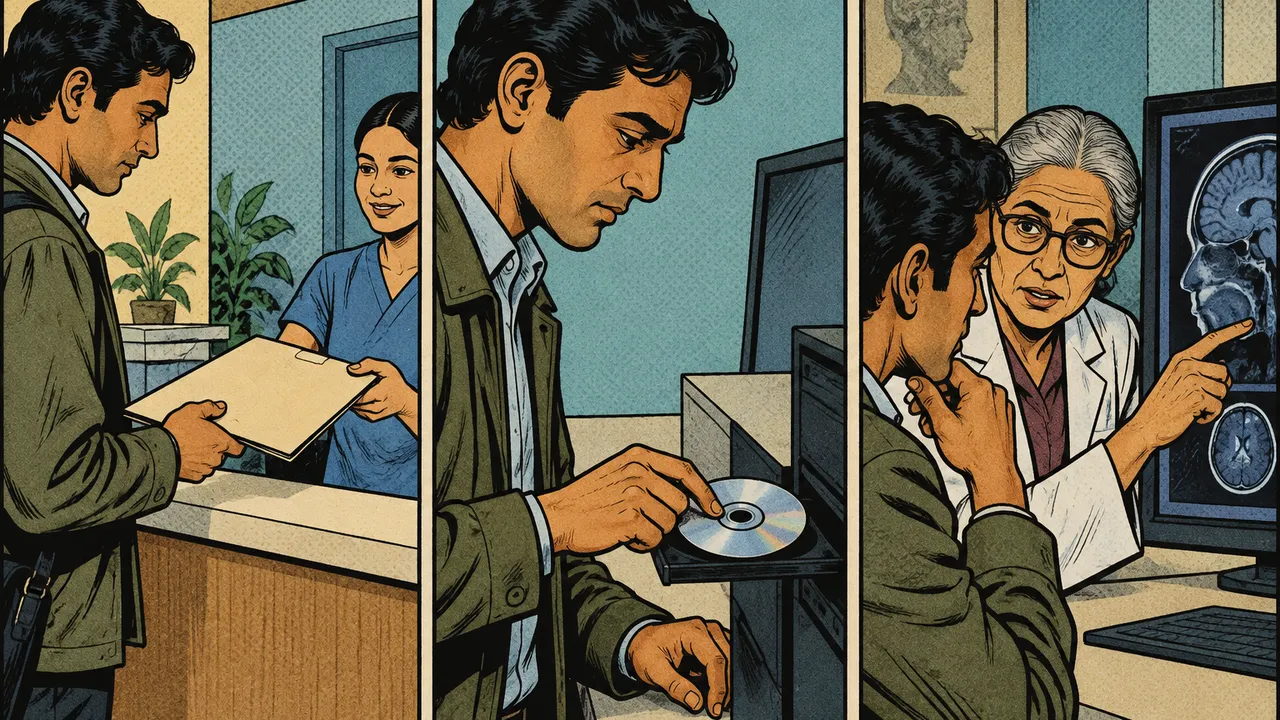
A second opinion is most useful when it answers a specific question: Is surgery necessary? Does the diagnosis support this treatment? Would monitoring or a less invasive option be reasonable? For a major, nonurgent decision, another specialist can confirm the plan, explain alternatives or identify information that is genuinely missing.
The goal is not to avoid every repeat test. It is to make existing work available before anyone orders more. Records, original images and sometimes tissue samples can let the next clinician evaluate what has already been done rather than reconstructing your medical history from scratch. Start arranging the transfer when you request the appointment, since missing files may otherwise turn the consultation into a preliminary visit rather than a decision.
1. Establish the question and the safe timeline
Consider another opinion before an irreversible procedure, a treatment with substantial risks or a long-term medication commitment. It can also help when specialists disagree, a diagnosis is rare or uncertain, or the proposed treatment does not seem to address your symptoms. Agreement between clinicians can be valuable, too: it may strengthen confidence in a difficult decision.
Ask the treating clinician how long you can safely take to decide and what changes would require urgent attention. Do not postpone emergency care while arranging a consultation. Write down the diagnosis, proposed treatment and your main concern. Ask which decisions remain open and whether any scheduled testing can safely wait until the second specialist reviews existing results.
If the next available appointment falls outside that window, tell the referring office. Ask whether clinician-to-clinician contact, a cancellation list or another qualified specialist could secure an earlier review.
2. Choose experience that matches the decision
Look beyond a hospital’s reputation to the specialist’s experience with your condition and the choice you face. A surgeon who regularly performs a procedure may answer different questions than a specialist who manages nonsurgical alternatives. For uncommon diseases, an academic center or multidisciplinary clinic may offer a more focused review.
Request recommendations from your current clinician, primary care office or a reputable disease organization. Check licensure through the state medical board and relevant certification through the American Board of Medical Specialties or American Osteopathic Association. Certification alone does not establish condition-specific expertise.
For a remote consultation, confirm whether the specialist can advise patients in your state and whether the service includes a discussion with you or only a written report.
- How often do you evaluate patients with this diagnosis?
- Do you offer both treatment and observation options, or coordinate those perspectives?
- Can you review outside testing before the visit?
- Is a records-only review sufficient, or is an examination needed?
3. Transfer the evidence, not just the summary
Ask the receiving office for its checklist and approved transfer method before requesting records. Patient portals are useful, but they may omit older documents, full imaging studies or pathology materials. Request relevant information directly from medical records, radiology and pathology departments; these often have separate release processes.
Send materials early enough for review, then confirm they arrived and can be opened. Electronic exchange between health systems is not a guarantee that every file transferred. Keep your own copy and a simple list of what was sent.
Include earlier comparison scans when available, not just the newest study. Changes across dated images may help the specialist assess growth or stability without ordering another scan immediately.
- Clinical records: referral, specialist notes, discharge summaries, operative reports, laboratory results and prior treatment responses.
- Images: complete original studies, generally in DICOM format, plus radiology reports—not screenshots alone.
- Pathology: reports and, if requested, glass slides, digital slides or tissue blocks; coordinate tracking and return with both laboratories.
- Patient summary: symptoms and dates, medications and doses, allergies, relevant family history and your treatment priorities.
4. Separate review from necessary repeat testing
A report describes an interpretation; the underlying images or tissue allow an independent assessment. A specialist may request a formal radiology reread or pathology consultation rather than another scan or biopsy. Those reviews can carry separate charges. Ask whether the existing material answers the clinical question before agreeing to a new collection or study.
Repeating a test can still be appropriate when your condition has changed, the study is too old for the decision, quality is inadequate or a different protocol is needed. Ask what the new result would change.
If repeat imaging requires contrast or sedation, flag prior reactions, kidney disease and relevant medications. Ask how these factors affect the test choice, preparation and whether an alternative is appropriate.
| Situation | Question to ask |
|---|---|
| Images unavailable | Can the original facility resend them? |
| Different interpretation | Would an expert reread resolve it? |
| Older results | What makes updated testing necessary now? |
| Inadequate tissue | Can existing material support additional analysis? |
5. Confirm costs and leave with a usable plan
Before booking, ask your insurer about specialist coverage, network status, referrals and prior authorization. A hospital’s network participation does not necessarily cover every clinician or outside review. Ask the office for expected charges, including facility fees, image interpretation and pathology. Records-only programs may be self-pay even when ordinary visits are covered.
If uninsured or paying without insurance, ask about a written good faith estimate; federal rules generally provide this right for scheduled care, with timing requirements. Check current guidance through the Centers for Medicare & Medicaid Services. Before leaving, request a written assessment to share with your original clinician.
For any new test, identify who will place the order, obtain authorization and communicate results. Schedule the follow-up discussion before leaving so findings do not sit between two offices.
- Does the specialist agree with the diagnosis and proposed treatment?
- Which alternatives fit your goals, and what are their trade-offs?
- What testing is still needed, and why?
- Who will coordinate follow-up and reconcile conflicting recommendations?
Verify current coverage, fees, records-access rules and estimate protections with your insurer, providers and official government sources; this article is not personalized medical advice.
AI Assistance Used — AI assistance was used in researching and drafting this article. It was reviewed, edited, and fact-checked by Lisa Barber before publication.