Why Clean Laundry Still Smells, and How to Find the Cause
Laundry that smells fine at the end of a cycle but turns sour in the closet is leaving clues. So are workout shirts that smell again as soon as they warm up and towels that become musty when wet. The cause is not always too little detergent. Excess product, a crowded drum, damp storage or residue inside the washer can leave fabrics smelling unpleasant even when they look clean.
The useful approach in 2026 is still to troubleshoot the process, not cover it with a stronger scent. Automatic detergent dispensers, low-water cycles and quick-wash settings can be helpful, but none eliminates the need to match the load, product and drying method. Start by identifying when the smell appears, then change one variable at a time. That keeps you from repeatedly washing the same laundry without learning what went wrong.
1. Identify when and where the smell starts
Check a freshly washed item before it goes into the dryer, then check it again once it is completely dry and cool. Compare an ordinary cotton shirt, a towel and an athletic garment if you have them. If unrelated items all emerge with the same stale odor, investigate the shared process and washer first. If only polyester workout clothing smells, retained body oils deserve more attention. These are clues, not definitive tests.
Next, smell the empty drum and inspect the hamper, drying rack and storage shelf. A clean load can pick up odor from a damp basket or musty closet. Notice whether the problem follows one cycle, one unusually large load or a delay before drying. Write down the detergent amount and settings for the next couple of loads. Do not bury the evidence under scent beads: a strong fragrance can make it harder to judge whether cleaning actually improved.
| When the odor appears | Possible explanation | First check |
|---|---|---|
| Immediately after washing | Incomplete cleaning or washer residue | Dose, load size and washer interior |
| After sitting wet | Too much time damp | Transfer time and drying conditions |
| Only during wear | Retained soil in athletic fabric | Care label and washing method |
| After folding or storage | Hidden moisture or musty storage | Thick seams and closet conditions |
2. Reset the detergent dose before adding anything
More detergent does not necessarily mean cleaner laundry. Too much can be difficult to rinse away, particularly when concentrated products are poured by eye. Residue may leave fabric stiff, slippery or heavily perfumed, although those sensations alone cannot prove buildup. Too little detergent can also leave sweat and oils behind. Use the detergent label and washer manual together, accounting for load size, soil level and local water hardness. An HE washer needs detergent labeled for HE use.
For the next test load, measure instead of filling the cap automatically. Check automatic-dosing settings against your detergent’s concentration and the manufacturer’s instructions; changing formulas may require changing the setting. For lightly soiled items that seem coated with product, try a rinse-and-spin without additives, then dry promptly. Improvement supports investigating residue, but a rinse will not adequately clean oily, dirty clothing. Avoid adopting a universal tiny dose: products, machines and water conditions vary too much for one amount to fit every household.
- Pause fabric softener and scent boosters while troubleshooting so they do not obscure the result.
- Check whether a pod’s labeled load size matches yours; never cut or puncture pods.
- Ask your water utility about hardness, or test well water, before adjusting dosing around it.
3. Give the load room and choose a real cleaning cycle
An overloaded drum limits the movement that helps release soil and distribute wash water. It can also leave a load poorly rinsed or unevenly spun. Capacity claims do not mean every combination of fabrics can be packed tightly into the drum. Follow the manual’s loading guidance, place items loosely and avoid compressing towels to squeeze in one more. A bulky blanket may need a larger machine even if you can close the door.
Run a smaller, comparable load with the same measured detergent and an appropriate full-length cycle. Quick wash is often intended for small, lightly soiled loads, not a week’s worth of sweaty clothing or dense towels; verify your model’s limits. Choose water temperature from the care labels, detergent directions and washer guidance rather than assuming cold water cannot clean or that hot water solves everything. Modern detergents can work in cold water, but warm water may help with some oily soils when the fabric permits it. If items remain unusually wet after spinning, check for an imbalance or drainage problem instead of sending the extra water straight into a long drying session.
4. Treat drying as part of cleaning
A successful wash can be undone when laundry stays damp too long. Move it along promptly rather than letting it sit overnight in a closed drum. There is no reliable universal number of hours before a load becomes smelly: temperature, soil and airflow all matter. If it already smells sour, rewash it appropriately rather than merely drying the odor in. For air drying, separate items, unfold sleeves and give thick waistbands and towel edges open space.
In a dryer, avoid packing wet laundry tightly and clean the lint filter as directed, generally after every load. If drying suddenly takes longer, examine the maintenance instructions. Vented dryers need an unobstructed exhaust path; ventless and heat-pump models have different filter, condenser and drainage requirements. Do not use one maintenance checklist for every design. Let items cool before folding and feel thick areas for lingering dampness. Persistent long drying times, weak exhaust or overheating call for inspection, not repeated extra cycles.
- On a rack, use spacing and room ventilation; a fan or dehumidifier may help in humid conditions.
- Separate heavy towels from lightweight items when mixed loads dry unevenly.
- Never use a dryer for items contaminated with flammable solvents; follow the appliance’s safety warnings.
5. Give towels a residue-and-moisture check
Towels combine dense loops, repeated wetting and slow drying, so they often reveal a problem before other laundry does. First stop fabric softener, which can coat fibers and reduce absorbency. Wash a manageable towel load using a measured detergent dose and the warmest temperature allowed by the care label. If the towels feel coated, an extra rinse may help; if they are genuinely soiled, they still need detergent and enough washing time.
For persistent odor, consider an oxygen bleach labeled for the fabric and color, following its dose, temperature and soaking limits. It is not suitable for every material, and not every oxygen-bleach product is a disinfectant. Do not assume a homemade stripping soak is gentler or necessary. Between uses, spread towels fully on a bar or rack rather than bunching them on hooks. Let damp towels dry before they enter the hamper. After washing, check hems and folded edges before storage. A towel that smells only when wet may still contain retained residue or soil, but its drying and storage conditions also need attention.
6. Handle athletic fabrics without coating them
Polyester-rich athletic clothing can retain body oils and odor even when cotton items in the same load smell normal. Turn garments inside out so the areas touching skin are exposed to washing. If they cannot be washed promptly, hang them to dry rather than leaving them balled up in a gym bag. Check care labels carefully: elastic, printed graphics, membranes and water-repellent finishes can limit temperature, soaking and product choices.
Use a detergent suitable for the garment; an enzyme-containing formula may help remove body soils, but check its suitability for delicate fibers such as wool or silk. Pretreat underarms or other oily areas only as the detergent and garment instructions allow, then wash with enough room for movement. Skip fabric softener unless the garment maker specifically permits it. Avoid treating high heat as an odor cure because it can damage stretch fibers. Dry according to the label, often with low heat or good airflow, and assess the garment after it cools. A sports-specific detergent is an option, not a requirement; compare actual results before paying more for a specialized label.
7. Clean the washer’s hidden trouble spots
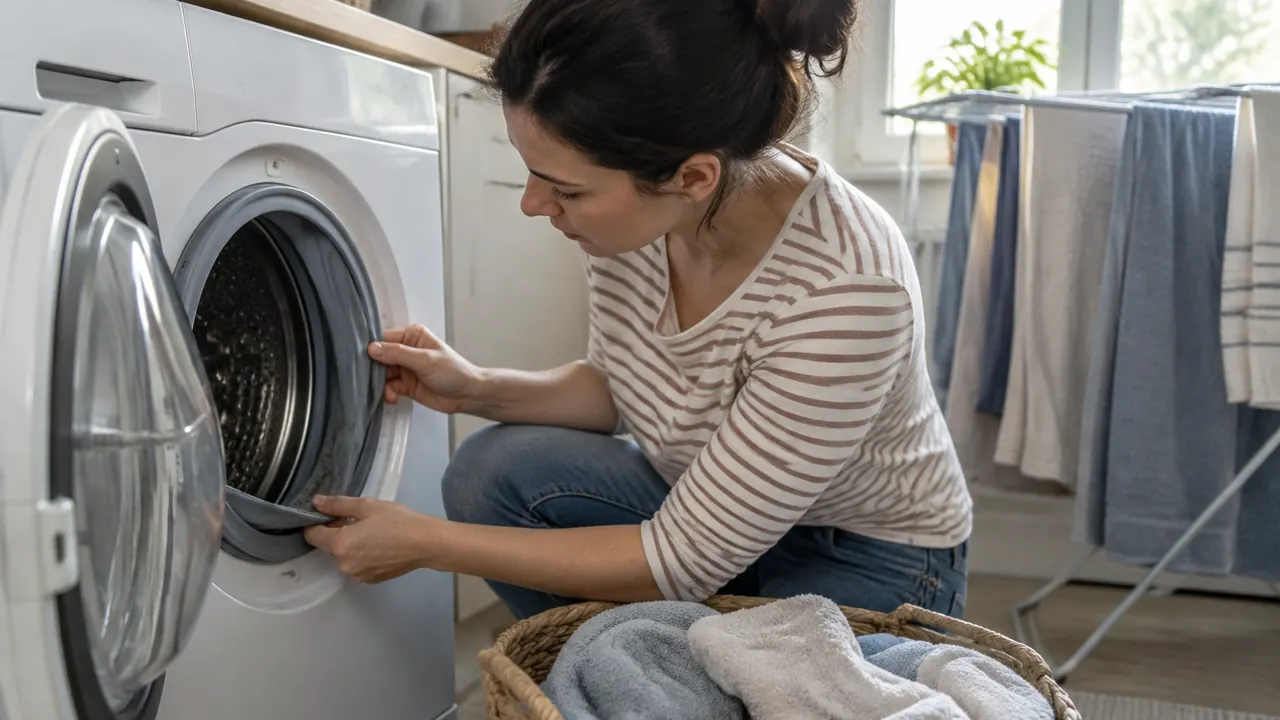
If several fabric types smell straight from the wash, inspect the machine. On a front-loader, gently check the rubber seal’s folds for lint, standing water and trapped items. Examine the dispenser drawer and its recess, where detergent and softener can collect. Top-loaders also need attention around dispensers and accessible tub edges. Use the manual’s approved cleaning method rather than abrasive tools or a guessed chemical mixture.
Run the designated tub-clean cycle empty with the product and amount specified by the manufacturer. Some washers have a user-accessible drain-pump filter; others do not. Before opening one, follow instructions for disconnecting power, cooling water and containing drainage. Afterward, keep the door or lid and dispenser ajar only when safe around children and pets. If cleaning does not resolve the odor, or you notice poor draining, backflow or recurring standing water, seek appliance or plumbing help.
- Never mix chlorine bleach with vinegar, other acids, ammonia or other cleaners.
- Do not remove panels or force access to a filter that the manual does not identify as user-serviceable.
- Persistent sewage-like odor warrants checking the drain installation and household plumbing, not stronger laundry perfume.
Consult current appliance manuals and garment care labels before treatment, and contact a qualified professional for persistent drainage, electrical or dryer-exhaust problems.
AI Assistance Used — AI assistance was used in researching and drafting this article. It was reviewed, edited, and fact-checked by Leah Fornier before publication.