How to Judge Winter Clothing Quality in Thirty Seconds
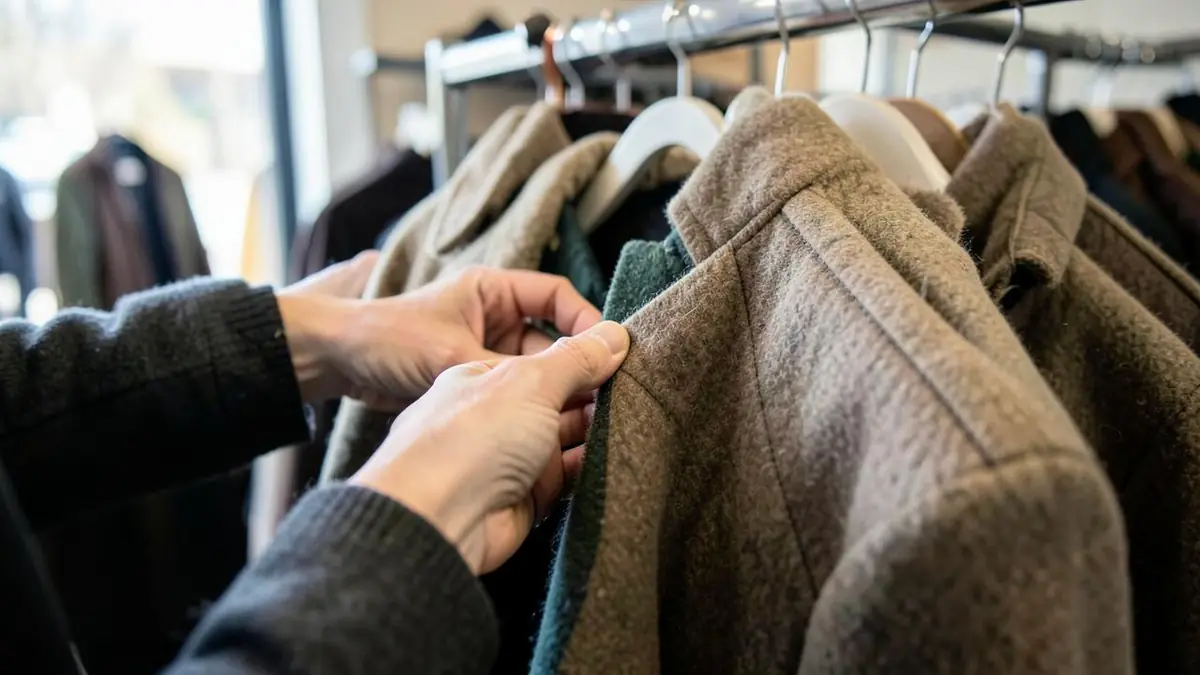
Winter clothing is bought quickly, often in a hurry and frequently online, and the difference between a coat that lasts a decade and one that looks tired by spring is mostly invisible in a photograph. Price helps a little, but plenty of expensive outerwear is assembled to the same standard as cheap outerwear with a better label sewn in.
What does discriminate reliably is a short physical inspection. On a rail it takes half a minute; on a delivered parcel, about the same before the tags come off.
Read the composition label first
For warmth per weight, wool content is the single most informative number on a coat. A high-wool blend behaves completely differently from a coat that is mostly polyester with a token percentage of wool for the label.
For knitwear, look for merino, lambswool, or a substantial natural-fibre content. Acrylic knits feel soft in the shop and pill quickly at friction points such as underarms and the sides of the body.
Insulation: fill power and construction
Down jackets state fill power, a measure of loft. Higher fill power means more warmth for less weight, and a modest amount of high-loft down outperforms a thick jacket stuffed with low-grade fill.
Synthetic insulation is heavier for the same warmth but keeps insulating when damp and costs less. For a wet climate and everyday wear, that trade often favours synthetic regardless of price.
Check the seams and the lining
Turn the garment inside out. Neat, dense stitching with finished seam edges indicates careful construction; loose stitches, raw edges, and puckering do not, and those are the points that fail first.
A full lining that is stitched rather than glued makes a coat hang properly and last longer. Partial linings are acceptable on lightweight jackets and a warning sign on anything sold as a winter coat.
Test the zip and the fastenings
Run the main zip up and down several times. It should move smoothly with one hand, without catching on the storm flap. A stiff or snagging zip is the most common terminal fault in outerwear and is expensive to replace.
Look at buttons: are they stitched with a shank so they sit above the fabric, and is there a spare? Small details like a spare button indicate a manufacturer expecting the garment to be worn for years.
Weatherproofing claims
Water-resistant and waterproof are different. A waterproof shell states a hydrostatic head rating and has taped seams; a water-resistant coat has a surface treatment that wears off and needs periodic reproofing.
Check whether the hood adjusts and whether cuffs close. A perfectly waterproof fabric with open cuffs and a floppy hood still leaves you wet, which is the most common disappointment in this category.
Care instructions predict lifespan
A coat that requires dry cleaning after every few wears has an ongoing cost that many buyers ignore. Machine-washable wool blends and technical fabrics have improved substantially and are usually the more practical choice.
Down needs occasional washing with a specialist detergent and a tumble dry with dryer balls to restore loft. If that routine sounds unlikely in your household, a synthetic-filled coat will stay warmer for longer in practice.
Fabric performance and care requirements vary by garment. Follow the manufacturer's care label rather than general guidance.
AI Assistance Used — AI assistance was used in researching and drafting this article. It was reviewed, edited, and fact-checked by Leah Fornier before publication.