Trying Induction in 2026: Check Your Pans, Power and Cooking Habits
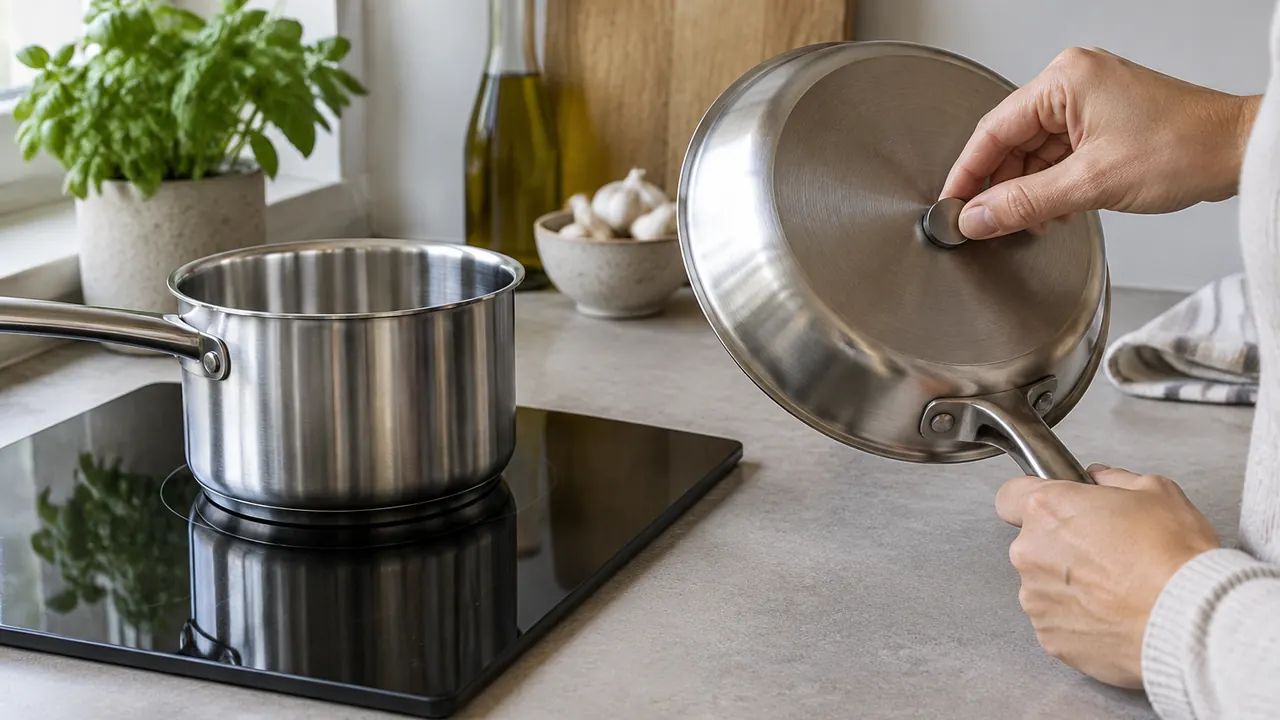
A portable induction burner can answer a question that showroom demonstrations cannot: Will this way of cooking work with your pans, kitchen and dinner routine? For households considering induction in 2026, a single countertop unit is a useful first step before replacing a working stove. It lets you practice the quick response, listen to the fan and find out whether your favorite skillet actually heats well. But it is a trial of one appliance, not a perfect preview of every full-size induction range.
Start with three checks: cookware compatibility, a suitable electrical supply and enough counter space to use the burner safely. Then cook several ordinary meals rather than judging it only by how quickly it boils water. Portable models differ in coil size, low-power control, ventilation and temperature settings. Those differences matter when you simmer oatmeal, brown a large pan of vegetables or keep a sauce warm. The goal is to discover which adjustments feel easy and which would become daily annoyances.
1. Give your existing cookware a magnet test
Induction creates heat in compatible cookware through a changing magnetic field. The pan needs a magnetic base; the glass surface is not a conventional electric heating element, although it gets hot from contact with the pan. Cast iron and many carbon-steel pans work. Stainless steel is less predictable because its composition and construction vary. Plain aluminum, copper and glass generally do not work unless the cookware has a suitable induction-compatible base.
Use a small household magnet on the underside of each pan. Strong attraction across the cooking base is a useful first screen, not a guarantee of good performance. A magnet sticking only to a small area or to the side does not establish that the burner will recognize and heat the pan evenly. Look for an induction symbol or a clear manufacturer statement, then check the burner’s cookware requirements. Before replacing a whole set, identify one medium saucepan and one skillet you already use regularly.
- Test the actual bottom, including several spots if the construction is unclear.
- Check for a flat, stable base without pronounced rocking on the counter.
- Inspect rough bottoms and move heavy pans carefully rather than sliding them across glass.
- Treat magnetic compatibility and even heating as separate questions during your cooking trial.
2. Measure the bottom, not just the advertised pan size
A skillet sold by its rim diameter may have a much smaller cooking base. Measure the flat underside and compare it with the portable burner’s stated minimum and maximum cookware dimensions. A small espresso maker or butter warmer may not trigger pan detection. At the other extreme, a wide skillet can overhang the effective heating area, leaving food at the edges slower to brown. The printed circle on the glass does not necessarily reveal the coil’s actual diameter.
This is especially important if your regular dinner involves a large frying pan. A compatible pan is not automatically a well-matched pan. Ask for coil dimensions when the manufacturer provides them, and favor return terms that allow a realistic test. Thick, well-constructed cookware can spread heat, but it cannot completely erase a size mismatch. Also check any cookware weight limit, including the weight of food and liquid. A heavy stockpot should not become a stress test for a lightweight appliance.
- Measure your favorite skillet before choosing a burner, not after delivery.
- Avoid buying an adapter plate as your first solution; it adds a hot layer and may be prohibited by the burner’s instructions.
| What to measure | Why it matters | What to verify |
|---|---|---|
| Flat pan base | Determines the contact footprint | Allowed minimum and maximum diameter |
| Effective heating area | Affects browning across wide pans | Published coil size, if available |
| Loaded cookware weight | Includes water and food | Appliance weight limit |
| Overall pan footprint | Handles and overhang need room | Controls and vents stay unobstructed |
3. Check the circuit, not merely the outlet
Many US portable induction burners use a standard 120-volt household outlet, with higher-output single-burner models commonly rated around 1,800 watts. At 120 volts, that represents roughly 15 amps at maximum output. Read the specific appliance label and installation instructions rather than assuming all countertop units have the same requirements. Some higher-power portable equipment needs a different electrical supply and is not a simple plug-in option for an ordinary kitchen outlet.
An outlet that accepts the plug does not prove that the circuit has capacity for everything you plan to run. A kettle, toaster oven or coffee maker sharing that circuit can create an overload when used alongside the burner. Separate receptacles may still be on the same breaker. Follow any dedicated-circuit requirement, plug directly into an appropriate wall receptacle, and avoid power strips and extension cords. If the outlet is loose, scorched or unusually warm, or a breaker repeatedly trips, stop using the setup and have an electrician evaluate it.
- Find the rated voltage, wattage and circuit requirements before ordering.
- Identify other appliances on the same circuit; do not rely on outlet location.
- Keep the cord away from hot cookware, water and counter edges.
- Never replace a breaker with a larger one to accommodate the burner without professional evaluation.
4. Make room for heat, airflow and everyday handling
A portable burner needs more than a pan-sized patch of counter. Its electronics typically rely on a cooling fan, with intake and exhaust openings that must remain clear. Follow the manufacturer’s clearance rules, including any limits on placement near walls, cabinets and combustible materials. Set it on a stable, level surface approved by the instructions. Do not place it on top of another stove unless the manufacturer expressly permits that arrangement; an accidentally activated burner underneath can damage the unit.
Think through the cooking movements before turning it on. You need space to set down a hot lid, lift a filled saucepan and keep handles away from passing children. The surface can remain hot after the pan comes off, even though induction does not heat glass the way a conventional radiant element does. Leave the unit plugged in for any required fan cooldown, following its instructions. Induction removes the flame and combustion emissions from that burner, but frying and searing still produce particles and odors, so continue using effective kitchen ventilation.
- Keep towels, paper, packaging and loose utensils away from the cooking area.
- Check whether the cord reaches safely without stretching across a walkway.
- Let the surface cool before cleaning, storing or moving the appliance.
5. Listen for the sounds you will actually live with
Induction is not necessarily quiet. A portable unit may produce fan noise, electronic beeps and a hum or buzz from the cookware. Some pans make a higher-pitched sound, especially at particular power settings. Layered construction, pan size and how the pan sits can affect what you hear. The cooling fan may keep running after cooking stops. That can be normal, but unfamiliar sounds should still be checked against the manual.
Test noise during an ordinary meal, not just a brief boil with the range hood running. In a small apartment or open-plan kitchen, a fan that seems modest up close may become distracting during conversation. Try your saucepan and skillet at both high and low settings. Do not assume a noisy portable burner means every induction range will sound the same; cooling systems, cookware interactions and installation differ. Stop using a unit that sparks, smells burned or develops a sudden severe rattle, and contact the manufacturer.
| Sound | Possible source | Useful check |
|---|---|---|
| Steady airflow | Electronics cooling fan | Confirm vents are clear |
| Hum or high-pitched buzz | Cookware vibration | Try another compatible pan |
| Intermittent operating sounds | Power cycling or controls | Compare with manual guidance |
| Repeated alert beeps | Timer, pan detection or fault | Read the displayed message |
6. Adjust your timing and learn the low settings
If you cook on gas, the first adjustment is losing the visible flame as a cue. If you use conventional electric coils or radiant glass, the bigger change may be how promptly heat delivery responds when you lower the setting. Start below your usual instinct and keep ingredients ready. Avoid leaving an empty pan on high, especially nonstick cookware; it can overheat quickly. Follow the pan manufacturer’s preheating and maximum-temperature guidance rather than using boost or maximum power by default.
Low heat deserves just as much attention as speed. Some portable units alternate stronger bursts with pauses instead of delivering very gentle heat continuously. That can make a small amount of sauce bubble unevenly. A displayed temperature is also not necessarily a direct measurement of the food or oil; sensing methods vary. Treat temperature mode as a feature to evaluate, not a precision guarantee. Lifting a pan to toss food may pause heating or trigger an alert, so try that motion during the return window.
- Boil water, then reduce it to a controlled simmer.
- Cook eggs at modest heat to learn how quickly the pan responds.
- Brown food across your usual skillet and compare center with edges.
- Hold a small saucepan at low heat long enough to notice cycling.
7. Use the trial to decide what a full range must do
Before buying in 2026, check the current listing and manual together. Confirm cookware limits, electrical requirements, warranty coverage and return conditions, including whether cooking use is allowed and who pays return shipping. Controls matter, too: try changing heat with damp fingers, reading the display from standing height and canceling a timer. A bargain is less useful if basic adjustments are frustrating every night.
After several meals, separate induction itself from the limitations of this particular portable unit. You may like the responsive heat but need a larger cooking zone, finer low-power control or quieter cooling. A full-size range may address those concerns, but verify the exact model rather than assuming it will. Many full-size US induction ranges require a suitable 240-volt circuit; required amperage and connection details vary. Have the existing supply checked before committing. Keeping the portable burner as an extra cooking station can also be a sensible outcome.
Check current specifications, prices and return terms before buying, and consult a qualified electrician about circuit capacity or any wiring changes.
AI Assistance Used — AI assistance was used in researching and drafting this article. It was reviewed, edited, and fact-checked by Jordan Singh before publication.