Houseplants Die From Care More Often Than Neglect
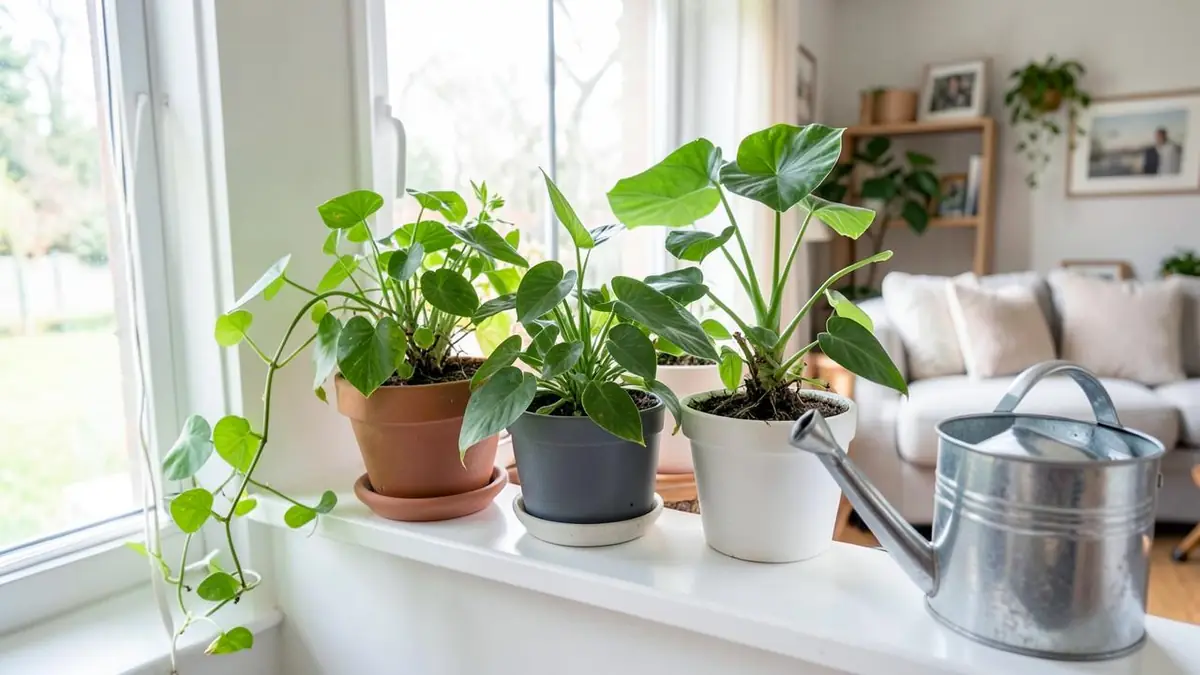
People who describe themselves as bad with plants are usually attentive rather than negligent. The most common cause of houseplant death is overwatering, and the instinctive response to a drooping plant is to water it again.
Getting two things right — light and watering by soil condition — resolves most of the problem before any question of feeding, misting, or specialist compost arises.
Match the plant to the light you have
Light is the constraint you cannot change without moving walls. Observe how bright each spot is at different times of day before choosing what goes there.
A north-facing room and a south-facing window are entirely different environments. Buying a light-hungry plant for a dim corner produces slow decline that no amount of care reverses.
Water the soil, not the calendar
Weekly watering schedules ignore season, temperature, humidity, and pot size. Push a finger into the soil to the second knuckle and water only if it is dry at that depth for most common houseplants.
Water thoroughly until it runs from the drainage holes, then discard what collects in the saucer. Small frequent sips leave the lower root zone dry and the surface permanently damp.
Drainage is not optional
Pots without drainage holes trap water at the root zone and cause rot. Decorative outer pots are fine as long as the plant sits in a plastic nursery pot inside them.
A layer of gravel at the bottom of a pot does not substitute for a hole. It raises the saturated zone rather than removing it, which is the opposite of the intended effect.
Repot when it is needed, not annually
Roots emerging from drainage holes, water running straight through, or growth stalling in the growing season all suggest a plant is ready for a slightly larger pot.
Move up one size only. A large pot holds more moisture than small roots can use, which recreates the overwatering problem in a new form.
Catch pests early
Check leaf undersides and stem joints periodically for fine webbing, sticky residue, or small white clusters. Early infestations are far easier to resolve than established ones.
Isolating new plants for a couple of weeks before placing them with others prevents most of the outbreaks people struggle with, and costs nothing but a windowsill.
Forgiving plants to start with
Snake plants, pothos, ZZ plants, spider plants, and many succulents tolerate a wide range of conditions and irregular watering, which makes them reasonable first choices.
Some common houseplants are toxic to cats and dogs. Check the specific species against a reliable veterinary list before bringing it into a home with pets or small children.
Plant toxicity and care needs vary by species. Consult a veterinary or horticultural source for specific plants and pets.
AI Assistance Used — AI assistance was used in researching and drafting this article. It was reviewed, edited, and fact-checked by Leah Fornier before publication.