Household Paperwork: What to Keep, Shred or Digitize
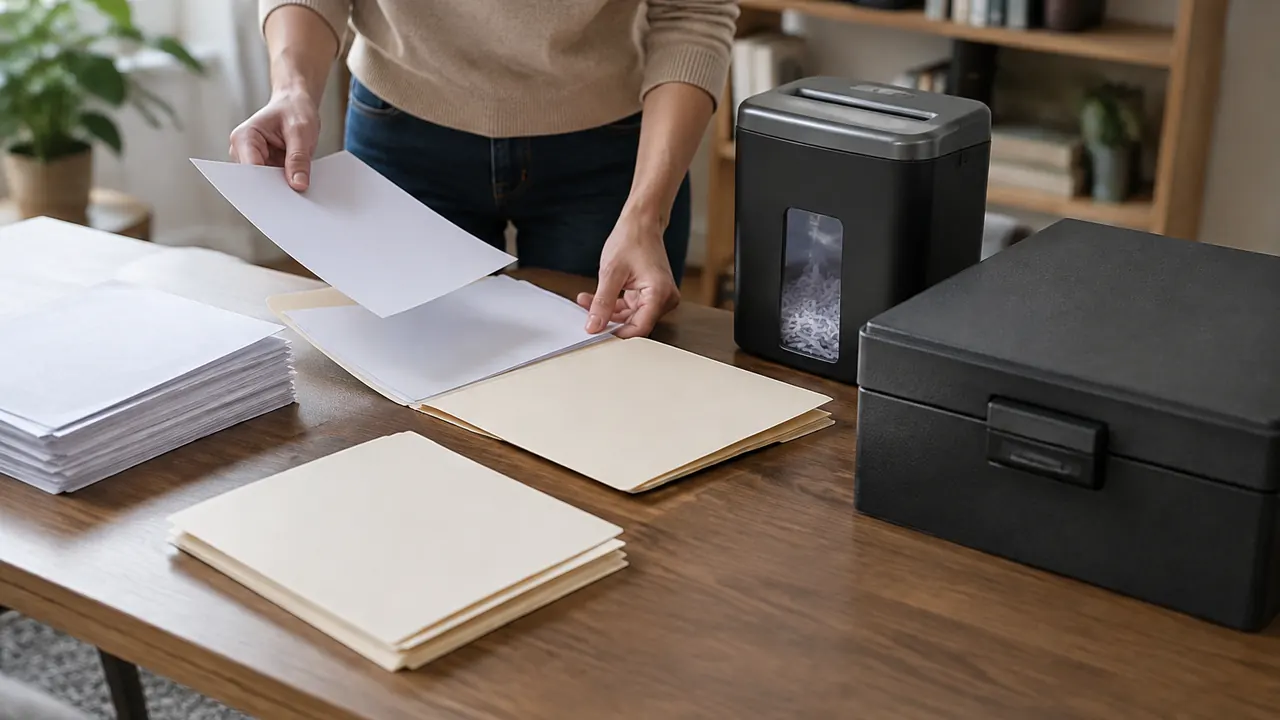
A useful household filing system does not preserve every envelope. It protects documents that establish identity, ownership and legal rights, while giving everyday statements and receipts a clear exit date. The challenge is that a paper can serve several purposes: A utility bill might be ordinary clutter, proof of residence or support for a tax deduction. Its longest relevant use should determine when it goes.
For a 2026 cleanup, sort records into four groups: permanent originals, long-term reference files, time-limited supporting documents and disposable paperwork. Then decide whether each item needs a physical home, a digital copy or both. Going paperless can make records easier to retrieve, but an online account is not an archive you control. Download important files before closing accounts, changing providers or losing access to a former employer's benefits portal.
1. Separate irreplaceable originals from replaceable information
Keep vital and foundational legal records indefinitely, usually as originals or official certified copies. These include birth, adoption, marriage and death certificates; citizenship and naturalization documents; and final divorce decrees. Maintain current estate-planning documents and ask the drafting attorney how to handle superseded versions. A scan is useful for reference, but a court, government office or financial institution may require an original or certified copy.
Treat current passports, Social Security cards, military discharge records and professional credentials as protected documents, not everyday wallet contents unless needed. Expired identification can sometimes help establish a history or support a replacement application; check the issuing agency's guidance before destroying it. For deeds, titles and recorded legal instruments, confirm what your state or local office requires and whether an official replacement is available.
Create a simple index showing what you have and where it lives. A trusted person should know how to locate essential records in an emergency without receiving unrestricted access to every account. Do not write passwords or full account numbers on folder labels.
| Record type | Usual approach | Before discarding |
|---|---|---|
| Vital and citizenship records | Keep permanently; preserve official copies | Confirm replacement and original-document requirements |
| Estate-planning documents | Protect current signed originals | Ask an attorney about superseded versions |
| Ownership records | Keep through ownership and applicable follow-up periods | Check tax, title and state-law needs |
| Routine statements | Keep until reviewed and no longer needed | Check for tax, dispute or warranty connections |
2. Use tax deadlines, not a blanket three-year rule
For federal income taxes, the IRS generally advises keeping supporting records for three years after filing a return. If filed before the due date, the return is generally treated as filed on that date. Exceptions matter: The period can be six years for certain substantial omissions of income, and seven years for claims involving worthless securities or bad-debt deductions. Fraudulent returns and unfiled returns have no federal assessment limitation period.
Refund claims generally require records for three years from filing or two years from paying the tax, whichever is later. These rules do not mean every tax-related document becomes disposable on that anniversary. Keep copies of filed returns indefinitely as a practical reference, along with acceptance confirmations and important correspondence. Preserve supporting records longer when they establish something used on a later return, such as investment basis or a loss carryforward.
State tax deadlines can differ from federal deadlines. Before a major purge, check current IRS recordkeeping guidance and your state revenue department's rules, especially after amended returns, disaster-related extensions or an audit notice. Self-employment and rental activity may also require a separate retention plan.
- Retain income forms, deduction receipts and payment evidence for the applicable tax period.
- Keep basis and improvement records through disposal, then through the relevant tax limitation period.
- Save proof of estimated payments and resolve account discrepancies before shredding related records.
- Do not destroy documents connected to an open examination, appeal or refund dispute.
3. Give routine bills and statements a shorter life
Ordinary household bills rarely deserve permanent storage. Once you have confirmed the charge and payment, an electric bill or internet invoice may have little continuing value. But keep it longer if it supports a deduction, documents a service problem or proves residence for an application. For recurring accounts, retaining a rolling year can be convenient for comparing seasonal charges, although that is a household preference rather than a universal legal rule.
Review bank and credit card statements promptly. Reporting deadlines for errors and unauthorized transactions depend on the account, transaction and applicable law; do not assume keeping a statement gives you unlimited time to challenge a charge. Retain relevant statements and correspondence until any dispute is resolved, then apply tax or other retention requirements. Save selected records longer when they establish a major payment, reimbursement or source of funds.
Compare pay stubs with year-end tax forms and keep any showing unresolved payroll or benefit issues. Store purchase receipts according to their purpose: returns, warranties, insurance claims or tax support. A receipt for groceries and a receipt for a new refrigerator should not share an automatic destruction date.
- Mark temporary folders with a review date, not an unconditional shred date.
- Download statements you need; institutions' online history and access policies vary.
- Keep paid-in-full letters for significant debts as long-term evidence.
- Remove account numbers from notes used only for budgeting comparisons.
4. Follow property, investments and loans beyond the transaction
Keep a home's closing documents, purchase records and evidence of qualifying capital improvements throughout ownership. They may help establish adjusted basis when you sell. Save the sale paperwork and relevant earlier records until the applicable tax period for the sale has ended. Ordinary repairs and capital improvements receive different tax treatment, so retain detailed invoices rather than relying on a credit card total or a folder labeled renovation.
For investments, preserve purchase dates, cost basis, reinvestment details and records of gifts or inheritances. Brokerage reporting can be helpful without being complete, particularly for older holdings or assets transferred between institutions. Keep documentation supporting nondeductible IRA contributions and other retirement-account basis until distributions have fully accounted for it and the relevant tax periods have passed. Annual statements alone may not establish the tax history you need.
Hold vehicle titles and active loan agreements securely. After a mortgage or other secured loan is paid, retain payoff confirmation and evidence that the lien was released; verify the release with the appropriate recording or title office. State law affects ownership, recording and debt disputes. When selling property or settling a complicated account, ask the closing professional or attorney which originals and supporting files should survive.
5. Keep medical, insurance and legal files by their purpose
Maintain a lasting personal health summary with immunizations, major diagnoses, procedures, allergies and important treatment information. That does not require saving every appointment reminder. Keep medical bills, explanations of benefits and payment records until the provider's balance, insurer's processing and any appeal are settled. Keep them longer if they support a tax deduction, reimbursement or legal claim. An explanation of benefits is not itself a bill.
Save current insurance policies, endorsements and an updated home inventory. After coverage ends, some policies and claim files can still matter for later disputes or claims tied to earlier events. Ask the insurer or a qualified adviser before discarding records involving liability coverage, a major loss or continuing treatment. For health savings account distributions, retain receipts and records establishing qualified expenses and showing they were not reimbursed elsewhere or also deducted.
There is no reliable universal deadline for legal paperwork. Child support, custody, immigration, disability benefits, employment disputes and estate administration can involve long-lived rights and state-specific rules. If litigation is underway or reasonably anticipated, suspend routine destruction of relevant paper and electronic records. Ask counsel what must be preserved, including messages and attachments that would otherwise disappear through automatic deletion.
6. Digitize for retrieval, with backups and controlled access
Scan records clearly, including backs, attachments, signatures and seals. Open each file to confirm that nothing is cropped, faint or missing before discarding eligible paper. Searchable PDFs are convenient, but check that text recognition has not distorted critical information. Digital copies can be suitable for many routine and tax records if complete, legible and accessible; they do not automatically replace originals required for legal or official purposes.
Use filenames that identify the date, issuer and subject without exposing unnecessary sensitive details. Organize folders by category and year. Protect devices with updates, encryption and a strong screen lock; secure cloud accounts with unique passwords and multifactor authentication. Keep another protected backup separate from the primary device, and test that you can restore files. Synchronization alone may copy accidental deletions rather than protect against them.
- Avoid shared work scanners and public devices for sensitive household records.
- Review sharing permissions and remove access that is no longer needed.
- Keep recovery instructions secure and plan access for incapacity or death.
- Export essential records from apps in a format you can open independently.
7. Store originals safely and destroy the rest securely
Place essential originals in a locked container with independently tested fire protection appropriate for paper; consider water protection and location, too. A fire-resistant box is not indestructible. A bank safe-deposit box may suit some valuables, but access is limited by bank hours and can become complicated after death. Check state law and professional advice before storing the only original will or urgently needed instructions there.
Shred discarded papers containing identifying, financial, medical or signature information. A cross-cut or micro-cut shredder makes reconstruction harder than long strips. For bulk disposal, use a reputable document-destruction service and ask about custody and destruction practices. Follow local rules for recycling shredded paper. Before donating devices, use the manufacturer's secure erasure procedure; deleting files or emptying the trash is not enough.
Schedule a yearly review and pause whenever a claim, tax issue or legal question remains open. The goal is fewer records, better protected, with a clear reason for every document kept.
Retention needs vary; verify current IRS and state requirements and consult a qualified tax or legal professional before destroying records affecting unresolved obligations or rights.
AI Assistance Used — AI assistance was used in researching and drafting this article. It was reviewed, edited, and fact-checked by Leah Fornier before publication.