Your Home's Sale Price Is Not Its Rebuilding Cost
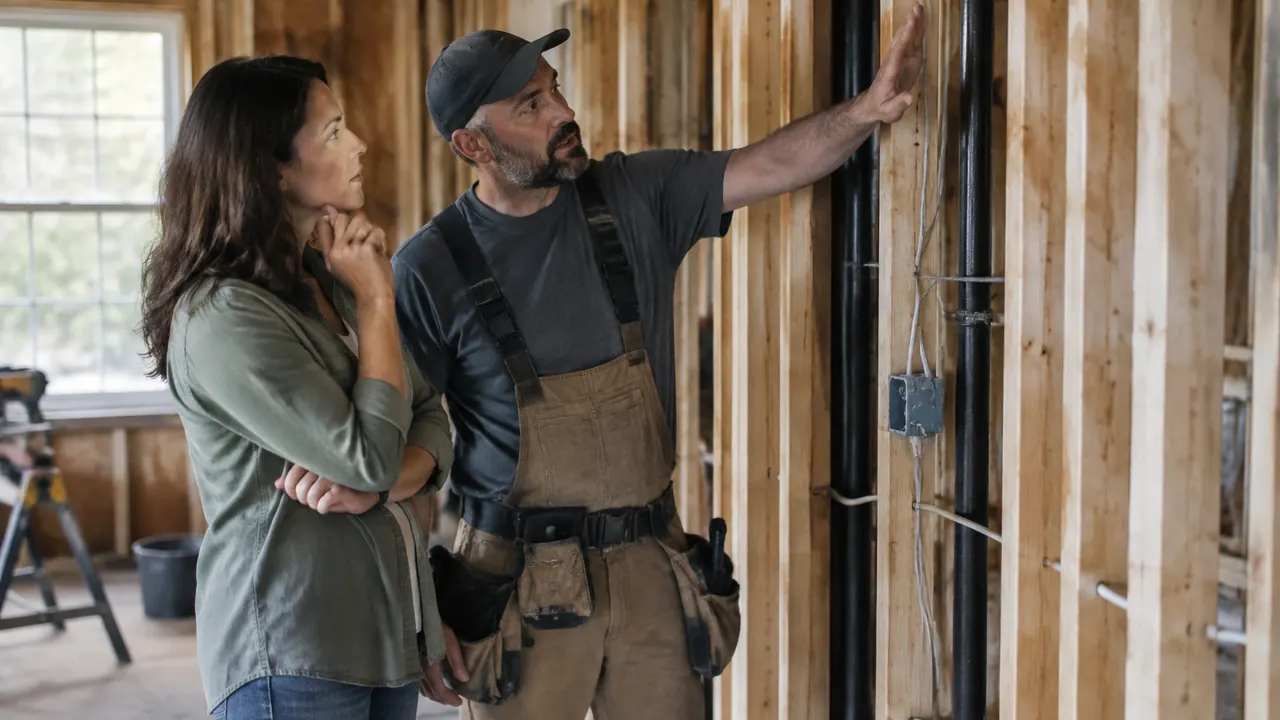
The price your home could sell for in July 2026 is not the amount your insurer would necessarily pay to rebuild it after a fire. Market value reflects land, location, nearby sales and buyer demand. Reconstruction cost reflects labor, materials and the work required to recreate the insured structure. A desirable lot can push a sale price far above rebuilding cost; an older house in a lower-priced market can cost more to reconstruct than someone would pay to buy it.
That distinction matters when you review Coverage A, usually the dwelling limit on a homeowners policy. Matching that number to your purchase price, mortgage balance or an online real estate estimate can leave you underinsured or paying for a poorly calibrated limit. A better review starts with the house itself, current local reconstruction costs and the policy provisions that determine how a covered claim gets paid.
1. Separate the price of the property from the cost of the structure
A rebuilding estimate generally excludes land value but must account for the insured building and its attached features. Depending on the form, those can include an attached garage, deck and built-in fixtures. Detached garages, fences and sheds often fall under other-structures coverage instead. Ask how your particular policy classifies them; putting every improvement into one total can hide a shortfall elsewhere.
Reconstruction is also different from building a new house on an empty lot. Crews may need to remove damaged materials, work around surviving portions of the home, navigate a tight driveway or protect neighboring property. A builder constructing many similar homes may achieve efficiencies that are unavailable for a single insurance reconstruction. Neither a tax assessment nor a broad new-construction price per square foot captures all those conditions.
Use market value as background, not as the formula. The goal is a defensible estimate of rebuilding the covered structure with comparable materials and quality, subject to the policy's terms. Do not simply subtract an estimated lot value from a real estate listing and assume the remainder is your insurance target. Those figures answer different questions.
| Figure | What it measures | Use for a dwelling review |
|---|---|---|
| Market value | Likely price of land and home together | Context, not a reconstruction estimate |
| Mortgage balance | Amount still owed to the lender | Not a measure of rebuilding needs |
| Tax assessment | Value determined under local tax rules | May differ from both sale and rebuilding values |
| Reconstruction estimate | Estimated cost to rebuild the insured structure | Starting point for reviewing Coverage A |
2. Get a local estimate that describes your actual house
Ask your agent or insurer for the replacement-cost estimate supporting your current dwelling limit, including its date and property inputs. Check whether the square footage matches the estimator's definition, especially for finished basements, garages and additions. An incorrect size or quality classification can distort the result even when the software's local pricing is current. Ask what assumptions the estimate makes about your home.
For an unusual, historic or heavily customized property, consider a local contractor or professional replacement-cost estimator familiar with insurance reconstruction. Ask for a written scope rather than a casual square-foot quote. Local labor availability, access, specialty trades and permit requirements matter. In a widespread disaster, demand can increase costs beyond an ordinary estimate; that uncertainty is a reason to examine coverage cushions, not to invent a universal markup.
- Verify stories, foundation type, exterior materials, roof shape and attached structures against the estimate.
- Identify custom cabinets, stonework, plaster, specialty windows and other finishes that differ from standard construction.
- Ask how demolition, debris removal, contractor overhead and profit, permits and applicable taxes are treated.
- Request clarification on catastrophe-related cost assumptions and whether any expenses have separate policy limits.
3. Bring renovations into the insurance record
A renovation can increase rebuilding cost without adding much square footage. Replacing stock cabinets with custom millwork, installing higher-end flooring or converting unfinished space changes what must be restored after a covered loss. Conversely, the full contract price is not automatically the amount to add to Coverage A: some spending may involve landscaping, design changes or work already reflected in the estimate. Have the insurer update the underlying property details.
Do not wait for the next renewal to mention substantial work. Ask before construction starts whether the project requires different coverage, a renovation endorsement or a separate construction policy. Vacancy, occupancy changes and the nature of the work can affect coverage. A contractor's liability insurance is not a substitute for protecting your own building. Keep dated photographs, plans, invoices and a description of the completed materials somewhere you can access away from home.
- Report additions, finished basements, garage conversions and major kitchen or bathroom upgrades.
- Discuss solar equipment, structural changes and newly attached outdoor features rather than assuming their classification.
- After completion, request an updated estimate and written confirmation of any limit or endorsement changes.
4. Understand what extended replacement cost actually extends
Extended replacement cost generally provides a stated additional amount above the dwelling limit when a covered rebuilding loss exceeds that limit and policy conditions are met. An endorsement might offer an additional 25% or 50%, but available percentages and rules vary. With a $400,000 dwelling limit and a qualifying 25% extension, the potential additional amount would be $100,000. That is a ceiling under specified terms, not an automatic payment.
Common conditions include maintaining insurance at the amount required by the insurer's valuation process, reporting improvements and actually repairing or replacing the home. Ask about deadlines, rebuilding at another location and what happens if you choose not to rebuild. Also ask whether the extension applies to ordinance-or-law expenses or other coverage categories; do not assume it increases every limit on the declarations page.
Guaranteed replacement cost is a different feature that may cover qualifying reconstruction beyond the stated dwelling limit without a fixed percentage cap, subject to its conditions. Neither label means every expense is covered. An inflation adjustment, meanwhile, periodically changes the base limit using an index or formula. It does not establish that the property's description was accurate or that local costs have been fully captured.
5. Make room for mandatory code upgrades
Rebuilding an older house may require more than reproducing what existed. A local authority might require updated electrical systems, different structural connections or energy-efficiency measures during repairs. Depending on local rules and the damage, requirements can also affect undamaged portions of a building. Standard replacement-cost language does not necessarily pay all additional expenses caused by enforcing those laws.
Ordinance-or-law coverage addresses specified code-related costs following a covered loss. Policy language may distinguish demolition of undamaged portions, loss in value of those portions and increased construction costs. Coverage may be included at a limited amount or available through an endorsement. Ask which categories are insured, what triggers them and whether the displayed limit is additional insurance or part of another limit.
There is no single percentage that fits every home. Age, prior renovations, local building rules and exposure to damage all matter. Ask your local building department or a qualified contractor about likely reconstruction requirements, then discuss the coverage with your agent. This is not generally a fund for correcting existing violations or voluntarily modernizing an undamaged house. Document the advice and revisit the limit when significant local requirements or the building itself change.
6. Read roof settlement terms separately
A policy described as replacement cost can still settle certain roof claims differently. Some forms or endorsements apply actual cash value to roofs, often based on age, condition or the cause of damage. Others use a payment schedule tied to roof age or material. Cosmetic-damage exclusions may restrict payment when the roof's appearance is affected but its function is not, as defined by the policy.
Under replacement-cost settlement, an insurer may initially pay actual cash value and release recoverable depreciation after qualifying repairs, subject to deadlines and documentation. With actual-cash-value-only coverage or some scheduled settlements, the withheld amount may not be recoverable. Deductibles still apply, and wear, deterioration or maintenance problems are not made covered losses merely because you carry a high dwelling limit. Check roof terms at each renewal, particularly after a roof reaches an age threshold.
- Ask whether settlement differs for wind, hail, fire or other covered causes.
- Confirm the roof's recorded installation date, material and any age-based payment schedule.
- Check separate wind or hail deductibles and the dollar effect of any percentage deductible.
- Ask about matching, undamaged slopes, cosmetic exclusions and proof required to recover depreciation.
7. Turn renewal into a documented coverage check
Before renewing in 2026, compare the declarations page, reconstruction estimate and endorsements together. A higher premium does not necessarily mean your rebuilding protection increased. Ask the insurer to explain changes to the dwelling limit, valuation inputs, deductibles and settlement terms. If you shop around, request quotes using consistent property details and compare the coverage forms, not just the annual bill.
Ask whether an insurance-to-value requirement could reduce a partial-loss payment if you carry too little coverage. Some replacement-cost provisions require insurance equal to a specified share of replacement value; the percentage, calculation and consequences depend on the contract. Extended coverage can have separate requirements. Have the agent explain how both would work for your home rather than relying on a general rule.
Finally, review related limits. Other structures, personal property and loss-of-use coverage may be linked to Coverage A or expressed separately, and a long reconstruction can strain temporary-living coverage. Keep the updated estimate, endorsement list and written answers with your household records. Repeat the review after major improvements and at renewal. The objective is coverage grounded in your building and an understanding of its limits.
Coverage terms, construction prices and local requirements can change; verify current policy language and estimates with your insurer and qualified local professionals.
AI Assistance Used — AI assistance was used in researching and drafting this article. It was reviewed, edited, and fact-checked by Leah Fornier before publication.