That 2% Home Insurance Deductible May Be Larger Than You Think
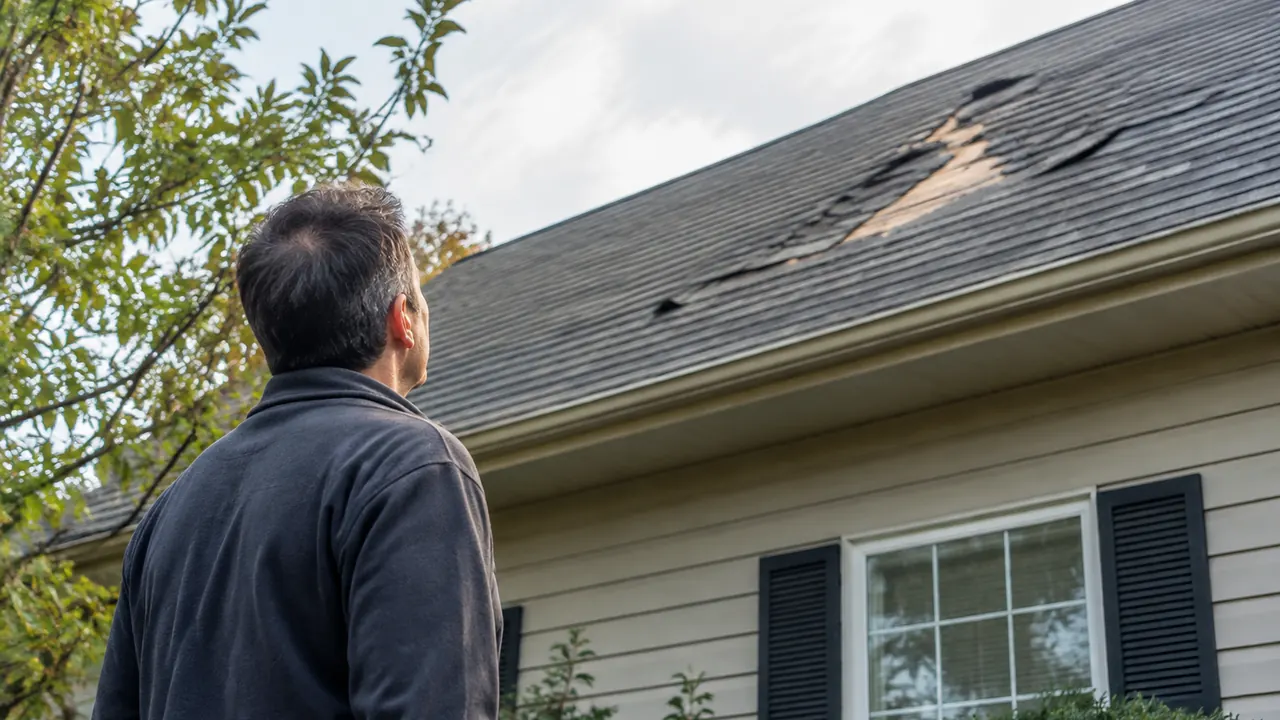
A 2% deductible sounds manageable until you learn what the percentage applies to. On some homeowners policies, a hurricane, wind or hail deductible is calculated from the amount of insurance on the house, not the size of the claim. If that insured dwelling amount is $400,000, a 2% deductible is $8,000. It is not $400 on a $20,000 repair bill.
As homeowners review coverage ahead of the 2026 Atlantic hurricane season, which begins June 1, that distinction deserves attention alongside the premium. Wind and hail can also cause damage well outside hurricane season and far from the coast. A policy with an attractive annual price may leave you responsible for a substantial first layer of covered damage. The practical question is whether you could pay that amount when repairs cannot wait.
1. Find the dollar amount behind the percentage
Start with the policy's declarations page, then read the deductible schedule and any relevant endorsements. A percentage deductible commonly uses the dwelling coverage limit, often labeled Coverage A, as its calculation base. That figure generally reflects the insured cost of rebuilding the house, not its market price, mortgage balance or property tax assessment. Do not assume a percentage applies to the entire policy or to each coverage separately; the wording controls.
The arithmetic is straightforward: multiply the applicable insured amount by the deductible percentage. The table shows what several percentages mean for a home insured for $400,000. These are illustrations, not a statement that every insurer offers these choices. If your declarations page lists multiple percentages, identify the event attached to each one. Also ask whether a minimum dollar deductible applies. A familiar-looking percentage can produce a different result if the policy uses another stated valuation basis or imposes a minimum. Request the dollar equivalent in writing so you can compare quotes without mentally switching between percentages and dollars.
| Deductible option | Calculation | Deductible in dollars |
|---|---|---|
| 1% | $400,000 × 0.01 | $4,000 |
| 2% | $400,000 × 0.02 | $8,000 |
| 5% | $400,000 × 0.05 | $20,000 |
| Flat $2,500 | No percentage calculation | $2,500 |
2. Apply that amount to a realistic repair bill
Suppose a covered windstorm causes $20,000 in damage and the applicable deductible is 2% of a $400,000 dwelling limit. In a simplified claim, with no other adjustments, the insurer would pay $12,000 and you would absorb $8,000. The deductible is ordinarily subtracted from the covered loss payment; it is not a separate fee paid to the insurance company. You still need a way to cover your share of the repair cost.
Now suppose the same storm causes only $6,000 in covered damage. With an $8,000 deductible, there would generally be no payment for that loss. Conversely, a larger covered loss does not make this particular deductible 2% of the larger repair bill. The calculation base remains the amount specified in the contract. Actual checks can differ because of depreciation, coverage limits, exclusions, roof payment schedules or other settlement provisions. Ask for an explanation separating the deductible from every other reduction. That distinction matters when you are estimating cash needed to start work rather than simply reading the final claim total.
| Covered damage | Applicable deductible | Illustrative insurer payment |
|---|---|---|
| $6,000 | $8,000 | $0 |
| $20,000 | $8,000 | $12,000 |
| $50,000 | $8,000 | $42,000 |
3. Read the trigger, not just the storm label
Hurricane, named-storm, and wind-and-hail deductibles are not interchangeable. A hurricane deductible may depend on a defined hurricane classification, specified official warnings, a geographic area and a time window. A named-storm provision may reach storms that never become hurricanes. A wind-and-hail deductible may apply to ordinary thunderstorms or other qualifying events. The exact scope depends on the policy and applicable state requirements, not what a television forecast calls the weather.
Before relying on your standard deductible, ask the insurer or agent to identify the controlling endorsement and explain when the special deductible starts and stops. Get an answer tied to your address and policy term. A storm weakening before landfall does not, by itself, prove that the hurricane deductible no longer applies. Similarly, damage discovered after the weather clears may still arise from an event within the defined period.
- Which official classification, warning or other condition activates this deductible, and which authority must issue it?
- What geographic boundaries and start-and-end times determine whether my house falls within the trigger?
- If both a named-storm and wind-and-hail provision appear, which one governs this loss?
- Does the deductible apply per occurrence, per calendar year or under another accumulation rule?
4. Check what the storm coverage actually covers
A special deductible does not mean every kind of storm damage is insured. Standard homeowners policies generally exclude flood damage, including storm surge; flood protection typically requires separate coverage. Wind-driven rain also needs careful review because coverage can depend on how water entered and the contract's terms. In some markets, wind coverage may be excluded from the main homeowners policy and purchased through a separate policy or wind pool.
Roof settlement provisions are another potential cash gap. Replacement-cost coverage and actual-cash-value coverage can produce different payments, especially on an older roof. Some contracts use a roof payment schedule or limit particular kinds of damage. Even when depreciation is recoverable after repairs, an initial check may be smaller than the eventual settlement. Budget for that timing difference without confusing it with the deductible. Ask how ordinance-or-law coverage would respond if covered repairs require code upgrades, and whether separate limits leave expenses unpaid. Do not assume one storm creates one deductible across all your policies: a separate flood policy has its own terms. Have the insurer explain which deductibles apply to which covered losses before you build a repair budget.
5. Compare the premium savings with the extra risk
Ask for side-by-side quotes that keep coverage limits and settlement terms the same. Otherwise, a lower premium may reflect less protection rather than just a higher deductible. Consider a hypothetical choice between a $2,500 deductible and an $8,000 deductible for the same covered event. Choosing $8,000 shifts another $5,500 of potential loss to you. If it saves $350 a year, roughly 15.7 years of those savings would equal that additional exposure.
That calculation is a budgeting comparison, not a prediction of when a storm will strike or proof that either option is better. Premiums, insured limits and available deductibles can change at renewal, and repeated losses can alter the outcome. If the relevant deductible applies per occurrence, more than one qualifying event could require more than one contribution. Conversely, an applicable annual hurricane deductible may work differently. Compare only deductible choices actually available for your address.
- Request the annual premium difference in dollars, not just a monthly payment comparison.
- Confirm that roof coverage, exclusions, endorsements and other deductibles are unchanged between quotes.
- Calculate the extra deductible exposure divided by annual savings, while recognizing that a loss could happen immediately.
6. Test the deductible against accessible emergency cash
An $8,000 deductible is not affordable simply because your household owns assets worth more than $8,000. The more useful test is whether you could access that money promptly without skipping essential bills, selling retirement investments or taking on expensive debt. Keep ordinary living expenses in the calculation. A storm can interrupt work, require temporary lodging or create costs that are excluded, limited or reimbursed only later.
For example, if you have $10,000 in emergency savings, paying an $8,000 deductible would leave $2,000 for everything else. That does not automatically make the policy unsuitable, but it reveals how little cushion remains. Credit cards and home equity borrowing are not substitutes for cash you already control; interest, approval requirements and access can complicate their use. If the numbers do not work, ask about a lower deductible and its premium before renewal. Do not reduce dwelling coverage below an appropriate rebuilding estimate merely to shrink the percentage calculation.
- Write down cash available after reserving money for essential household bills.
- Add a separate allowance for uninsured damage and temporary reimbursement delays.
- Check whether a second event could require another deductible under your policy.
- Choose a savings target and automatic contributions if your current storm reserve falls short.
7. Recheck the math at your 2026 renewal
Even if the deductible remains 2%, its dollar amount can rise when the insured dwelling limit increases. A change from $400,000 to $440,000 raises that deductible from $8,000 to $8,800. Review the current declarations rather than relying on last year's dollar estimate. Rebuilding-cost adjustments, renovations and revised coverage selections can all make an old calculation stale. Ask which limit applies on the date of loss and how any inflation adjustment affects the calculation.
Before binding or renewing, obtain a complete quote and the applicable deductible endorsements, not just a premium summary. Confirm that your mortgage servicer accepts the proposed coverage and deductible. Keep a copy of the policy somewhere accessible if the house is damaged, along with an inventory and dated photos. Changes requested as a storm approaches may be restricted by binding moratoriums, so do not wait for a forecast to discover your options. The goal is not necessarily the smallest deductible. It is a policy whose triggers you understand and whose out-of-pocket exposure you can realistically carry.
Policy language, state rules and prices vary; verify current terms with your insurer or a licensed insurance professional before choosing or changing coverage.
AI Assistance Used — AI assistance was used in researching and drafting this article. It was reviewed, edited, and fact-checked by Lisa Barber before publication.