Measuring Blood Pressure at Home Without Fooling Yourself
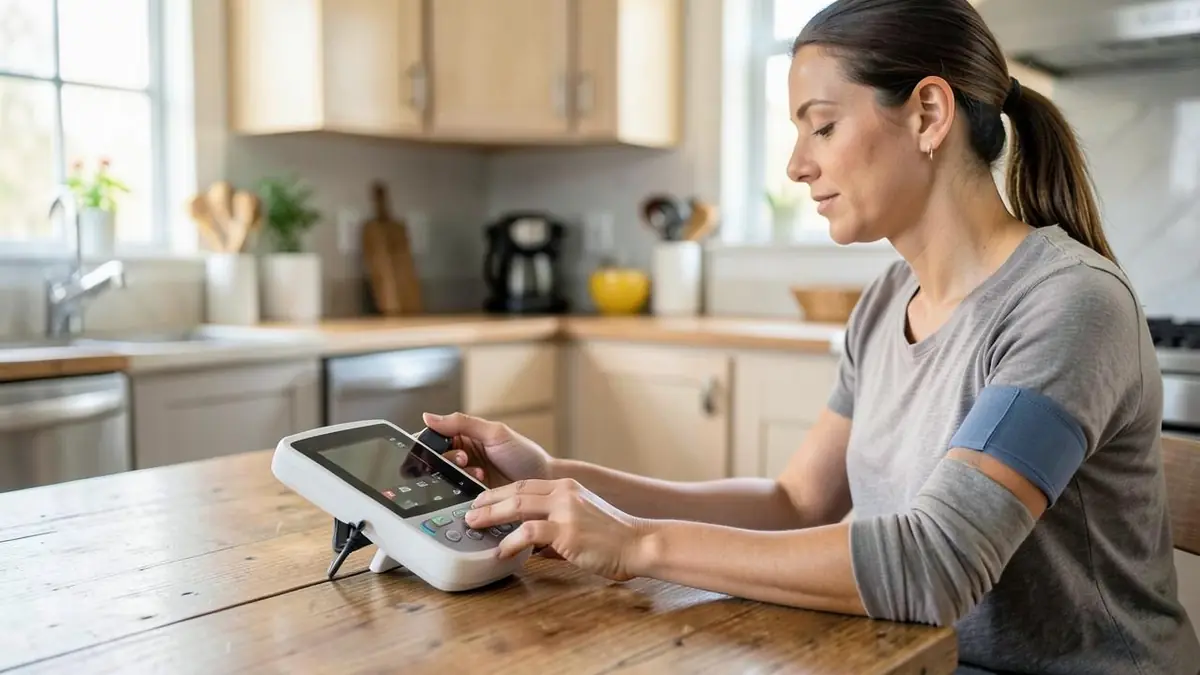
Home blood pressure monitors have become inexpensive and common, and clinicians increasingly welcome the readings, because a single measurement taken in a clinic on a stressful morning is a thin basis for a long-term decision.
The catch is that home readings are only as good as the technique behind them. Most of the variation people see between one reading and the next has nothing to do with their cardiovascular system and everything to do with how they sat, what cuff they used, and when they measured.
Choose an upper-arm cuff and size it properly
Upper-arm monitors are generally preferred over wrist and finger devices, which are more sensitive to position. Look for a model that has been independently validated rather than one selected on price or app features alone.
Cuff size is the most common source of error. A cuff that is too small tends to overstate the reading and one that is too large tends to understate it, so measure your upper arm circumference and match it to the manufacturer's range instead of assuming the supplied cuff fits.
Posture changes the number
Sit with your back supported, feet flat on the floor, legs uncrossed, and the cuffed arm resting on a table so the middle of the cuff sits at roughly heart level. An unsupported arm or crossed legs can shift a reading noticeably.
Rest quietly for about five minutes first, and do not talk during the measurement. Conversation alone can raise a reading, which is one reason clinic numbers so often run high.
When and how often to measure
A common approach is twice in the morning before medication and food, and twice in the evening, over several consecutive days, discarding the first day. Averaging the remaining readings gives a far more meaningful picture than any single value.
Avoid measuring right after caffeine, exercise, or a cigarette, and empty your bladder first. These all move the number in ways that have nothing to do with your usual pressure.
White-coat and masked patterns
Some people show substantially higher readings in a clinical setting than at home, a pattern often described as white-coat hypertension. Others show the reverse, with normal clinic readings and raised readings during ordinary life.
Both patterns matter, and both are only detectable by comparing home data with clinic data. That comparison is a large part of why clinicians ask for a home log rather than a single figure at an appointment.
Record everything, not the good days
Write down every reading, including the ones that look wrong, along with the date, time, and anything unusual. A log that has been filtered to look reassuring is worse than no log, because it will be trusted.
Many monitors store readings and export them, which removes the temptation to edit. Bring the raw record to appointments rather than a summary you have calculated yourself.
When to seek advice promptly
A single high reading is usually not an emergency, and repeating it after a rest is reasonable. Persistent high readings across several days should be discussed with a clinician rather than managed by adjusting anything yourself.
Very high readings accompanied by chest pain, breathlessness, severe headache, visual changes, weakness, or confusion need urgent medical attention rather than another measurement.
This article is general information and not medical advice. Discuss blood pressure readings, targets, and any medication with a qualified clinician.
AI Assistance Used — AI assistance was used in researching and drafting this article. It was reviewed, edited, and fact-checked by Leah Fornier before publication.