Will a Home Battery Run Your AC? Plan Backup Power by Load
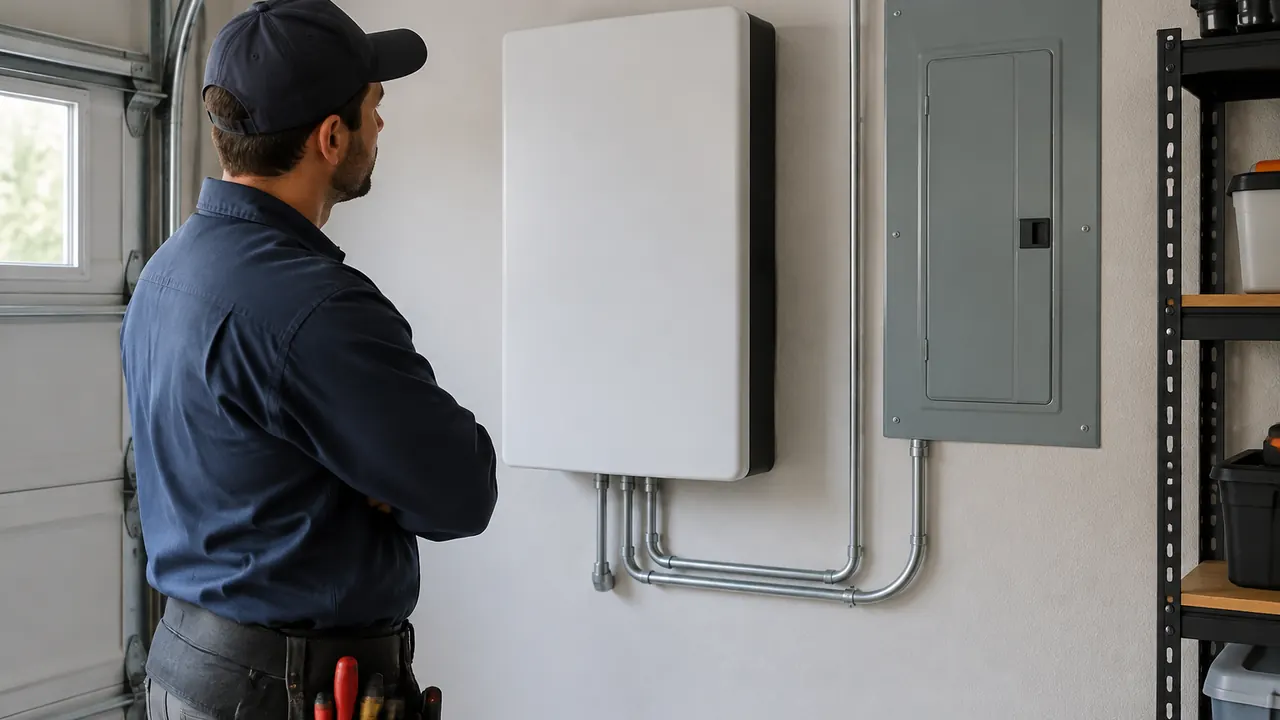
A home battery can run an air conditioner, but that answer comes with conditions. The battery must deliver enough power to start and operate the equipment, have enough stored energy to keep it running, and connect to a backup system that actually serves the AC circuit. A battery advertised as whole-home capable is not automatically a promise of all-night cooling, especially when other large appliances are running.
For homeowners shopping in April 2026, the useful question is not simply how many batteries to buy. It is which loads must work, for how long, and under what weather conditions. Start with the refrigerator, medical equipment, communications and any essential heating or cooling. Then ask an installer to show how the proposed system handles those loads together. That approach separates a practical outage plan from a purchase aimed mainly at lowering electric bills.
1. Stored energy and power output answer different questions
Battery capacity, measured in kilowatt-hours, describes stored energy. Power output, measured in kilowatts, describes how quickly the system can deliver that energy. Think of capacity as the size of a water tank and power as the flow through its outlet. A large tank with a restricted outlet cannot serve every demand at once. Likewise, a battery with substantial capacity can still have an inverter too small for an air conditioner and other simultaneous loads.
Compare usable capacity rather than assuming the headline capacity is available at your outlets. Also distinguish continuous output from a short-duration surge rating. The battery, inverter, controls and installation configuration can all constrain delivered power. Adding another battery may increase storage without increasing AC output if the same inverter remains the bottleneck. Ask for specifications for the complete installed system in backup mode, not just an individual component's best-case rating.
Your utility bill helps estimate overall energy use, but monthly totals hide brief peaks. Interval usage data can reveal patterns; equipment labels and an electrician's measurements provide more detail. Neither a home's square footage nor the size of its main electrical service is enough to size battery backup.
| Specification | What it tells you | What to verify |
|---|---|---|
| Usable capacity, kWh | Energy available from storage | Reserve settings and operating limits |
| Continuous output, kW | Power available for sustained loads | Rating during an outage |
| Surge output | Brief extra power for starting loads | Duration and compatible equipment |
| Supported circuits | Where backup power can go | Actual circuit list and controls |
2. Your AC must start before it can keep running
An air conditioner's running demand is only part of the problem. Conventional compressors can draw a brief, substantial surge when starting. A system that comfortably covers normal operation may trip or refuse to start if the inverter cannot handle that demand. Central AC also involves indoor equipment, such as a furnace blower or air handler, which must receive backup power along with the outdoor unit.
An HVAC contractor can identify the compressor design, inspect nameplate information and help verify starting requirements. Locked-rotor amps, when listed, are a useful warning about potential startup demands, not a direct measurement of everyday consumption. Variable-speed and inverter-driven equipment often starts more gradually, but compatibility still needs checking. A suitable soft-start device may reduce starting demand on some conventional systems; it does not make every AC compatible or eliminate the energy needed for cooling.
Ask the installer to evaluate realistic combinations, not an AC operating alone in a demonstration. A refrigerator compressor or well pump could start while cooling is underway. Do not experiment inside electrical equipment yourself.
- Record model numbers for both outdoor and indoor HVAC equipment.
- Confirm voltage, running demand and startup requirements with qualified contractors.
- Ask whether any proposed soft-start device affects equipment warranty coverage.
- Require a backup-mode test that includes the intended simultaneous loads.
3. Estimate runtime with an explicit energy budget
A basic runtime estimate divides available energy by average load. Suppose an illustrative system has 13.5 kWh of usable storage, starts fully charged and keeps a 20% minimum floor that cannot be discharged. That leaves 10.8 kWh before any additional losses not already reflected in its rating. At a steady 3 kW combined load, the arithmetic gives 3.6 hours. That is a planning example, not a product promise or a prediction for your home.
Air conditioning rarely draws the same average power all day. Outdoor temperature, humidity, insulation, thermostat settings and equipment efficiency affect runtime and cycling. A system that cycles on a mild afternoon may run almost continuously during a heat wave. Include the indoor fan and background household loads, and account for conversion losses, temperature-related limits and reduced capacity as batteries age without double-counting losses already included in specifications.
Ask what the installer means by reserve. A grid-connected backup reserve may be available once an outage begins, while a minimum discharge floor may remain unavailable. Model both a full battery and a partially charged one. For overnight protection, calculate a conservative case with no solar recharge and cooling demand that stays high after sunset.
| Illustrative average combined load | Energy available for loads | Calculated runtime |
|---|---|---|
| 0.5 kW | 10 kWh | 20 hours |
| 1 kW | 10 kWh | 10 hours |
| 3 kW | 10 kWh | About 3.3 hours |
| 5 kW | 10 kWh | 2 hours |
4. Essential-load circuits make a smaller battery more useful
An essential-load setup supplies selected circuits instead of leaving every appliance free to compete for limited power. Depending on the design, that can mean a dedicated backup subpanel or compatible controls that automatically disconnect lower-priority loads. Central AC can be included if the system supports it, but doing so changes the required power and energy budget. Circuit selection should happen before you accept a quote.
Whole-home wiring offers flexibility, but it does not create unlimited output. An electric range, clothes dryer, water heater and EV charger can overwhelm a system intended primarily for lights and refrigeration. Automatic load management can help by enforcing priorities rather than relying on everyone to remember the outage rules. Confirm which functions operate without internet access and what happens if a controller loses communication.
- Prioritize refrigeration, basic lighting, communications and necessary medical equipment.
- Include sump or well pumps where losing them creates serious consequences.
- Identify every circuit needed for heating or cooling, including indoor equipment.
- Shed EV charging, electric laundry and other deferrable loads automatically where practical.
- Consider a smaller cooling zone only after checking its demand and safe installation.
5. Bill savings and outage protection are different jobs
For bill management, a battery may charge when electricity is cheaper and discharge when rates are higher. With solar, it can store daytime production for evening use instead of exporting that energy. Whether either strategy pays depends on your current utility tariff, export compensation, charging rules, round-trip losses and battery wear. A household on a flat rate with favorable solar export credits may have less opportunity than one facing a large evening price premium.
For outage protection, the objective is having energy available when the grid fails. Discharging aggressively for daily savings can leave less backup unless you maintain a reserve. A higher reserve improves readiness but reduces the energy available for bill management. Weather-based charging features may help, but surprise outages still happen. Compare operating strategies instead of accepting a savings estimate that assumes the same stored energy performs both jobs simultaneously.
- Request savings calculations using your actual tariff and recent usage.
- Ask how reserve settings change both projected savings and backup duration.
- Verify current incentive eligibility rather than counting an advertised credit automatically.
- Review utility program rules for dispatch, compensation, opt-outs and event reserves.
6. Solar panels alone usually stop during an outage
Most ordinary grid-connected solar installations shut down when utility power fails. Their inverters are designed to stop energizing a failed grid, helping protect utility crews and equipment. Sunshine on the roof therefore does not necessarily mean usable electricity inside. An existing solar array needs compatible equipment and an approved design to supply home circuits while isolated from the utility.
A backup-capable solar-and-battery system uses isolation equipment and controls to establish a local electrical supply. Solar may then serve loads and recharge the battery, subject to sunlight, inverter limits and system compatibility. Some specialized systems offer limited daytime backup without a battery, but that capability is not standard and can be constrained by clouds and load changes. Ask specifically what works with your proposed equipment.
Do not assume solar guarantees indefinite AC operation. Smoke, storms, shade and short winter days can reduce production. The system must balance household demand, battery charging and available solar output. Also ask whether it can restart from a depleted battery when sunlight returns, and what minimum stored energy or other conditions that restart requires.
7. Buy a documented backup plan, not just a battery
Request an itemized proposal covering batteries, inverters, transfer or isolation equipment, circuit work, permits, commissioning and any required service upgrades. Have the installer document continuous and surge capability, backed-up circuits, load-shedding priorities and estimated runtime under stated assumptions. Compare warranties for years, throughput or cycles, retained capacity and labor coverage. Installation must meet applicable local electrical, fire and siting requirements.
Before signing, ask for a demonstration plan: simulate an outage safely, start the AC, check automatic load shedding and verify recovery when utility power returns. Learn how to change reserve settings and interpret alerts. Keep a separate contingency for medically necessary equipment or dangerous heat, including relocation if needed. The right battery is one matched to a defined load plan, with limitations your household understands before the lights go out.
Verify current utility rates, incentives, equipment specifications and installation requirements with your utility and qualified electrical and HVAC professionals before purchasing.
AI Assistance Used — AI assistance was used in researching and drafting this article. It was reviewed, edited, and fact-checked by Nadia Clarkson before publication.