If Your Car Breaks Down on the Highway, What Should You Do First?
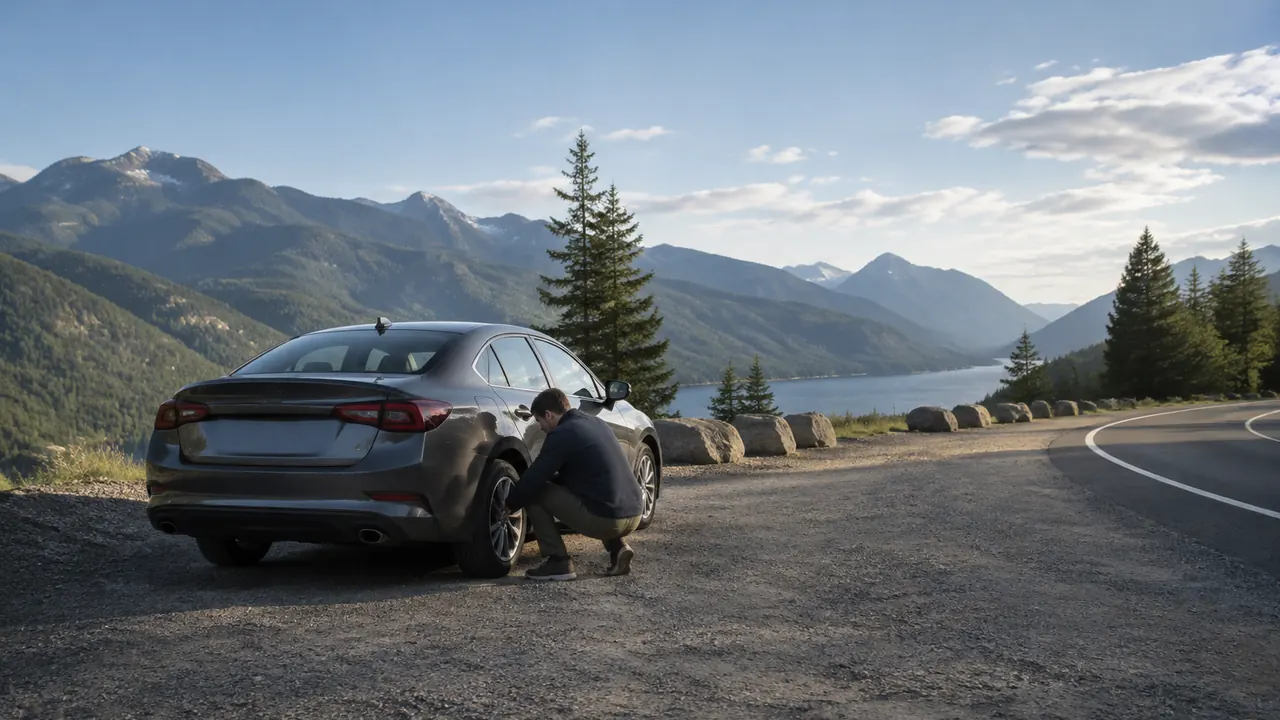
If your car breaks down on the highway, first concentrate on controlling it and reaching a safer stopping place, if it will still move. Turn on your hazard lights as soon as you can without losing control. Avoid hard braking or a sudden dash across lanes. A mechanical problem can become a much bigger emergency when a disabled vehicle stops in fast traffic.
What comes next depends on where you land. A wide turnout, a narrow bridge shoulder and an active travel lane require different decisions. There is no universal rule that you should always stay inside or always get out. For drivers in 2026, roadside apps and connected vehicle services can help summon assistance, but neither replaces assessing traffic, spotting fire danger and following local emergency instructions.
1. While the car is moving, aim for separation from traffic
Keep your eyes on the road and both hands available for steering. Ease off the accelerator and assess whether the vehicle responds normally enough to reach an exit, rest area, emergency stopping area or broad shoulder. Use your turn signal before moving over; hazards warn of trouble but may not clearly communicate your intended lane change. Do not cross several lanes abruptly to reach a preferred side.
If the engine stalls, steering and braking assistance may diminish, so the controls can require more effort. Brake steadily as needed, and do not switch off the ignition while still moving. If a tire fails, hold the steering wheel firmly, avoid slamming the brakes and slow gradually. Do not try to nurse a car farther when it cannot be controlled or shows signs of fire.
- Choose a reachable stopping place with room between the vehicle and moving traffic, ideally away from curves and hillcrests.
- If the right shoulder is inaccessible, a reachable left shoulder may be safer than forcing your way across traffic.
- Never reverse along the highway or stop in a travel lane just because you missed an exit.
- If you cannot leave a live lane, stop as controlled as possible, keep hazards on and treat the situation as an emergency.
2. Once stopped, secure the car and assess your surroundings
Get as far out of the travel lanes as practical without driving onto an unstable slope, soft ground or another hazard. Once fully stopped, secure the vehicle with the parking brake and the appropriate transmission setting. Keep your seat belt fastened while you assess the scene, and ask passengers to do the same. Turn off the engine unless doing so would interfere with an immediate effort to escape danger.
Look through the windows and mirrors before opening any door. Check how close passing vehicles are, whether trucks are buffeting the car and whether another driver could reasonably see you. Then look for smoke, flames, a strong fuel odor or an unusual chemical smell. Notice whether a barrier actually offers a protected waiting area: beyond a guardrail could be a steep drop, water or insufficient standing room.
On a bridge, in a tunnel or beside a narrow median, your options may be especially limited. Use posted emergency instructions and call for help promptly. Do not assume a painted shoulder or striped gore area is protected from traffic; neither physically stops a vehicle from entering your space.
| Situation | Immediate priority | Help to contact |
|---|---|---|
| Wide turnout, no immediate hazard | Secure the vehicle and assess safe waiting options | Roadside assistance |
| Narrow shoulder close to fast traffic | Avoid traffic exposure and request safety guidance | 911 if there is immediate danger |
| Stopped in a live lane | Keep hazards on; avoid stepping into moving traffic | 911 |
| Smoke, flames or suspected fuel leak | Evacuate away from the vehicle and traffic | 911 |
3. Stay inside or get out? Let the immediate hazards decide
When there is no fire or other immediate danger inside the vehicle, staying buckled in can be safer than standing on an exposed shoulder, especially if exiting would put you directly beside moving traffic. But remaining inside is not automatically safest when the car is vulnerable to being struck and a genuinely protected area is safely reachable. Tell the emergency dispatcher exactly where the vehicle sits and ask for instructions.
If you must exit, use a door away from traffic when feasible and first check that the route is clear. Move to a protected location away from the vehicle and roadway, behind a suitable barrier if accessible. Never cross active highway lanes to reach help. Do not stand directly in front of or behind the car, where an impact could push it into you.
- Smoke, flames or a suspected fuel leak call for prompt evacuation. Leave belongings, move well away and upwind if possible, and call 911.
- Do not open the hood or trunk when you suspect a fire; introducing air can intensify it.
- For children, pets or passengers with limited mobility, explain evacuation difficulties to dispatch immediately. Do not expose everyone to traffic unnecessarily.
- Reassess if conditions change. Follow instructions from dispatchers and responders who understand the location and current hazards.
4. Make the vehicle visible without becoming a roadside target
Keep hazard lights flashing if they work. In darkness or poor visibility, use appropriate vehicle lighting if available, but remember that lights cannot make an exposed position safe. A stopped car can still be struck by an inattentive driver. Visibility measures support your safety plan; they are not a reason to remain beside the vehicle.
Reflective triangles and battery powered warning lights may help in some settings, but placing them requires getting out and walking near traffic. Do not do that on a narrow shoulder, around a blind curve or anywhere you cannot remain safely separated from vehicles. There is no single placement distance appropriate for every highway, vehicle and jurisdiction. Follow applicable instructions and local guidance only when placement can be done safely.
Avoid flame flares near leaking fuel, dry vegetation or other fire hazards, and observe local restrictions. Raising the hood is sometimes used to signal trouble, but it is not worth stepping into danger and is inappropriate if fire is suspected. Never stand in a lane waving at approaching drivers. If warning devices cannot be deployed safely, stay focused on reaching help and choosing the safest available waiting position.
5. Contact the right help and give a location rescuers can use
Call 911 for immediate danger: a vehicle stranded in a live lane, a crash with possible injuries, fire, a suspected fuel leak or another serious traffic hazard. If the vehicle is safely off the highway and nobody is in danger, contact roadside assistance through your insurer, membership program, automaker or a reputable towing company. State or toll road services may also assist, but availability and procedures vary.
Give the location before a lengthy explanation of the mechanical problem. A phone map can help, but check it against signs and roadway features. A road running north and south may curve locally, so report the signed direction of travel rather than guessing from the compass. A passenger can handle calls while the driver concentrates on any remaining vehicle movement.
- Report the highway number or name, signed travel direction, nearest mile marker or exit, and any bridge or tunnel name.
- Say whether you are on the left or right shoulder, in a turnout or blocking a specific lane.
- Describe the vehicle, number of occupants, injuries, smoke and any accessibility needs.
- Ask where to wait, whether traffic protection is needed and what to do if conditions worsen.
- Provide a callback number and conserve phone battery after arranging help.
6. Use roadside technology, but verify that help is actually coming
In 2026, you may be able to request assistance through an app, an in vehicle emergency button or a compatible phone's satellite features. Capabilities depend on the device, vehicle, service plan, location and connectivity. Some systems handle roadside requests; others connect only to emergency services. Do not assume an app request has succeeded until you receive confirmation, and do not delay calling 911 for an urgent hazard.
If cellular service is unavailable, follow your device's supported emergency connection prompts if offered. Satellite connections may require a clear view of the sky, but do not enter traffic or abandon a protected location merely to improve reception. Use a roadside emergency phone only if it is safely accessible. Tell any operator if your phone battery is nearly exhausted.
For a routine tow, confirm who is dispatching the truck, the estimated arrival time and the destination. Ask about mileage limits, hookup charges, after hours fees and storage costs; coverage varies, and an app listing does not necessarily mean the tow is included. Some highways restrict which operators may respond. If an unexpected truck arrives, verify it with your dispatcher before authorizing service, while following lawful responder directions about clearing a hazard.
7. Wait safely rather than attempting a risky roadside repair
A flat tire or loose connection may look manageable, but highway traffic changes the calculation. Do not change a tire on the traffic side of a narrow shoulder, crawl underneath the car or attempt repairs where you lack stable ground and protected working space. Tell roadside assistance when the location is unsuitable for repair; moving the vehicle may need to come first.
Avoid repeatedly restarting an overheating engine, and never remove a hot cooling system cap. If an electric vehicle shows smoke, unusual heat, hissing or a strong chemical odor after a breakdown or impact, move away, call 911 and identify it as an EV. Do not touch exposed high voltage components or orange cables.
While waiting, monitor traffic and weather from your safest available position. Do not walk down the highway seeking fuel or a better signal. Update dispatch if danger increases or your location changes. When help arrives, follow the responder's instructions about doors, passengers and loading. The goal is not the quickest roadside fix; it is getting everyone away from highway traffic without another emergency.
Check current roadside coverage, towing terms and local highway guidance, and follow emergency responders’ instructions for your specific situation.
AI Assistance Used — AI assistance was used in researching and drafting this article. It was reviewed, edited, and fact-checked by Leah Fornier before publication.