Will a Heat Pump Water Heater Actually Lower Your Total Costs?
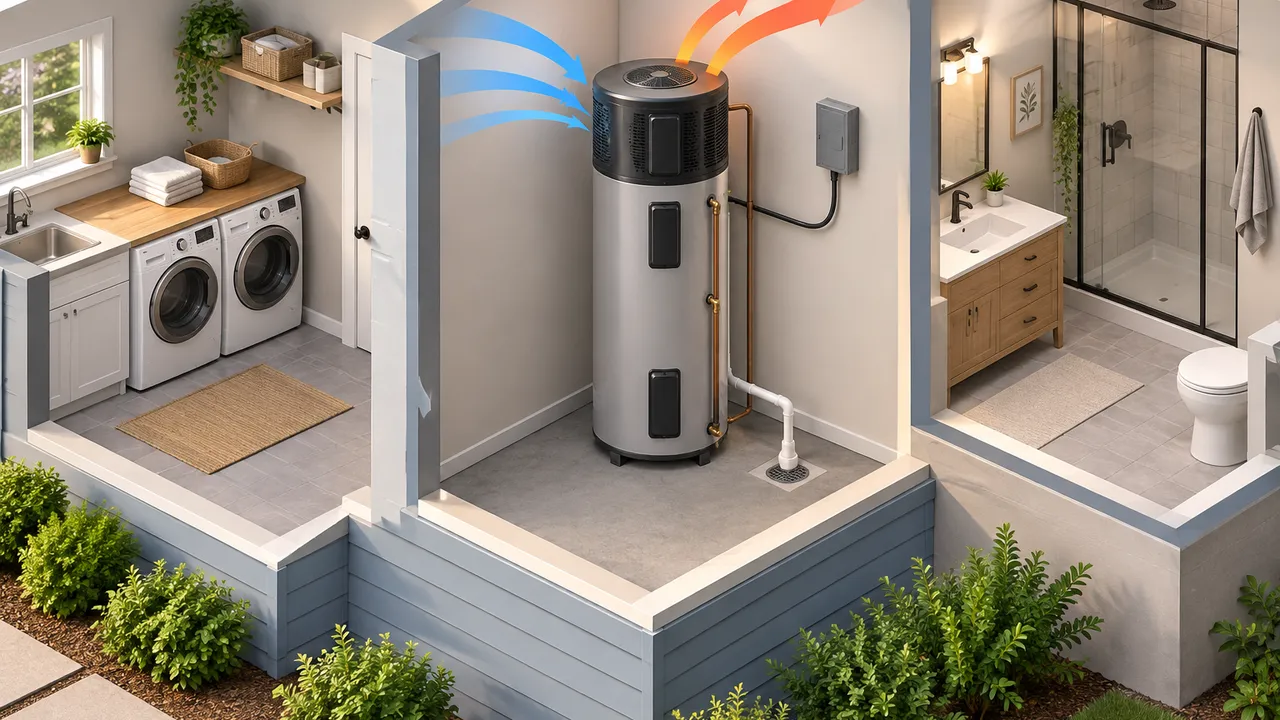
A heat pump water heater usually uses much less electricity than a conventional electric tank. That does not automatically make it the cheapest choice for every household. Your existing fuel, replacement timing, installation conditions and local incentives determine whether lower operating costs outweigh the higher purchase price. A sound estimate separates equipment efficiency from installation expenses and savings you can actually expect to capture.
The useful comparison is not a national savings claim. It is two realistic options for your home over the same ownership period. As of October 2026, that calculation should use verified state or utility incentives—not an assumed federal tax credit carried over from older buying guides.
1. Start with your current fuel and bills
Replacing electric resistance water heating generally offers the clearest savings opportunity. Switching from natural gas can be less compelling where gas is inexpensive and electricity is costly. Propane and oil replacements may offer substantial savings, but local prices and appliance efficiency make broad promises unreliable.
Use your utility’s current tariff, not simply the total bill divided by consumption. Fixed customer charges usually remain unless you disconnect that service entirely. Compare these household inputs before requesting equipment recommendations:
Separate water heating from other energy uses. Summer gas consumption can provide a rough baseline when space heating is off, but subtract cooking and dryer use where possible. For electric tanks, dedicated circuit monitoring offers a clearer estimate.
- Electricity: the marginal price per kilowatt-hour, including variable delivery charges.
- Gas: the delivered price per therm and whether other appliances still require service.
- Propane or oil: recent delivered prices and realistic refill assumptions.
- Existing equipment: fuel, age, tank size, condition and any known efficiency rating.
2. Match efficiency to demand and room temperature
Heat pump water heaters move heat from surrounding air into the tank. They perform best with adequate airflow and temperatures within the manufacturer’s operating range. A warm utility room is different from an unheated northern garage. In winter, a unit inside conditioned space can also increase the home’s heating load; summer cooling and dehumidification may provide benefits.
Estimate demand from occupants, shower habits, laundry and simultaneous use. Compare first-hour ratings, not tank volume alone. Many hybrid models use resistance elements during heavy demand or unfavorable temperatures, increasing consumption. A larger, properly selected tank may reduce backup use. Treat the EnergyGuide label as a standardized comparison, not a prediction of your bill.
Ask how the selected model recovers in heat-pump-only mode after consecutive showers. A household with tightly clustered morning demand may need more storage than one spreading use throughout the day, even when total daily hot-water consumption is identical.
3. Price the complete installation
Obtain itemized quotes for both a heat pump model and the replacement you would otherwise buy. Installed heat pump systems commonly cost several thousand dollars, with substantial variation by market and site. Electrical upgrades, relocation or difficult drainage can overwhelm a modest equipment discount.
A gas conversion deserves particular scrutiny: the existing circuit may not support the selected model. Some products accommodate different electrical arrangements, but capacity and recovery performance vary. Have the installer document these requirements rather than assuming the old location works:
Require the quote to identify disposal fees, plumbing modifications and any expansion tank or seismic restraint required locally. Ask who handles warranty service and whether labor is covered; a parts warranty alone does not eliminate future repair bills.
- Electrical circuit, panel capacity, permits and any required upgrades.
- Condensate drain or pump, including its discharge route.
- Manufacturer-required air volume, clearances and any ducting.
- Tank dimensions, service access, floor protection and acceptable noise.
4. Calculate incremental payback and ownership cost
Consider this illustrative electric-to-electric replacement, not a price forecast. Assume electricity costs $0.20 per kilowatt-hour, the conventional tank consumes 4,000 kilowatt-hours annually and the heat pump consumes 1,400. Installed prices below are hypothetical net costs after any confirmed rebates.
The additional investment is $2,200; annual energy savings are $520. Simple payback is about 4.2 years. That calculation fits an already-needed replacement. If your existing heater still works, charging the full $4,200 against those savings gives roughly eight years before accounting for its eventual replacement. For total ownership cost, add financing, maintenance, potential repairs and any heating-system penalty. The table excludes those costs and assumes unchanged electricity prices. Test lower savings and higher installation costs, then compare payback with your likely ownership period.
For example, reducing the electricity rate to $0.15 while keeping consumption unchanged lowers annual savings to $390 and extends incremental payback to about 5.6 years. This sensitivity check shows why a national dollar-savings estimate may mislead local buyers.
| Comparison | Conventional electric | Heat pump |
|---|---|---|
| Net installed cost | $2,000 | $4,200 |
| Annual electricity cost | $800 | $280 |
| Ten-year installation plus electricity | $10,000 | $7,000 |
5. Verify incentives before signing
The federal Energy Efficient Home Improvement Credit under Section 25C is unavailable for property placed in service after December 31, 2025. Confirm the rule on the IRS website; do not subtract an old advertised credit from a 2026 quote. State-administered rebate programs are separate from tax credits.
Availability varies by state, utility territory, household income and remaining funding. Start with your state energy office and utility’s official rebate pages; the Department of Energy provides links to state home energy rebate programs. Obtain written confirmation of eligibility and timing before committing.
Save the qualifying-product listing, reservation approval, itemized invoice and proof of installation date. Confirm whether the rebate reduces the contractor’s invoice or arrives later: reimbursement programs can require you to cover the full installation price upfront.
- Check income rules, qualifying models and approved-contractor requirements.
- Ask whether preapproval or a funding reservation is mandatory.
- Confirm stacking rules, payment timing and which installation expenses qualify.
- Run the comparison without any incentive that remains uncertain.
Verify current prices, program availability and eligibility with official agencies, utilities and qualified installers; these examples are not personalized financial advice.
AI Assistance Used — AI assistance was used in researching and drafting this article. It was reviewed, edited, and fact-checked by Leah Fornier before publication.