Gas, Hybrid, or Electric: Compare Costs for Your Actual Driving
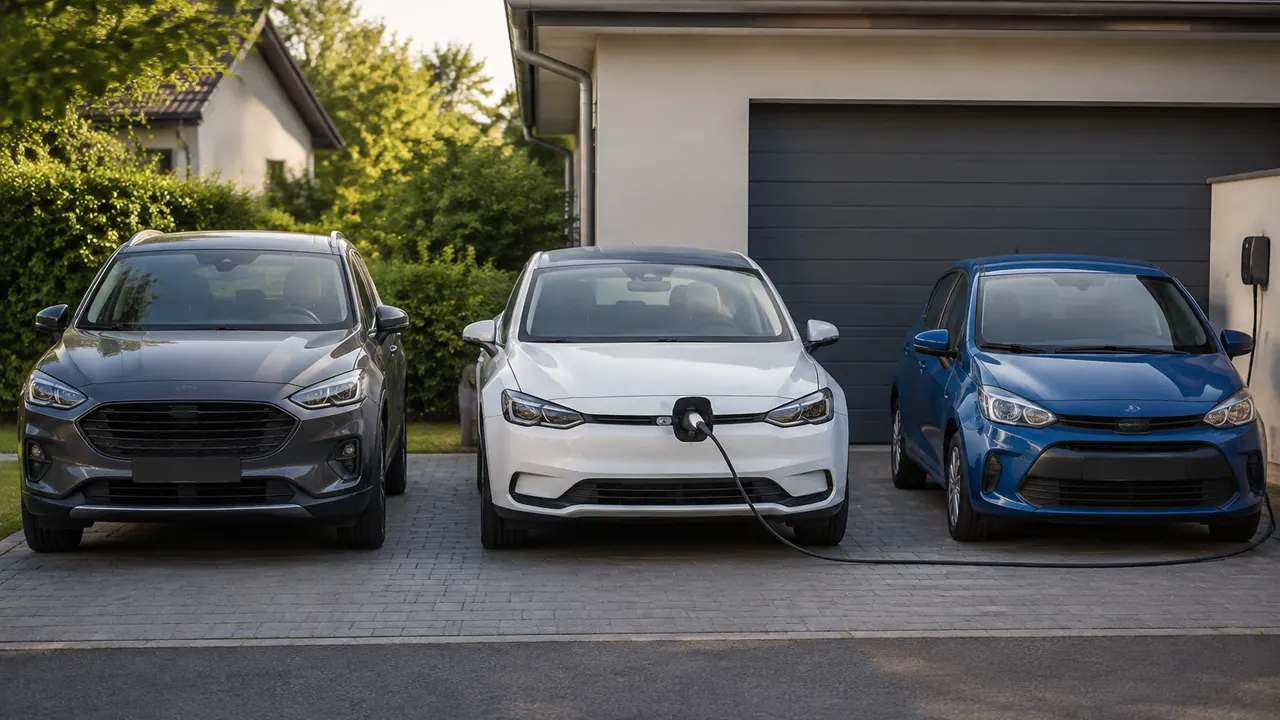
A car that uses less energy is not automatically the car that costs you less. A gasoline model with a lower purchase price can beat a more efficient alternative if you drive relatively little. A hybrid can make sense for someone who cannot charge at home. An electric vehicle can deliver substantial operating savings when charging is affordable, yet lose that advantage when expensive public charging becomes the routine.
For shoppers comparing vehicles in August 2026, the useful question is not which powertrain wins in general. It is which specific vehicle fits your routes, parking situation and ownership timeline at the lowest realistic total cost. Start with comparable vehicles, collect actual quotes and separate predictable expenses from uncertain ones. The worksheet below turns those details into a comparison you can adjust.
1. Define your driving before comparing vehicles
Choose a common ownership period, such as five years, and use the same annual mileage for every candidate. Estimate mileage from service records, odometer readings or a typical week multiplied across the year, then add road trips. A changed commute, retirement or a new school route deserves its own scenario rather than being buried in an average.
Compare vehicles that do the same job. A small electric hatchback and a large gasoline SUV are not a clean powertrain comparison if your household needs the larger vehicle. Match seating, cargo space, winter capability and towing requirements before judging efficiency. Include a conventional hybrid separately from a plug-in hybrid: the former does not need external charging; the latter has a battery you plug in plus a gasoline engine.
- Record annual miles, ownership years and your usual city/highway mix.
- List the longest regular drive, winter conditions and any towing.
- Identify dependable overnight parking and permission to install charging.
- Estimate how often you would need public charging, not merely whether a station exists nearby.
- Include used vehicles when appropriate, but match age, condition, equipment and remaining warranty coverage.
2. Build one ownership worksheet, not six disconnected estimates
Use one column per vehicle and keep every entry tied to the same ownership period. The basic equation is total ownership cost equals out-the-door purchase price minus resale proceeds, plus financing charges, insurance, energy, maintenance, repairs and other ownership expenses. Add charging installation for an EV or plug-in hybrid when needed. Subtract only incentives you actually qualify for.
Do not add loan principal payments on top of purchase price: that counts the vehicle twice. Likewise, depreciation is purchase cost minus resale value, not an additional expense to stack on top of both. A cash-flow worksheet showing monthly payments is useful for affordability, but it answers a different question from total ownership cost.
Label each entry as a quote, a calculation or an assumption. That small step exposes false precision. Round future estimates sensibly, and keep receipts or screenshots for current offers. If selling before the loan ends, request an amortization schedule for interest incurred through your expected sale date. Track the remaining loan balance separately when estimating how much cash the sale would leave.
| Worksheet line | What to enter for each vehicle |
|---|---|
| Vehicle cost | Out-the-door price minus estimated resale proceeds |
| Financing | Interest and financing fees during ownership |
| Insurance | Quoted premium, projected over ownership |
| Energy | Annual gasoline and electricity expense × years |
| Upkeep | Scheduled maintenance, tires and repair allowance |
| Other costs | Charging installation, registration and applicable recurring fees |
3. Price the deal, financing and insurance together
Get written out-the-door quotes that include destination charges, dealer fees, sales tax and required registration charges. Separate optional products from the vehicle itself. Compare the same loan term and down payment, then examine the annual percentage rate and total financing charges. A longer loan can disguise a more expensive car behind an attractive payment. Promotional financing may also replace a cash rebate rather than accompany it.
For a 2026 purchase, do not copy an older article's federal EV-credit assumptions into your budget. Federal new, previously owned and qualified commercial clean-vehicle credits generally are unavailable for vehicles acquired after September 30, 2025. State, local, utility and manufacturer offers may still matter, but eligibility, funding and deadlines vary. Treat an advertised lease incentive as part of that specific offer, not proof of a federal benefit available to you.
Request insurance quotes for the exact model and trim, preferably using a VIN, with identical drivers, coverage limits and deductibles. Repair complexity, parts availability and local claims experience can affect premiums across all powertrains. Also check state registration schedules for EV or hybrid surcharges. These recurring differences can consume fuel savings, particularly for someone driving fewer miles.
4. Calculate energy costs using your prices
For gasoline, divide annual miles by realistic miles per gallon, then multiply by the price per gallon. For an EV, divide miles by miles per kilowatt-hour measured from the wall, then multiply by the electricity rate. Alternatively, use a wall-energy consumption figure in kWh per 100 miles. Do not combine a battery-only efficiency estimate with electricity billing without accounting for charging losses.
The illustration below assumes 12,000 miles annually, gasoline at $3.50 per gallon, a gas car achieving 30 mpg, a hybrid achieving 50 mpg and an EV traveling 3 miles per wall kWh. These are hypothetical inputs, not national averages or forecasts. They show why the same EV can be inexpensive or relatively costly to power.
- Use the additional electricity cost per kWh, including applicable delivery charges and taxes, rather than an advertised supply rate alone.
- Split EV electricity use between home, work and public charging at their respective prices; add session, parking or subscription fees when applicable.
- For a plug-in hybrid, calculate electric and gasoline miles separately using your likely charging frequency.
- Run a second estimate for winter, sustained highway driving or towing if those conditions are routine.
| Vehicle and energy source | Assumed energy price | Annual energy cost |
|---|---|---|
| Gas car, 30 mpg | $3.50/gallon | $1,400 |
| Hybrid, 50 mpg | $3.50/gallon | $840 |
| EV, home charging | $0.15/kWh | $600 |
| EV, public charging | $0.45/kWh | $1,800 |
5. Make charging access a budget item
Home charging is not simply a yes-or-no feature. An existing household outlet may replenish enough energy for modest daily driving, but its suitability depends on the circuit, vehicle and time available. Faster home charging can require an electrician, a dedicated circuit, permits and possibly panel work. Obtain an installed quote rather than budgeting only for the charging equipment.
Renters and condo owners should confirm permission, assigned-space access, billing rules and what happens if they move. Workplace charging can be valuable, but check availability during your actual shift and whether pricing could change. Public charging should be tested along normal routes: compatible connectors, working equipment and access hours matter as much as a station marker on a map.
Also budget time separately from dollars. You need not assign every charging minute a wage, especially when the car charges while parked overnight. But a weekly detour or a queue that complicates childcare is a genuine ownership burden. Before buying, try the charging routine you expect to use. If the low-cost plan depends on one free charger, rerun the worksheet without it. A durable cost advantage should not rest on access you cannot control.
6. Estimate maintenance and depreciation without guessing too confidently
EVs avoid engine-oil changes and several combustion-engine service items, but they still need tires, inspections, cabin filters and model-specific maintenance. Hybrids retain an engine even though regenerative braking can reduce friction-brake use. Tire life depends on the vehicle, tire choice, alignment and driving habits, not simply its powertrain. Price the recommended service schedule for each candidate.
Depreciation can outweigh several years of energy savings. Estimate resale using comparable vehicles of the age and mileage yours will reach, while recognizing that today's used market is not a forecast. Model changes, new-car discounting, repairability and buyer confidence can all shift values. Use a lower-resale scenario rather than assuming one powertrain will hold value better.
- Ask for tire replacement pricing in the actual wheel size, including installation.
- For used vehicles, obtain an independent inspection and review service and accident records.
- For electrified vehicles, verify remaining battery coverage, transferability, mileage limits and any capacity-loss provisions.
- Keep an out-of-warranty repair allowance; a warranty does not cover every expense.
- If leasing, compare total lease cash outlay and mileage charges separately instead of using purchase-and-resale math.
7. Stress-test the winner against mileage and ownership length
Now divide each ownership total by years and total miles. Those annual and per-mile figures make differences easier to understand, but keep the underlying assumptions visible. Repeat the calculation at lower and higher mileage. Energy savings generally grow with miles; purchase premiums, charger installation and many fees do not. Insurance and maintenance may also change with mileage, so adjust them when justified.
In the energy example, home-charged electric driving saves $800 annually versus gasoline at 12,000 miles. At 6,000 miles, the savings fall to $400. A hypothetical $3,000 purchase premium would therefore take about 3.75 years or 7.5 years, respectively, to recover through energy savings alone. Those are not complete payback estimates: financing, insurance, maintenance, charging equipment and resale could shorten or lengthen the result.
Finally, test higher electricity prices, lower gasoline prices and a less favorable resale value. If two vehicles finish close, avoid pretending the worksheet can predict an exact winner. Choose the one that remains affordable under the weaker scenario and suits your routine. The strongest comparison is not the lowest mpg or efficiency headline; it is a workable ownership plan with costs you can explain.
Caveat: Verify current vehicle offers, incentive eligibility, utility tariffs, insurance quotes and financing terms before committing to a purchase.
AI Assistance Used — AI assistance was used in researching and drafting this article. It was reviewed, edited, and fact-checked by Lisa Barber before publication.