Test Your Garden Soil Before Spending Money on Fertilizer
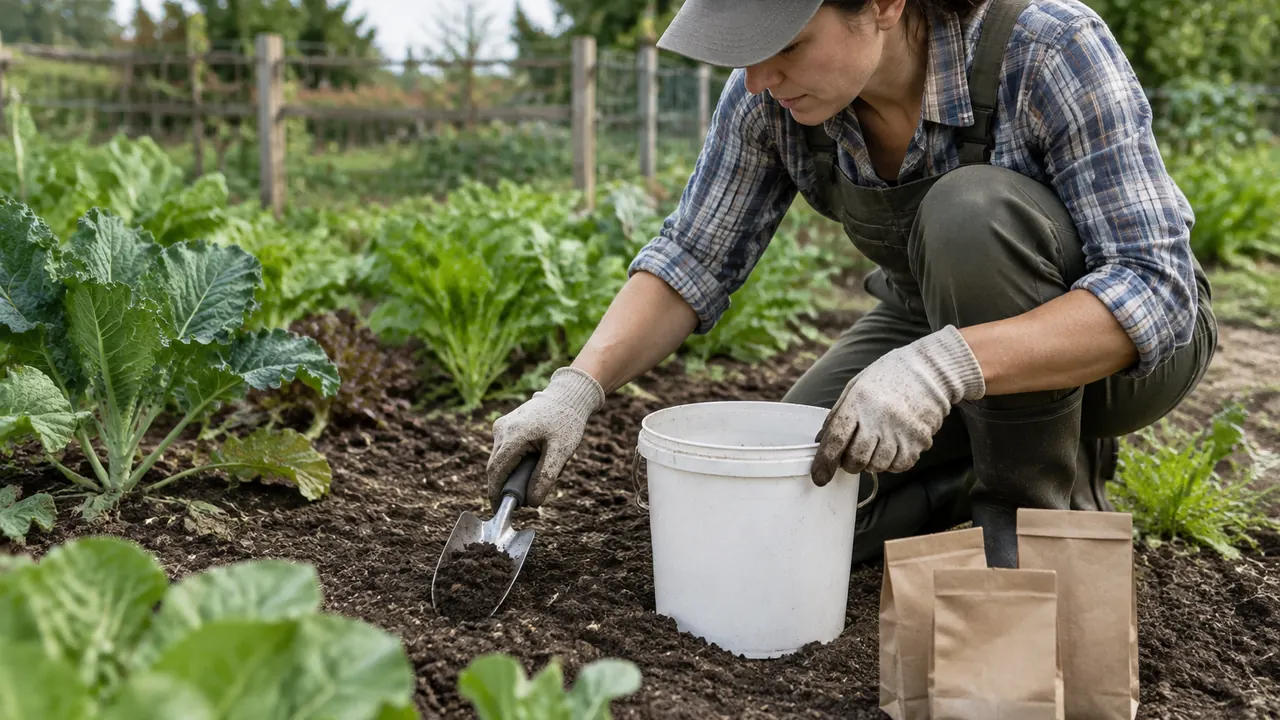
Before buying fertilizer for your garden this spring, find out whether the soil actually needs it. Yellow leaves, slow growth and disappointing harvests can result from poor drainage, unsuitable soil pH, drought, damaged roots or other problems that added nutrients will not fix. Fertilizer applied without a reason can waste money, worsen nutrient imbalances and contribute to polluted runoff. A useful soil test starts with a representative sample and ends with recommendations matched to what you plan to grow.
For the 2026 growing season, your best starting point is usually your state’s Cooperative Extension service or a laboratory it recommends. But first decide what question you need answered. A routine fertility test helps guide fertilizer and lime decisions; it generally does not establish whether soil is safe for growing food. That distinction matters especially in urban vegetable gardens, older residential yards and places with uncertain land-use histories. Here is how to collect useful information before spending money on amendments.
1. Choose a test that answers your actual question
Find your state or county Extension website through an official university directory, then look for garden soil testing instructions. Some Extension systems operate laboratories; others direct residents to outside services. Check that the lab accepts homeowner samples and provides recommendations for your state or region. Regional interpretation matters because extraction methods, soils and fertilizer guidance differ. For a private lab, ask whether its methods and recommendations are appropriate for your location and intended crops.
Read the current submission form before collecting soil. A basic package commonly includes pH and selected nutrients, but organic matter, soluble salts, nitrogen and contaminants may require separate requests. Routine nitrogen testing is not equally useful everywhere because available nitrogen changes with weather and biological activity; follow regional advice. Ask about the complete price, required soil quantity, shipping, turnaround and whether someone can explain the report. Inexpensive home kits and combination probes should not replace a suitable laboratory analysis when making substantial amendment decisions.
| Option | Useful for | What to verify |
|---|---|---|
| Extension or affiliated lab | Regionally interpreted fertility guidance | Accepted samples, included analyses and crop recommendations |
| Independent agricultural lab | Routine or specialized soil analysis | Regional suitability, methods and interpretation support |
| Home kit or probe | Limited screening or rough checks | Accuracy, calibration and what it actually measures |
| Environmental laboratory | Targeted contamination investigation | Analytes, detection limits and residential garden interpretation |
2. Divide the garden into meaningful sampling areas
A laboratory analyzes only a small portion of the soil you send. Its result is useful only if that soil represents the area you intend to treat. Separate the vegetable garden from the lawn, ornamental beds and other areas with different management histories. Also separate beds that received different amounts of compost, manure, lime or fertilizer. A raised bed filled with purchased soil should not automatically be combined with the native ground beside it.
Walk each area before sampling. Changes in slope, drainage, soil color or plant performance can justify separate samples. For an ordinary fertility test, avoid making one unusual spot stand in for the entire bed. If a patch consistently performs poorly, sample it separately and describe the problem. Never mix a potentially contaminated hotspot into a general garden sample merely to obtain an average; doing so can hide a localized concern. Contamination sampling needs its own plan.
- Sketch the beds and assign each sampling area a simple, unique name.
- Keep recently amended soil separate from areas managed differently.
- Exclude compost piles, fertilizer spills and paths from routine bed samples.
- Record past amendments and planned crops so the results have context.
3. Collect and mix a representative fertility sample
Follow the receiving laboratory’s depth and sampling instructions over any general rule. For established vegetable beds, labs often request soil from roughly the top 6 to 8 inches, but requirements vary. Remove surface mulch and loose plant debris without scraping away the soil beneath. With a clean trowel, spade or soil probe, collect similar-sized portions at consistent depths from widely distributed locations. Around 10 to 15 collection points is a common recommendation for a reasonably uniform garden area; use the lab’s specified number.
Collect into a clean plastic bucket that has not held fertilizer, pesticides or other chemicals. Avoid galvanized or brass tools when trace-element analysis is involved, and ask the lab about suitable equipment for contamination testing. Mix the portions thoroughly, remove stones and coarse roots, then take the requested amount from that mixture. For routine fertility samples, labs often instruct gardeners to air-dry damp soil before packaging. Do not heat it in an oven or microwave. Specialty analyses may require fresh soil, refrigeration or different handling, so check first.
- Sample before fertilizing or liming, and avoid saturated ground.
- Use the same sampling depth at every collection point.
- Spread soil on a clean surface if air-drying is instructed.
- Label the bag and submission form with matching bed names.
- Tell the lab about recent applications rather than concealing them.
4. Read the report as a recommendation, not a shopping list
Start with the sample identification, crop category and units. A recommendation for lawn grass is not interchangeable with one for vegetables, and a rate per acre needs conversion before use in a small bed. Next, read pH, the measure of acidity or alkalinity. Soil pH influences nutrient availability, but the target depends on the crop. A lime recommendation may also use a buffer measurement that helps estimate how much amendment is needed; the pH number alone does not tell you the dose.
Look for the lab’s interpretation categories and written recommendations, not just concentrations. A result labeled high usually does not mean more is better. Where phosphorus or potassium is already sufficient, additional applications may provide no benefit. Some reports estimate nitrogen needs from the crop rather than a direct nitrogen measurement. Nutrient values from different laboratory methods are not always directly comparable, so track results with the same lab and method when practical. If the report lists values without usable garden recommendations, request interpretation before buying anything.
| Report item | Practical meaning | Common mistake |
|---|---|---|
| Soil pH | Helps assess crop suitability and nutrient availability | Adding lime without a rate recommendation |
| Phosphorus and potassium | Guide whether these nutrients are needed | Treating high readings as a reason to add more |
| Organic matter | Adds context about soil condition and management | Assuming more compost is always beneficial |
| Soluble salts, if tested | Can flag conditions that stress roots | Applying fertilizer without investigating elevated salts |
5. Convert the recommendation before buying fertilizer
Measure the area you will actually treat. Multiply a rectangular bed’s length by its width, then scale the lab’s recommendation to that square footage. Check whether the stated rate refers to fertilizer product or to a particular nutrient. Bag numbers identify percentages by weight of nitrogen, phosphate and potash, in that order; they are not interchangeable with every elemental concentration shown on a laboratory report. Ask Extension to clarify unfamiliar units rather than guessing.
For example, if a recommendation calls for 0.1 pound of nitrogen per 100 square feet, a 10 percent nitrogen product would supply that amount in 1 pound of product. That is a calculation example, not a suggested garden rate. Any other nutrients in the product must also fit the recommendations. Account for compost, manure and previous fertilizer where the guidance allows, and follow application timing and label directions. More concentrated products require smaller quantities and careful measurement. Do not stack several amendments that supply the same nutrient simply because each is marketed differently.
6. Treat urban garden contamination as a separate investigation
Routine fertility results cannot rule out lead, arsenic, petroleum residues or other contaminants. Even a report that includes certain metals may not use a package designed to assess human exposure. Review the property’s history: older painted buildings, demolition debris, busy roads, former industrial activity, dumping and imported fill can all warrant closer attention. Lead exposure in gardens can involve swallowing contaminated soil or dust on hands and produce, not only contaminants taken up by plants.
Before collecting a contamination sample, consult Extension, your local health department or an environmental professional about likely hazards and appropriate laboratory testing. The correct analytes, sampling locations, depths, containers and handling depend on the concern. Ask who will compare results with applicable residential or garden guidance; a laboratory detection alone does not fully describe risk. No affordable standard panel detects every possible contaminant, and a composite sample can obscure hotspots. Keep children away from suspect bare soil while you investigate.
- Ask specifically for contamination testing, not just a garden fertility panel.
- Check whether painted-building drip lines and suspected hotspots need separate samples.
- Use documented clean growing soil if professionals recommend raised beds.
- Cover surrounding exposed soil and control dust; a raised bed alone does not eliminate exposure.
- Wash hands and produce, and avoid carrying garden soil indoors.
7. Make a modest plan and keep useful records
Turn the report into a bed-by-bed plan: what to apply, how much, when and what to skip. If nutrients are adequate, the sensible purchase may be no fertilizer at all. Address watering, drainage, compaction or crop selection separately. Lime and other pH adjustments take time; do not repeatedly add material because plants fail to improve immediately. For contamination concerns, follow the recommended exposure-reduction or remediation plan rather than trying to dilute the problem with compost.
Save the report, bed map, sampling date and amendment amounts together. Many established gardens can be retested for fertility every two to three years, but local guidance, substantial amendments or persistent problems may justify a different schedule. Sample at a similar time of year and before new applications to make trends easier to interpret. If you have already fertilized this season, tell the lab what you used and when, and ask about suitable sampling timing. A test is most valuable when it changes a decision, not when it simply accompanies another bag of fertilizer.
Check current laboratory fees, submission requirements and local recommendations before sampling, and consult a qualified professional when contamination is suspected.
AI Assistance Used — AI assistance was used in researching and drafting this article. It was reviewed, edited, and fact-checked by Nadia Clarkson before publication.