Flood, Sewer Backup or Burst Pipe: Which Insurance Might Pay?
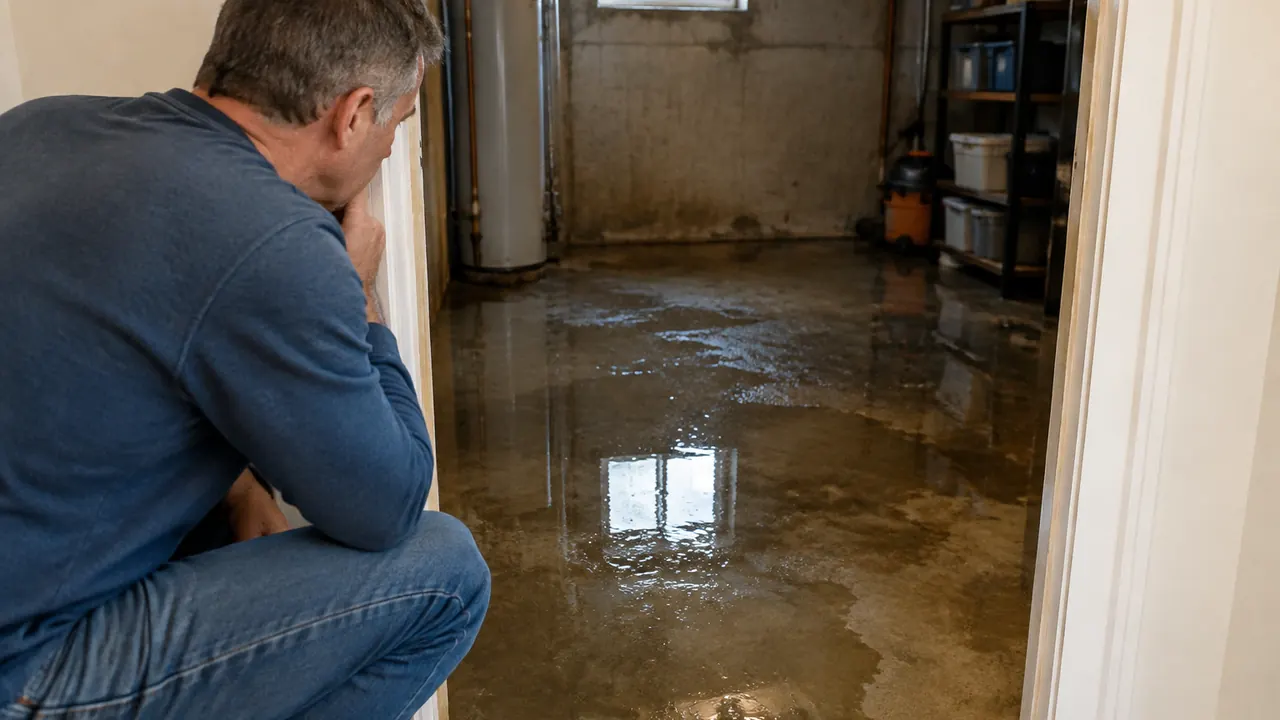
Two inches of water on a basement floor can look the same whether it came from a broken pipe, an overwhelmed sewer or a creek that jumped its banks. To an insurer, those can be three different events, with different coverage, deductibles and exclusions. The expensive misconception is that buying homeowners or renters insurance means buying protection against anything that gets your home wet.
For households reviewing coverage in August 2026, the useful question is not simply, “Do I have water damage coverage?” It is, “Which sources of water does my policy cover, and what would it pay to replace?” Standard home insurance, separate flood insurance and a water-backup endorsement serve different purposes. None automatically fills every gap left by the others. The comparison below describes common U.S. policy treatment; your contract, endorsements, state rules and the facts of a loss control the actual claim.
1. Start with where the water came from
A sudden plumbing failure inside a home is commonly handled under homeowners insurance. Water rising across normally dry land generally points toward flood insurance. Water coming backward through a sewer or drain, or overflowing from a sump, usually requires a backup endorsement or another policy that expressly covers it. Rain is not a category by itself: rain entering through storm-damaged roofing and rain accumulating at ground level can trigger very different decisions.
This table is a starting point, not a promise of payment. Coverage depends on how water entered, what property was damaged and whether an exclusion applies. A policy may cover the resulting soaked drywall but not the worn-out pipe that failed. It may also cover a house without covering the belongings in its basement. If several causes are involved, document each one rather than choosing a label yourself.
- Photograph the entry point, waterline, nearby drains and damage before cleanup, when safe.
- Ask the plumber or mitigation contractor to document observations and the likely source in writing.
- Report what happened accurately; an insurer, not a contractor's invoice label, makes the coverage determination.
| Event | Coverage to check | Important limitation |
|---|---|---|
| Sudden burst supply pipe | Homeowners; renters for belongings | Failed pipe itself may not be covered |
| River overflow or widespread surface flooding | Separate flood insurance | Building and contents protection are distinct |
| Sewer or drain backs up | Water-backup endorsement | Limits and flood-related exclusions vary |
| Sump overflows or fails | Backup or sump-overflow coverage | Equipment replacement may be excluded |
| Long-term leak or foundation seepage | Often excluded under standard policies | Specific wording and exceptions matter |
2. A burst pipe may be covered, but maintenance still matters
Homeowners policies commonly cover direct damage from sudden and accidental discharge of water from plumbing or certain household systems. That can include damaged walls, flooring and covered belongings, subject to the deductible and settlement terms. Renters insurance may cover the tenant's damaged belongings from a covered discharge, while the landlord's property policy addresses the building. Neither arrangement guarantees payment for every item or repair.
Separate the cause from the consequences. If an aging pipe suddenly breaks, resulting water damage may be covered even though replacing the defective pipe is not. Some policies cover necessary access work, such as opening a wall to repair plumbing after a covered discharge, but the conditions vary. Ask specifically about access, drying, mold treatment and reconstruction rather than assuming they share one limit.
Repeated leakage, deterioration, corrosion and neglected maintenance are common coverage problems. Some contracts contain exceptions for hidden leaks, so do not assume every unnoticed leak is excluded. Frozen-pipe claims can depend on whether you used reasonable care to maintain heat or shut off and drain the system when required. Vacancy provisions can further restrict protection. Before leaving a home unoccupied, get written guidance from your insurer about heating, inspections and water shutoff requirements.
3. Flood insurance addresses rising water, with important boundaries
Standard homeowners and renters policies generally exclude flood damage. Separate flood insurance is available through the National Flood Insurance Program, or NFIP, in participating communities, and through private insurers. You do not have to live in a high-risk flood zone to suffer a flood loss. A lender's decision not to require coverage is not a finding that your property cannot flood.
The NFIP definition generally requires temporary inundation of at least two acres of normally dry land, or at least two properties, one of which is yours, from specified causes such as overflowing inland or tidal waters or unusual, rapid accumulation of surface runoff. Its definition also addresses mudflow and certain erosion-related collapse along shores. A puddle confined to your basement is not automatically an NFIP flood.
For eligible one-to-four-family residential buildings, NFIP limits are generally up to $250,000 for the building and $100,000 for contents. These are separate coverages, typically with separate deductibles; renters can purchase contents coverage. Private policies may offer higher limits or different benefits, but exclusions, settlement methods and renewal terms need comparison. Do not treat an NFIP limit as an estimate of your rebuilding cost or assume that buying building coverage also insures your furniture.
4. Sewer and sump backups need their own questions
A water-backup endorsement usually adds specified protection to a homeowners or renters policy for water backing up through sewers or drains, or overflowing from a sump system. The exact covered pathways differ. Coverage is not necessarily included just because your declarations page lists water damage elsewhere. Some insurers offer packages; others sell backup protection separately with a chosen limit and deductible.
That limit can be much smaller than the main dwelling or personal-property limit. A finished basement can require sewage removal, disinfection, demolition, drying and replacement of flooring, cabinets and belongings. Ask whether all those costs share one cap. Also distinguish backup coverage from service-line coverage, which may help repair a damaged underground line but does not automatically insure the resulting indoor mess.
Heavy rain complicates the analysis. A backup endorsement may exclude damage caused by flooding even when water enters through a drain. Conversely, an NFIP policy may cover sewer-backup damage when flooding in the area exists and the flood is the proximate cause. Neither policy should be assumed to cover every rain-related backup.
- Confirm whether sewer backup, drain backup and sump overflow are each included.
- Ask about pump failure, power outages and any battery-backup requirements.
- Verify whether building damage, belongings and cleanup share the endorsement limit.
- Ask whether temporary housing is covered after a covered backup loss.
5. Basement belongings and temporary housing are frequent gaps
A policy that pays for some flood damage may still leave a substantial basement bill. NFIP coverage below ground level is restricted, and its basement definition generally turns on the floor being below ground on all sides. Building coverage can protect specified essential equipment and certain unfinished structural elements, but it generally does not restore a finished basement as it was before the flood.
NFIP basement contents coverage is also narrow: it generally covers specified items such as washers, dryers and food freezers, including their food, when coverage conditions are met. Basement sofas, televisions and stored personal possessions generally are not covered. Elevated buildings can have additional restrictions in areas below the lowest elevated floor. Request a location-specific explanation before assigning expensive belongings to those spaces.
Temporary housing is another major difference. Homeowners or renters loss-of-use coverage may pay additional living expenses when a covered loss makes the home uninhabitable, subject to limits. NFIP policies do not provide additional living expenses. Some private flood policies do, but verify the amount, duration and trigger. Tenants should not expect the landlord's insurance to replace their possessions or automatically pay their hotel bill.
6. Waiting periods make last-minute shopping risky
NFIP coverage generally has a 30-day waiting period after application and premium payment. Exceptions include certain purchases connected to making, increasing, extending or renewing a loan, and qualifying purchases following a flood-map revision. The map-revision exception generally carries a one-day wait when its conditions are met. A limited post-wildfire exception also exists. Have the insurer confirm eligibility and the effective date rather than assuming an exception applies.
Private flood waiting periods vary by company and product; some are shorter, while restrictions may apply during an approaching storm. Backup endorsements also have insurer-specific effective-date rules and underwriting restrictions. Adding either coverage after water starts entering will not insure that existing loss. Ask when coverage legally begins, not just when the quote was prepared or payment submitted.
- Get the effective date and time in writing, along with any waiting period.
- Confirm that payment, application and inspection requirements are complete.
- Check whether a coverage increase has a separate waiting period.
- Before replacing a policy, verify there will be no gap between contracts.
- Review renewal notices promptly; do not assume a new lender or escrow arrangement handled payment.
7. After a loss, protect yourself and preserve the claim
Stay out of water near electrical equipment, and treat sewage as a health hazard. Shut off the water supply only if you can do so safely. Notify each potentially relevant insurer promptly; a storm can produce separate covered losses under different policies. Ask about claim deadlines, proof-of-loss requirements and emergency cleanup instructions. Do not postpone reasonable damage prevention while waiting for a coverage decision.
Photograph damaged rooms and belongings, record model numbers where possible, and keep receipts for cleanup, repairs and lodging. Before discarding damaged property, ask what documentation or inspection the insurer requires; unsafe contaminated materials may need prompt removal. Avoid signing broad repair contracts or claim-rights assignments without understanding the charges and obligations. An initial payment or contractor estimate does not necessarily settle the whole claim.
If coverage is denied or limited, request a written explanation identifying the relevant provisions and factual findings. Compare it with the policy and any endorsements, then provide missing evidence or pursue available review options. Your state insurance department can explain complaint procedures, while NFIP claims have their own appeal process. The best preparation is a source-by-source coverage review before the next loss, not a search for one universal water-damage policy.
Coverage terms, limits, waiting periods and prices can change; verify current policy documents and discuss property-specific questions with a licensed insurance professional.
AI Assistance Used — AI assistance was used in researching and drafting this article. It was reviewed, edited, and fact-checked by Jordan Singh before publication.